
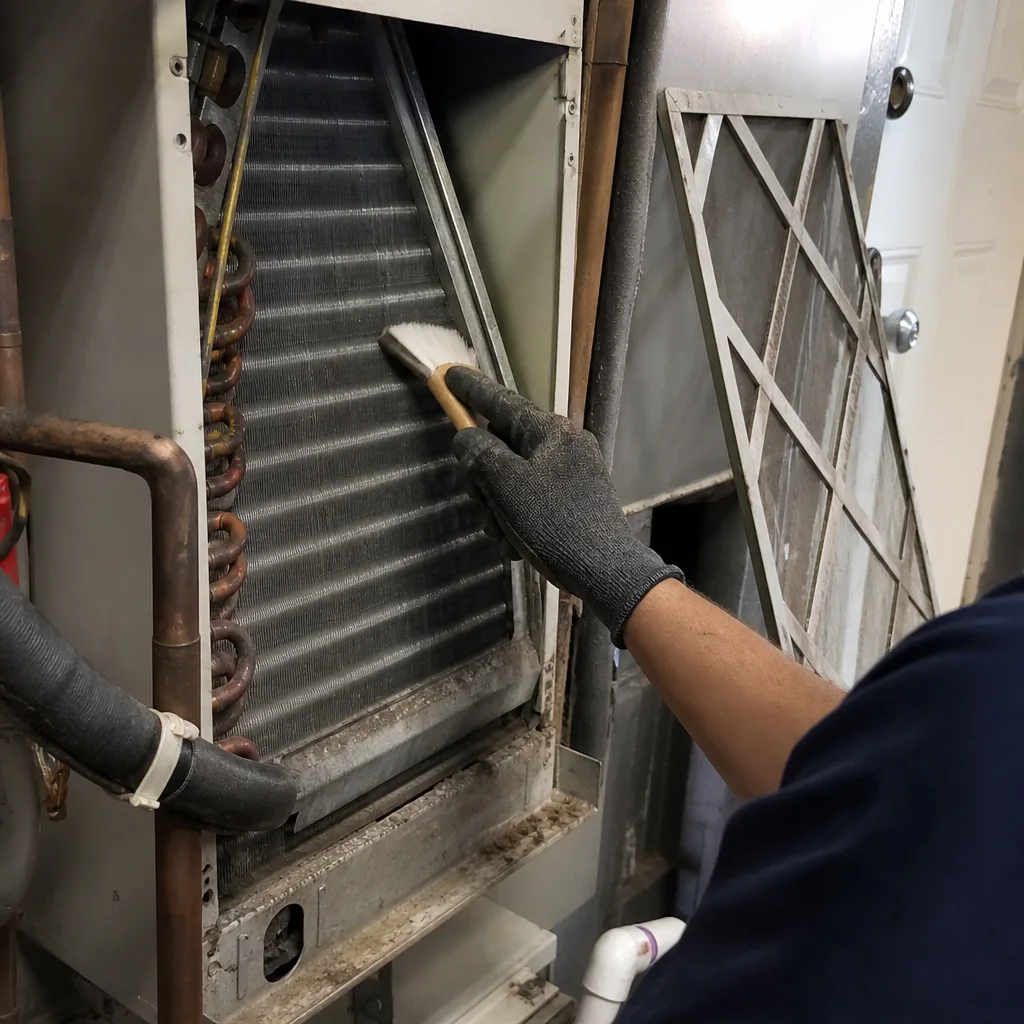
Last updated November 25, 2026
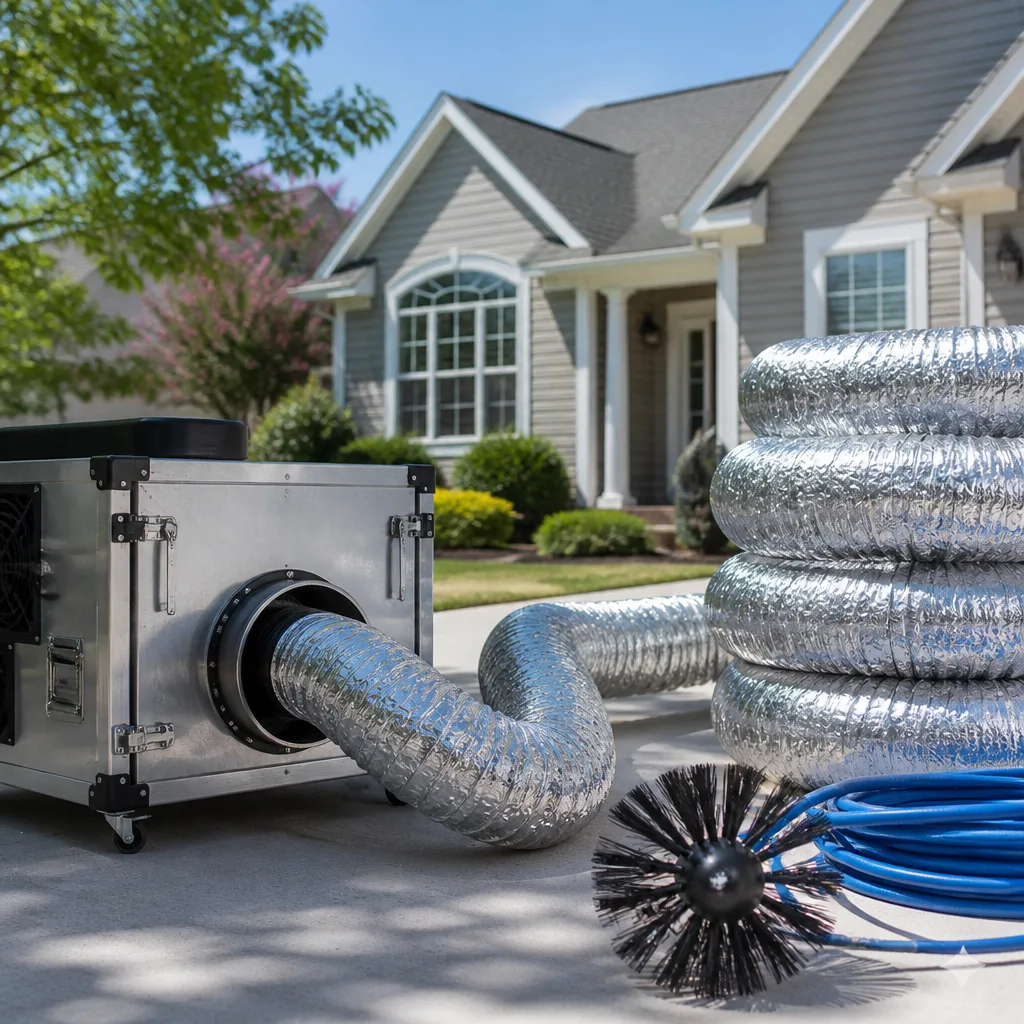 Whole-home duct cleaning
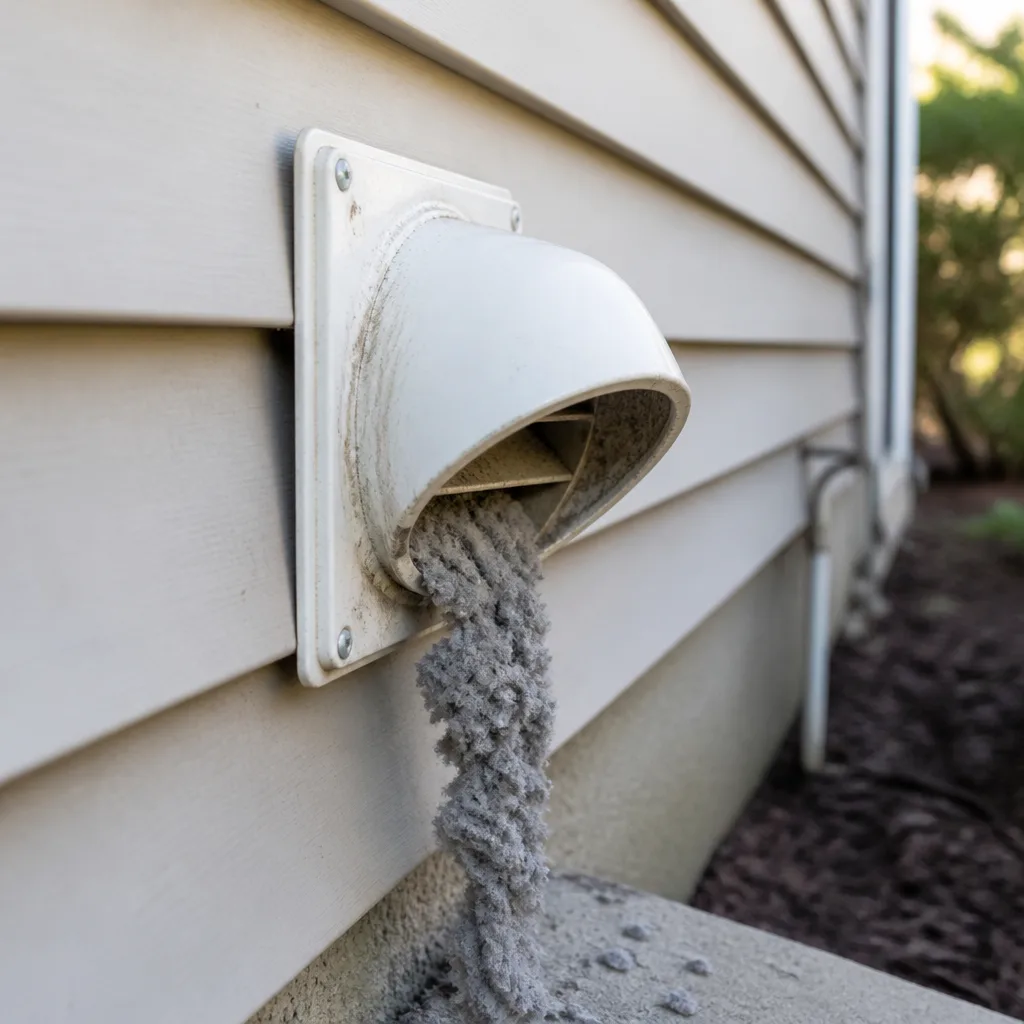 Dryer vent cleaning
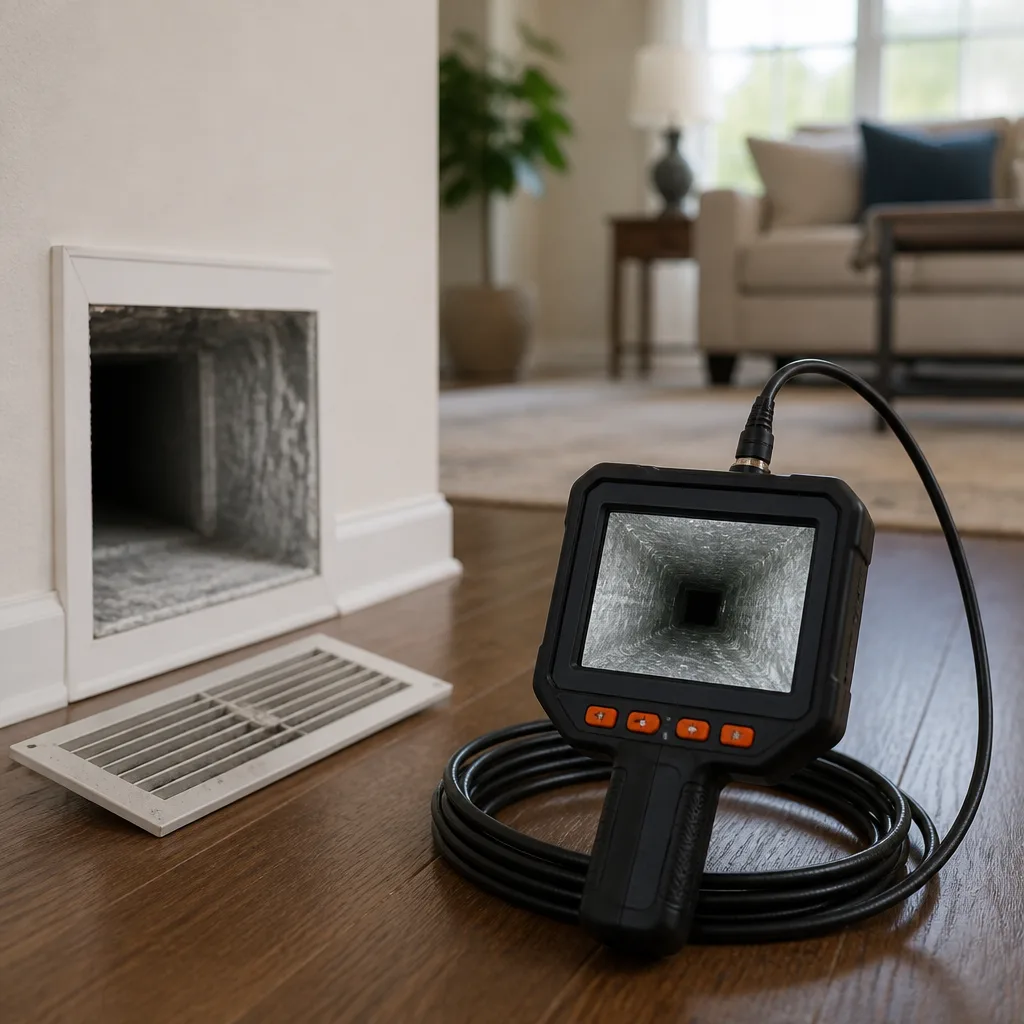 Camera inspection
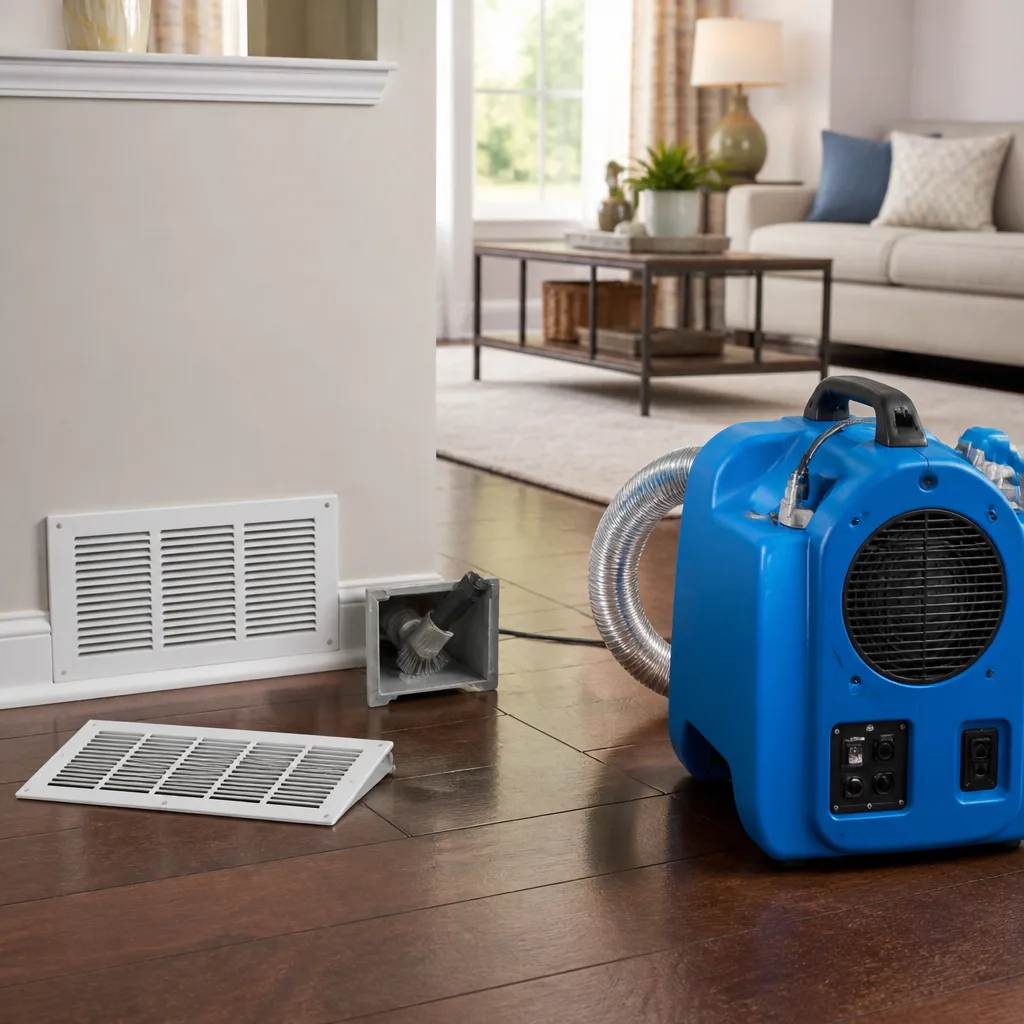 Sanitizing & deodorizing
Whole-system duct and dryer vent check with before-and-after photos - you see exactly what came out of your vents
That "$99 whole-house special" is a bait ad - the real number appears once they are in your hallway, or the "clean" is a shop-vac at the register. We photograph the inside of your ducts before and after instead.
Air Duct Cleaning Warning Signs: A Renton Homeowner’s Reference Guide
If you can see dust blowing from a supply register, your system has already been distributing that debris through your home for weeks. The more important warning sign happened long before that, and most homeowners missed it. In our experience, the signals that actually justify a full duct cleaning are quiet ones: a musty smell that shows up only when the heat kicks on, one bedroom that never warms like the rest of the house, or a filter that loads up in ten days when it’s rated for ninety. This guide walks through those overlooked indicators, explains what each one tells you about the inside of your duct system, and shows how Renton’s climate and housing stock shape the way we read them.
Styles & brands we work with
- Whole-home duct cleaning
- Dryer vent cleaning
- Camera inspection
- Sanitizing & deodorizing
Quick Answer
The warning signs that most reliably point to a needed duct cleaning are persistent odors that appear only when the HVAC runs, uneven airflow between rooms, filters loading faster than their rated interval, visible debris around return grilles, and a system that has just gone through a renovation or a rodent intrusion. Visible dust at supply registers is a real sign, but it usually shows up late. Each signal below points to a different part of the air pathway, and each calls for a different cleaning approach.
Table of Contents
- Why the Obvious Warning Signs Come Too Late
- Reading Odor Patterns to Diagnose Contamination
- Airflow Asymmetry as an Early Indicator
- What Rapid Filter Loading Reveals About Your Return Plenum
- Post-Renovation Warning Signs That Differ From Occupancy Signs
- Renton Climate Signals: Cedar Pollen vs. Coil Biofilm
- What Professional Equipment Actually Reveals
- A Step-by-Step Self-Check You Can Do Today
- Common Mistakes to Avoid
- When to Call a Professional
- Frequently Asked Questions
Why the Obvious Warning Signs Come Too Late
Dust at a supply register gets noticed because it’s the one sign you can see. The problem it represents, though, has been building for a while. Once debris is fine enough and loose enough to be carried out of a register and settle on a nightstand, that same material has already passed through the blower, the coil, and the plenum above your furnace. Cleaning at that point is still worthwhile, but you’re now dealing with contamination that has spread across the whole air pathway rather than a single area of buildup.
The earlier signals are quieter because they show up as patterns, not objects:
- A smell that appears for a minute when the heat or fan starts, then fades.
- A room that always sits a couple of degrees cooler than the setpoint.
- A filter that looks gray before its rated replacement interval.
- A faint rattle or whistle from a return grille.
- More dust settling on high shelves and ceiling fans than on floor surfaces.
Each of these points to a specific condition inside the ducts, and each is far cheaper to address before it reaches the register. Renton homes built in the 1960s through 1980s across the Highlands and Kennydale often have duct systems with few return paths and long trunk runs, which means a partial blockage or a disconnected joint in one branch quietly starves everything downstream of it. The system doesn’t fail outright. It just gets less efficient, and the first visible dust you notice is the tail end of that process, not the beginning.
What this means for you: don’t wait for visible dust. If a pattern from the list above is already in place, an inspection will show you whether the condition is in the ducts, the coil, or the return plenum, and those three need different treatment.
Reading Odor Patterns to Diagnose Contamination
The character of a smell tells you which component of the system is likely contaminated. A musty odor that appears when the fan starts usually points to moisture and biological growth in the duct liner small or on the evaporator coil. A burning or hot-dust smell points to the heat exchanger area. A chemical or solvent smell points to off-gassing from new materials or a previous treatment. A sweet, decaying smell points to organic material such as rodent debris inside a branch run. Same house, four different problems, four different cleaning and repair approaches.
What each odor typically indicates
- Musty or damp-earth: moisture in the duct system, often near the coil or in a low, cool branch run. Common in Renton basements and crawlspace-fed systems where relative humidity stays elevated through fall and winter.
- Hot dust or light scorching: dust baking on a heat exchanger or in the plenum above the furnace the first time the system runs after a long off period. Worth an inspection every time.
- Chemical or solvent: off-gassing from new flooring, painted trim, or adhesives, carried through the system. Post-renovation cleaning addresses this.
- Sweet decay or animal smell: organic material, most likely a rodent nest or droppings inside a duct run or the return plenum. This one needs containment before anything gets disturbed.
Timing matters as much as the smell itself. An odor that only appears on startup and clears in a minute or two usually means the smell is associated with the components closest to the blower. An odor that lingers through the whole cycle means contamination in the branch runs, and often the return side. When we run a camera through a Renton home and match the homeowner’s description to what we find, the smell usually lines up with the physical condition within a few feet.
The one odor you should never treat as a cleaning issue is a persistent gas smell or a smell like scorched electrical insulation. Turn the system off and call a qualified HVAC or gas technician first. Duct cleaning is not the answer to a combustion or wiring problem.
Airflow Asymmetry as an Early Indicator
When one room consistently runs warmer or cooler than the rest of the house, the cause is more often a duct problem than thermostat placement. A partially blocked branch, a crushed flex run, a disconnected joint in the attic, or a branch with too many elbows all reduce the volume of air that reaches the far register. The thermostat reads the room it’s in and works fine, while the rest of the house is quietly starved.
How to test it in ten minutes
- Set the thermostat to fan-only and walk to each register with a piece of tissue paper.
- Hold the tissue an inch from the grille and note how far the airflow pushes it. Compare across rooms.
- Note which registers feel strong and which feel weak, and write the result down by room name.
- Check the return grilles the same way. A weak return is often the upstream cause of a weak supply in the same zone.
- Look at the branch run visible in the attic or crawlspace if you can safely see it. A flex duct folded back on itself or sagging sharply is a common culprit.
In Renton’s two-story homes, especially in the Renton Highlands and Talbot Hill neighborhoods, the second-floor branches often run long and turn sharply to get around the roof framing. Those are exactly the runs that lose volume first when debris or a small obstruction builds up. Homeowners will spend a season adjusting dampers or moving a thermostat before anyone crawls up to look at the run itself.
Here’s the ceiling on this test: it tells you where the imbalance is, not what’s causing it. A duct repair may be the fix, or a cleaning may restore full flow. That diagnosis is where a professional inspection earns its keep.
What Rapid Filter Loading Reveals About Your Return Plenum
When a filter rated for ninety days loads up in under two weeks, the contamination is almost certainly upstream in the return plenum or in the return trunk itself. A filter is a downstream catch device; it only clogs because the air passing through it is already carrying material. Fast loading doesn’t mean the filter is too thin, or that the system is underperforming, or that you need a “better” filter. It means debris is entering the return side somewhere before the filter slot.
The common upstream culprits
- A return duct joint that has come loose in an attic or crawlspace, drawing in insulation fibers and framing dust.
- A return plenum with years of settled dust, disturbed into the air path every time the blower spins up.
- Renovation dust pulled into the return while work was going on elsewhere in the house.
- A rodent or pest intrusion that has deposited debris on the top of the plenum or in the return trunk.
In our work across Renton, the return side is where most rapid filter loading starts. Homeowners tend to think about the supply runs because they’re the ones they can see at each room, but the return side is where the air first gets dirty. A cleaning that only addresses the supplies without opening and cleaning the return plenum will fix the symptom for a few weeks and then the filters will load just as fast again.
One note on filters: if a fast-loading filter is a symptom, not a cause, then switching to a thicker and more restrictive filter is often the wrong response. High-MERV filters on a system that doesn’t have the static pressure headroom for them can actually reduce airflow and make the imbalance worse. The right order is to clean the return path, inspect the joints, then match the filter to the system. That’s also where we like being able to talk intelligently about a customer’s Honeywell filter cabinet or Aprilaire media filter, since those are set up to run with a specific pressure drop and a specific replacement interval.
Post-Renovation Warning Signs That Differ From Occupancy Signs
A house that has just been through a remodel is dealing with a different kind of duct contamination than a house that has simply been lived in for years. Occupancy contamination builds slowly and lives in the floor of the ducts, mixed with general household dust, hair, and skin cells. Renovation contamination is fast and airborne: drywall dust, sawdust, fiberglass, paint overspray, and adhesive off-gassing that gets pulled into the returns while the system runs. Both are real problems. They get cleaned differently.
Why the timing of the cleaning matters
Renovation dust is fine and travels easily. If the HVAC ran at all during the work, dust pulled into the return traveled straight through the filter to the coil and the supply trunk. If a contractor “blocked” the registers with plastic, that only stops airborne dust at those openings; the fine particles that got past the filter still made it into the coil face and the plenum. Either way, the cleaning should happen after the subcontractors are done, not while work is ongoing. Cleaning mid-renovation means new debris will just land again the next morning.
Occupancy-related signs (musty odor, uneven airflow, filters loading over months) can wait until it’s convenient to schedule. Renovation-related signs (visible drywall dust at the coil, dust rings around supply grilles, a fresh paint or solvent smell through the house) are better handled promptly, within weeks of the work finishing, before that fine dust bonds to the coil face and starts to absorb moisture.
There’s a further reason to address renovation signs early: some jobs, done while the dust is still loose, need only standard negative-pressure cleaning. Done months later, once that dust has wet into the coil and turned into a coating, the job can move from cleaning into a coil restoration, which is a different line of work. This is one of the reasons we bring Abatement Technologies containment equipment to a post-renovation call: fine gypsum dust and fiberglass don’t belong in the occupied space, and negative pressure keeps them where we can catch them.
Renton Climate Signals: Cedar Pollen vs. Coil Biofilm
Renton sits in a climate where spring pollen loads are heavy and summer humidity swings, and homeowners often spot greenish or brownish buildup on a visible coil face and can’t tell where it came from. Two very different conditions can look similar from a distance, and they need completely different interventions.
How to tell them apart
- Cedar and other pollen accumulation is dry, uniform, and usually lighter in color. It builds up on the coil face and on the return-side fins, and it brushes away easily. It lifts cleanly with a proper wet-vac and coil cleaner, and no microbial treatment is needed.
- Coil biofilm is damp, uneven, often darker, and clings to the fins rather than sitting on top of them. It smells musty when you’re near it. It grows because moisture is staying on the coil between cycles, usually because of a drainage issue, an oversized system that short-cycles, or a heavy pollen load that has trapped moisture against the fins.
The distinction matters because pollen by itself is a cleaning job, while biofilm is a cleaning job plus a moisture fix plus an IAQ treatment, and if you skip the moisture fix the biofilm grows back. When we open a coil on a Renton job and find the darker, clinging growth, the follow-up conversation is about the drain pan, the slope, and whether the system is short-cycling, not just the sanitizing spray.
Renton’s particular pattern is that pollen season overlaps with the shoulder-season window when homeowners aren’t running the system hard. The pollen sits, the system sits, and the first humid week puts moisture onto a coil that already has a pollen film on it. That’s the sequence that turns a pollen problem into a biofilm problem, and it’s the reason a spring inspection in Renton is more useful than the same inspection in a drier climate.
Renter and property-manager properties across the Renton Valley and Fairwood often show this pattern in units that change occupants every year or two, since the gap between occupancy runs is exactly the window where pollen-film moisture has time to develop.
What Professional Equipment Actually Reveals
Warning signs only get you so far. The condition of a duct system has to be read with equipment that can see inside it and evacuate what’s found without spreading it through the house. This is where the difference between a bargain cleaner and a professional-grade operation shows up most.
A Rotobrush or Nikro system is purpose-built for duct cleaning: it agitates the duct wall with a rotary brush or whip, and it evacuates the loosened material continuously into a HEPA-filtered collection unit. Shop-vacs and modified leaf blowers don’t do either job well. They blow debris loose without capturing it, and in a return-heavy system that means the dislodged material comes back through the registers a few minutes later. Abatement Technologies equipment is the containment side of the equation: negative pressure maintained on the duct system during cleaning means any dust disturbed inside the duct is pulled towards the collector instead of into the room.
Once we’re inside with a camera, the warning signs a homeowner has described almost always map to something specific: a rusted-through section of duct, a disconnected flex run in the attic, a coil face coated in biofilm, a crumbling duct board. Because duct repair and sealing is one of our core services, we can address those findings on the same visit instead of pointing at them and telling you to call a different contractor.
See what’s inside your system before deciding what to do about it. That’s the whole point of the camera. You can book the inspection through our Renton Air Duct Cleaning Pros page, and the technician will show you what we find before any work begins.
A Step-by-Step Self-Check You Can Do Today
Before calling anyone, run through this sequence. It takes about half an hour and gives you a clear list to discuss with the technician.
- Walk each register with a tissue. Note which rooms have strong airflow and which don’t. Write it down by room.
- Check the filter date. If you don’t remember when you last changed it, change it now and note the date on the edge. Then check it in two weeks.
- Look at the return grilles. A dark ring of dust around a return grille, or visible debris inside it, points to a return-side contamination problem.
- Listen on startup. Run the system from a cold start and listen for a rattle, whistle, or whoosh from any register or return. Note which one.
- Smell the first minute of air. Have someone stand in a central room and describe the first smell that comes through when the heat or fan starts. Match it against the odor list above.
- Check for recent activity. New flooring, painting, drywall work, or a rodent sighting in the last year all mean a different kind of contamination than ordinary occupancy dust.
- Look at the outdoor unit and the coil face if visible. Dry, uniform dust and pollen look different from damp, clinging growth. If you can see it, describe it.
- Check for moisture anywhere. A damp patch near a register, condensation on a duct, or a musty smell in a basement all point to a moisture issue that needs to be part of the cleaning plan.
That list gives you a working diagnosis. The professional inspection confirms it, and can also spot problems you can’t see from the living space, such as disconnected joints in the attic.
Common Mistakes to Avoid
- Waiting for visible dust at the registers. By the time you see it, the system has been moving that material for weeks. Address the pattern behind the dust, not the dust itself.
- Choosing a cleaner by price alone. A quote that comes in dramatically lower than the rest usually means no camera inspection, no negative-pressure containment, and a shop-vac. You’ll pay twice: once for the job that didn’t fix it, and once for the job that does.
- Running the HVAC during a remodel without blocking returns properly. Cheap blue tape over a grille doesn’t seal a return plenum, and the fine dust that gets past the filter is the same dust that ends up on the coil face.
- Switching to a thicker filter to fix fast loading. A more restrictive filter on a system with limited static pressure can lower airflow and make the imbalance worse. Clean the return path first, then match the filter to the system.
- Skipping the return side. Cleaning supply ducts without opening the return plenum leaves the upstream source of the dust in place. Filters will load just as fast two weeks later.
- Treating a musty smell as an air freshener problem. Masking the smell at a register doesn’t address the moisture and growth that are producing it. The smell is a symptom of a condition, not the condition itself.
- Hiring a duct cleaning as a one-off with no follow-up. In a Renton climate with heavy spring pollen, a follow-up inspection a year later catches coil-face buildup before it turns into biofilm. In our experience, properties that come back for a scheduled check avoid the more expensive coil restoration work entirely.
When to Call a Professional
Call a professional when you can tick off two or more of the following: a startup odor you can’t explain, an airflow asymmetry that hasn’t changed with damper adjustments, filters loading in under two weeks, visible debris at a return grille, wet spots or musty smell near a duct, a recent renovation that ran the system during the work, or a rodent sighting in the crawlspace or attic. Call earlier if you see visible dust at a supply register, since that points to contamination that has already spread. Any persistent gas or scorched-electrical odor is a stop-and-call-HVAC situation, not a cleaning job.
For an inspection across the full air pathway, including supplies, returns, the coil, and the dryer vent in one visit, schedule a professional inspection. Renton Air Duct Cleaning Pros offers free estimates in Renton and surrounding areas. Call (888) 423-4218. We answer 24/7. Fast dispatch from 7am to 7pm, Sunday through Friday.
Frequently Asked Questions
There’s no single test, but a professional inspection with a camera is the most reliable way to know. A camera inside the returns and the supply trunk shows whether there’s visible buildup, moisture, biofilm, rodent debris, or disconnected joints, and none of those conditions can be confirmed from a visual check at the register. If the inspection shows light dust and nothing else, the honest answer is that a cleaning is not urgent, and we’ll say so.
Not necessarily. It means the airflow to that room is reduced, and the cause could be a cleaning issue or a repair issue. A partially blocked branch is often solved by a standard air duct cleaning and inspection. A crushed or disconnected flex run may need duct repair and sealing. The only way to know which is to look at the run, which the technician will do on a free estimate. Call (888) 423-4218 and we’ll schedule the inspection.
It’s telling you the air reaching the filter is already carrying material, which means the contamination is upstream in the return plenum or the return trunk. A filter can only catch what reaches it. The right response is to inspect and clean the return side, check the joints, and then confirm the filter matches the system. Call (888) 423-4218 – a return-side inspection will find the source.
Usually both. Visible dust at a register means debris has spread through the system, which calls for a full cleaning, and it often means a joint has come loose or a duct has corroded, which calls for repair. That’s why we do duct repair and sealing as a core service rather than as an upsell. Cleaning and repair happen on the same visit, so you’re not waiting for a second contractor to close the loop. Call (888) 423-4218 for a free estimate.
Yes, and within a few weeks if possible. Renovation dust bonds to the coil face and absorbs moisture over time, which is how a cleaning job turns into a coil restoration. Wait until the subcontractors are done, then schedule the cleaning. If it’s been months and you’re seeing musty smells, the job may need coil restoration rather than a standard cleaning. Call (888) 423-4218 to discuss what’s involved.
Look for a rotary-brush or whip system like Rotobrush or Nikro, and containment equipment like Abatement Technologies for negative-pressure control during the work. Ask what they use before you book. A company that can name the equipment and explain why, and that will open the return side as part of the job, is the one you want. If you want to see the process in detail, take a look at the air duct cleaning service page. Call (888) 423-4218 for a free estimate.
There’s no fixed interval that fits every house. Homes in a heavy-pollen area like Renton with a well-maintained filter and no renovation or pest history can go several years between cleanings, while a home that has just renovated or had a rodent intrusion benefits from cleaning right away. The reliable rule is to inspect based on signs (odor, airflow, filter loading) rather than on a calendar. Call (888) 423-4218 to schedule an inspection and get a straight answer for your house.
It depends on the source. If the musty smell is coming from biological growth in the duct liner or on the coil, cleaning the ducts and the coil together is the fix, followed by sanitizing with a treatment product like Guardsman-grade products. If the growth is being fed by a drainage or humidity issue, the moisture has to be addressed or the growth will return. The inspection tells us which. Call (888) 423-4218 for a free estimate.
The Bottom Line
The warning signs that actually justify duct cleaning in a Renton home are seldom the ones you can see. Smell first. A musty startup odor, a burning hint, a sweet animal smell, or a chemical off-gassing each points at a different part of the system. Check your airflow across rooms, and pay attention when filters load faster than their rating. Treat a recent renovation as its own kind of contamination with its own timeline. And in Renton’s heavy-spring-pollen climate, look at the coil face and know the difference between dry pollen and damp biofilm. Two or more of those signs, together, mean an inspection is worth scheduling, before visible dust shows up and the job gets bigger.
If you’d like a professional-grade inspection across the entire air pathway, including the return side, the coil, and the dryer vent in a single visit, call (888) 423-4218. We answer 24/7. Fast dispatch from 7am to 7pm, Sunday through Friday. We’ll show you what’s inside your system, give you a written estimate, and let the estimate set the final price.
While you’re thinking about the whole air pathway, it’s worth reading up on dryer vent cleaning and HVAC cleaning as well, since fires and coil problems don’t announce themselves loudly either. If you’d rather speak to someone, the team at air duct cleaning can walk you through what an inspection will cover and answer any questions you have about a specific property in Renton.
Written by the team at Renton Air Duct Cleaning Pros.
See the difference
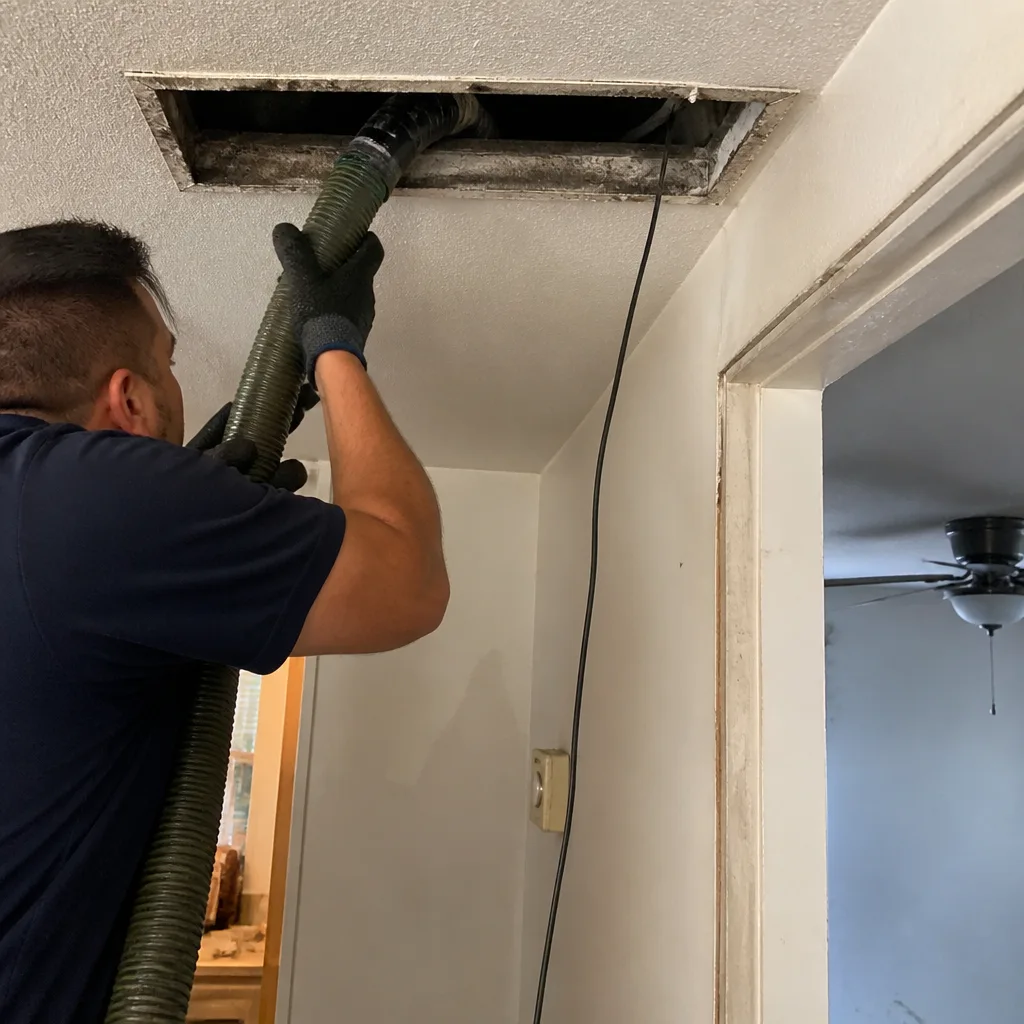 Before
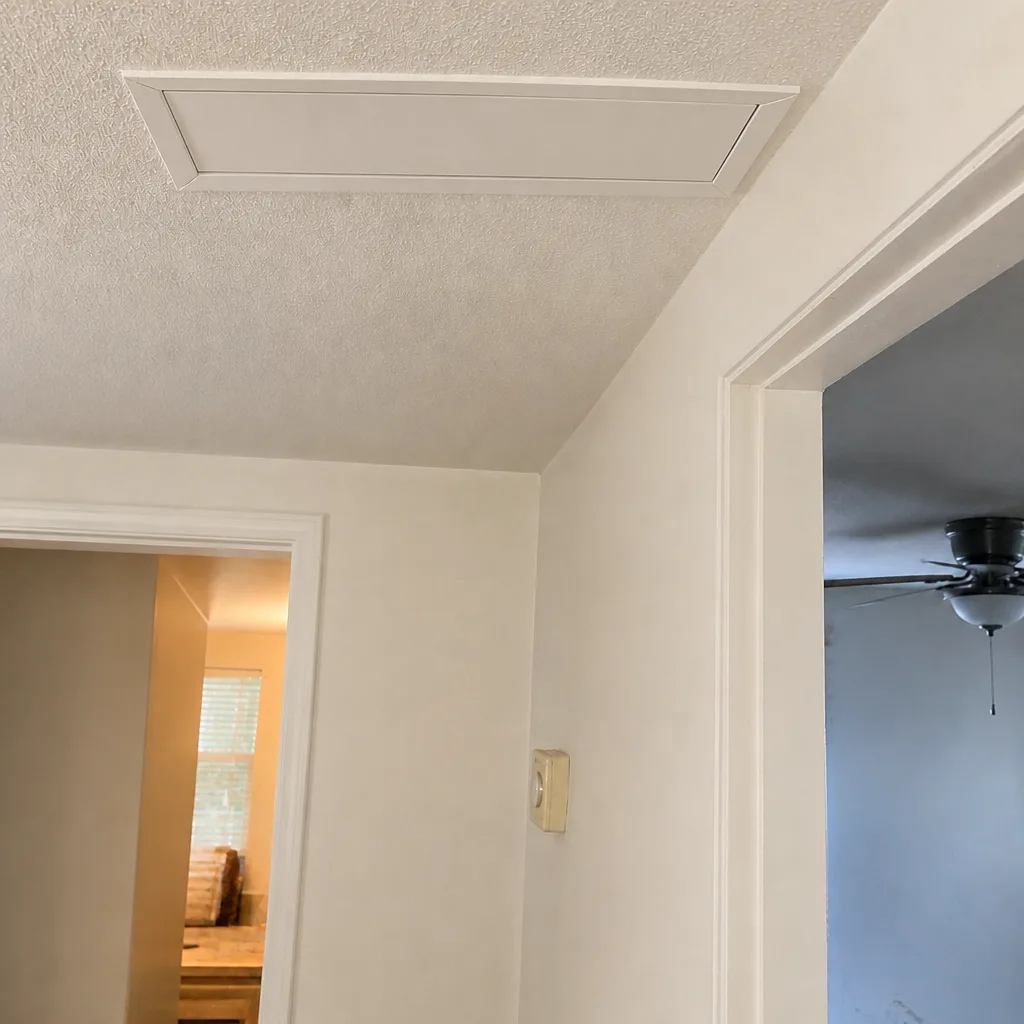 After
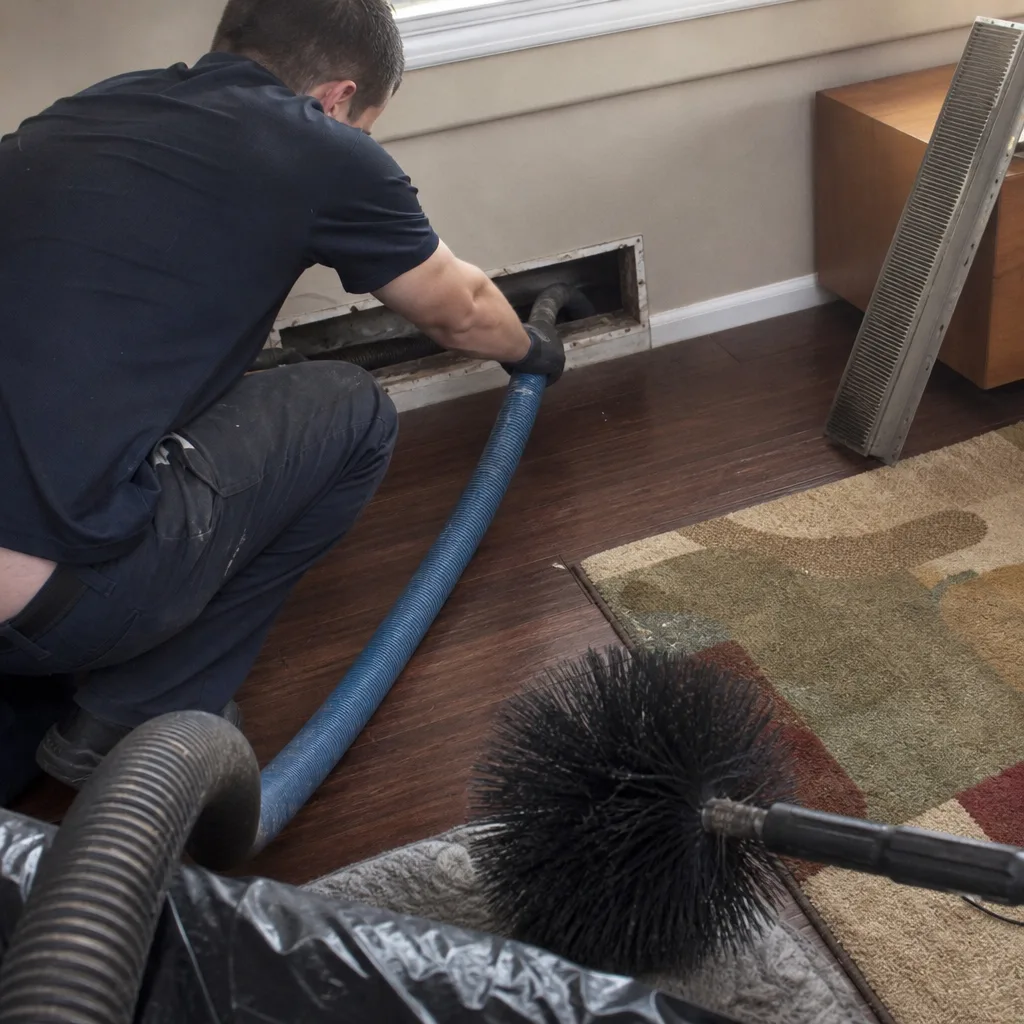 Before
 After
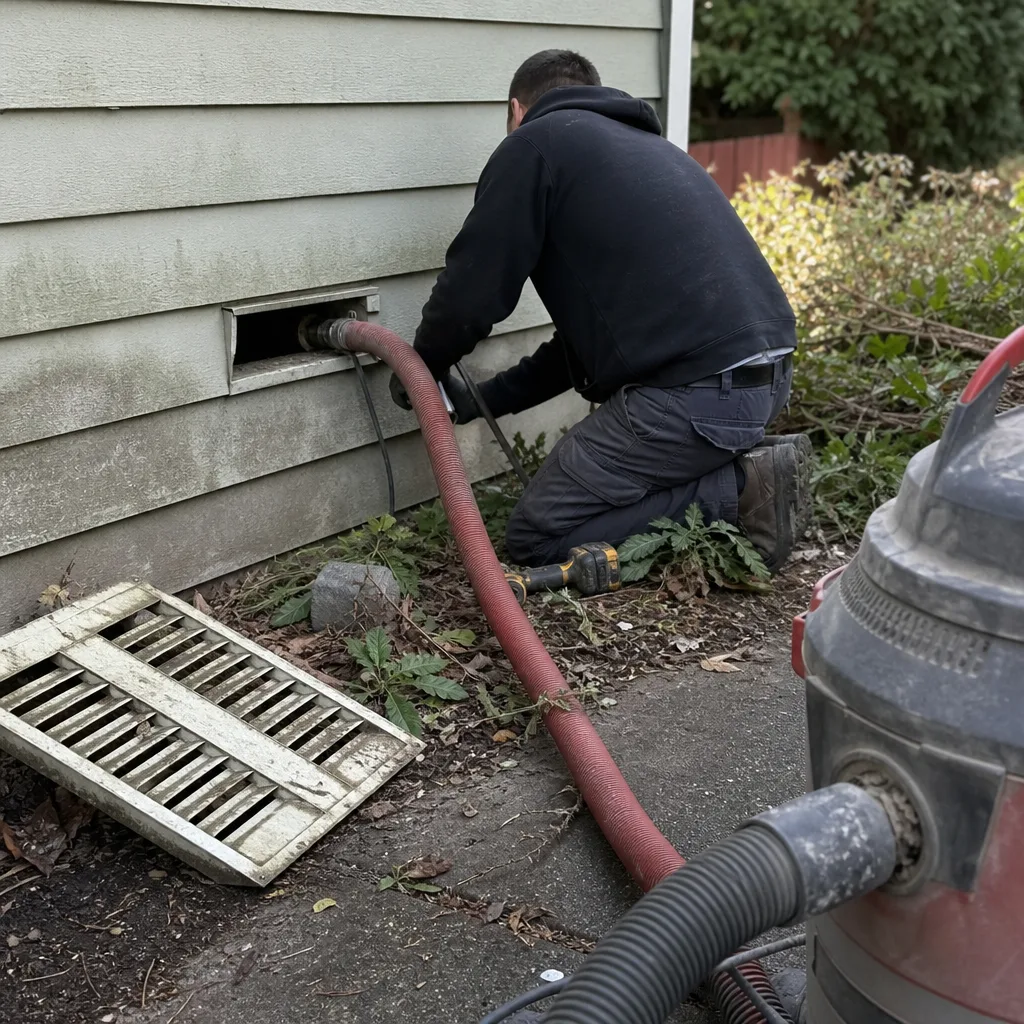 Before
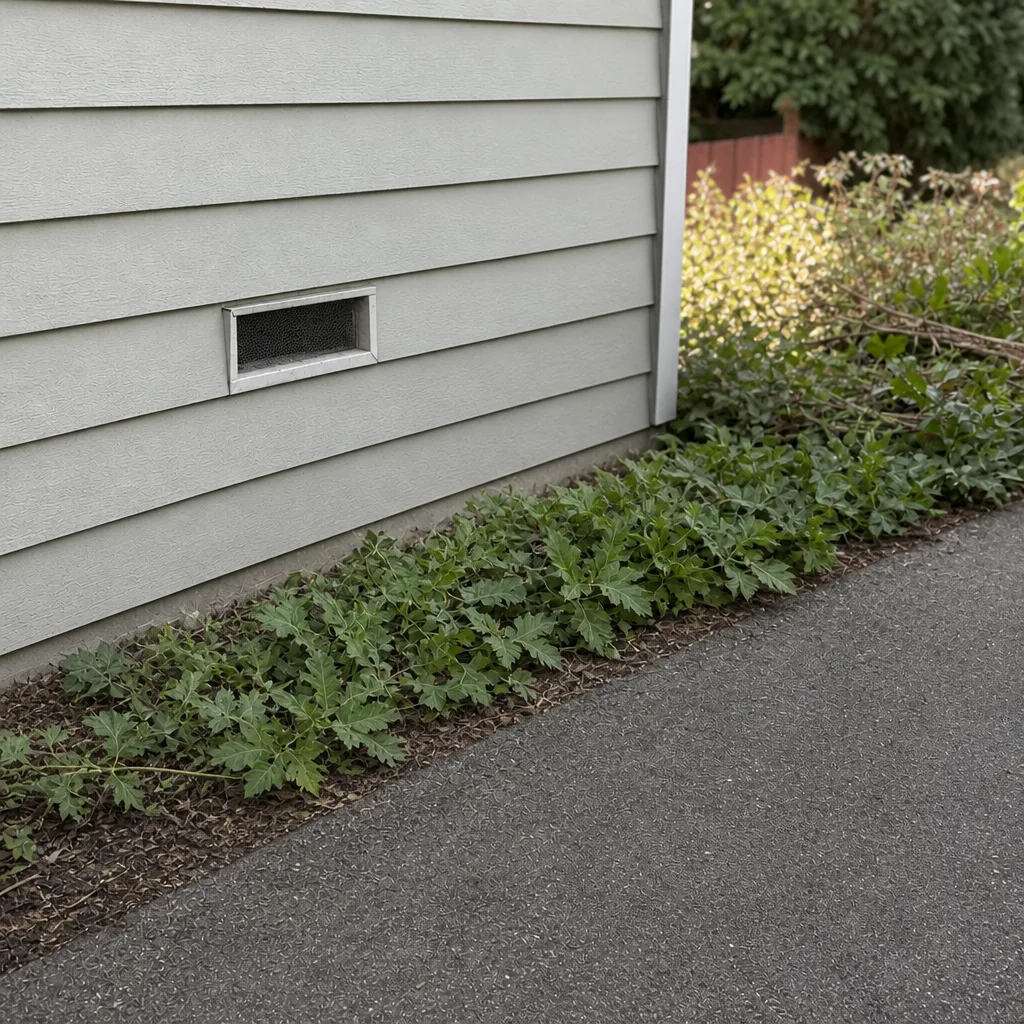 After