
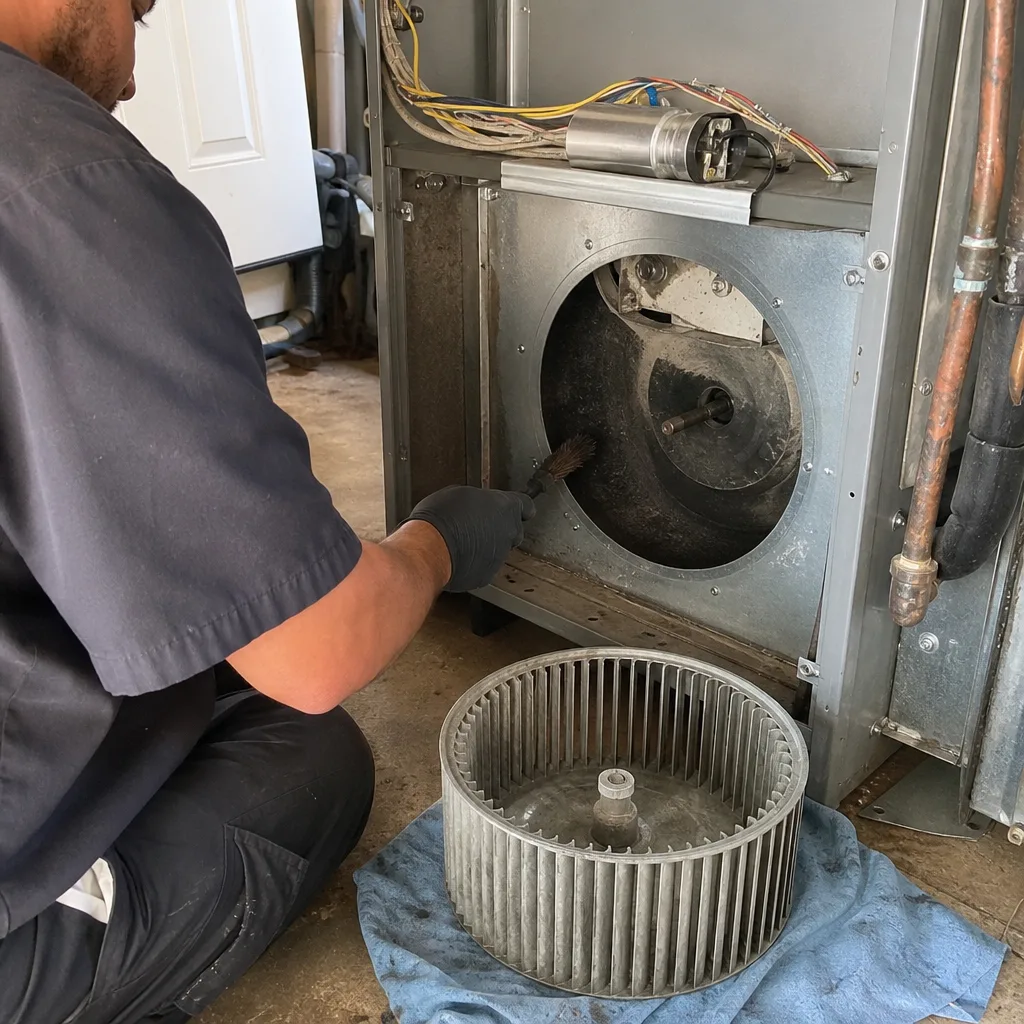
Last updated November 25, 2026
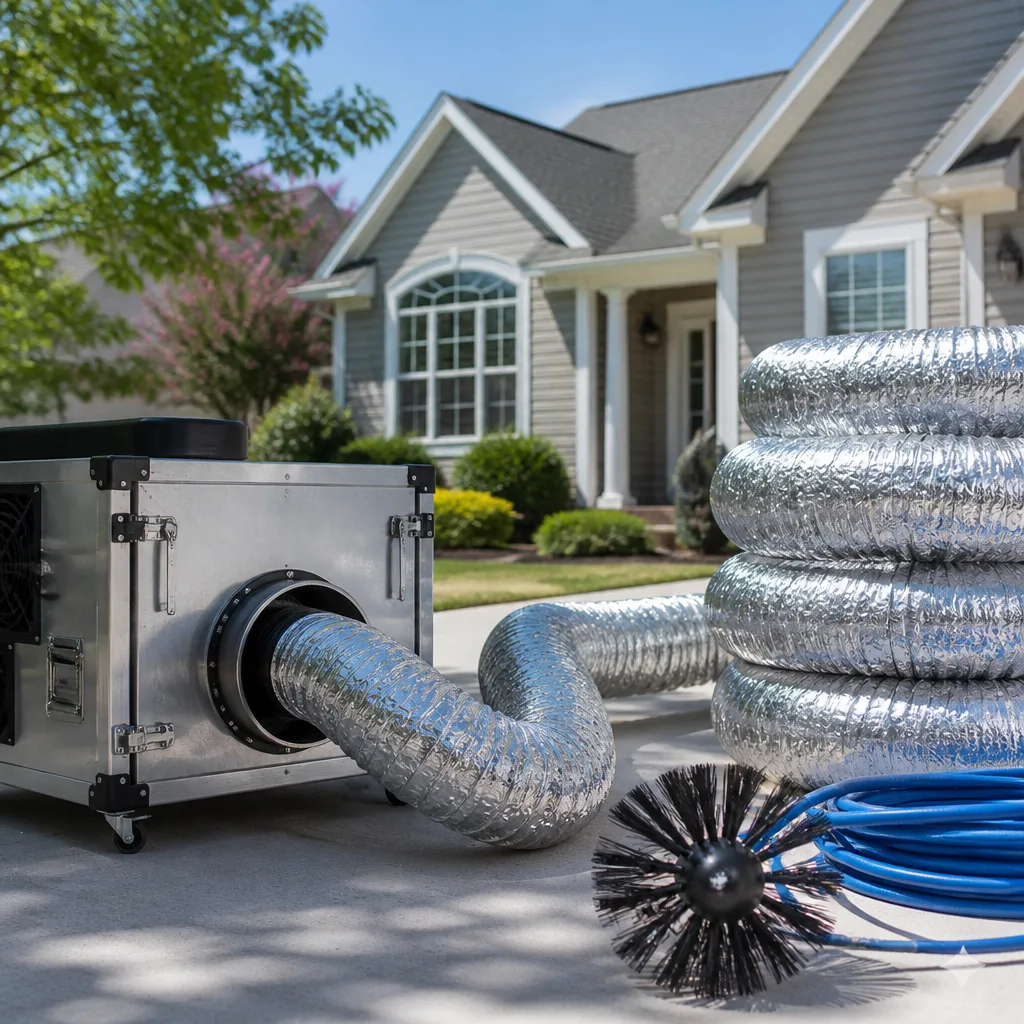 Whole-home duct cleaning
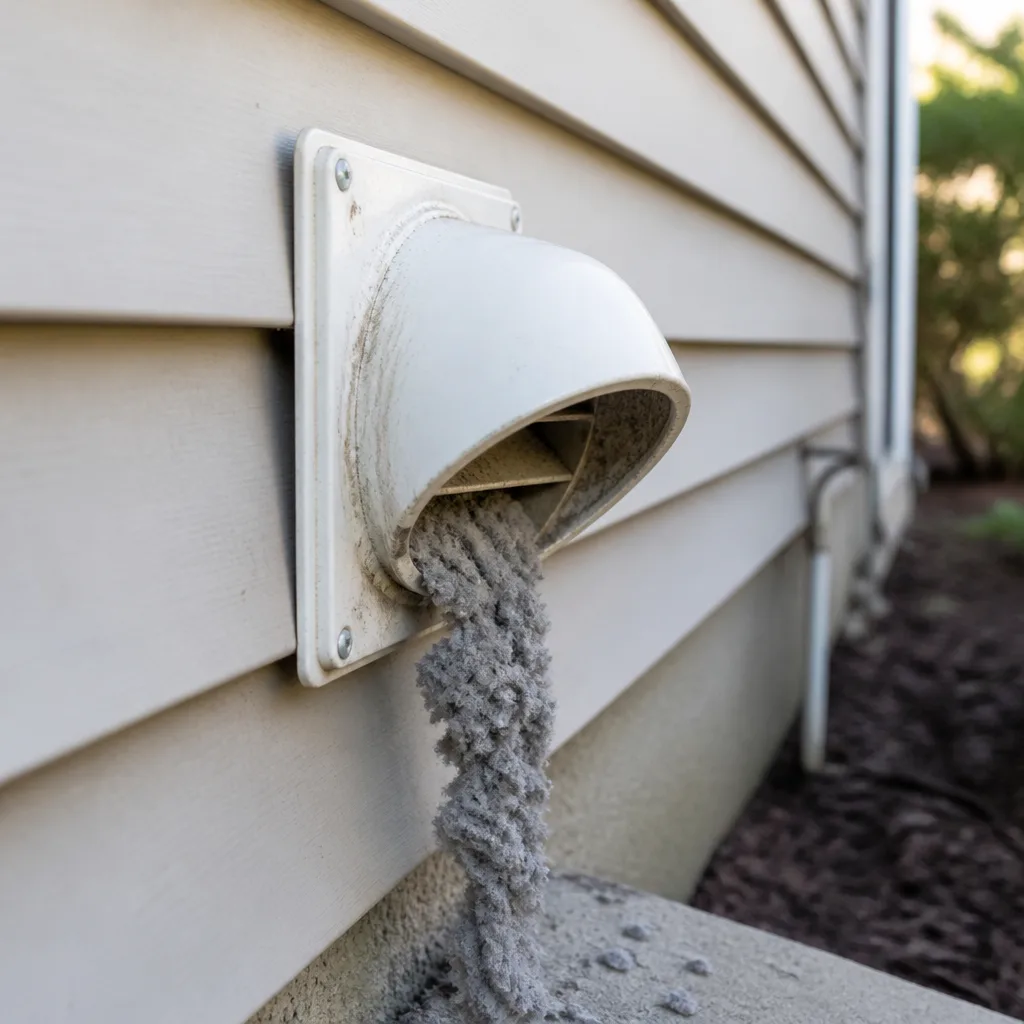 Dryer vent cleaning
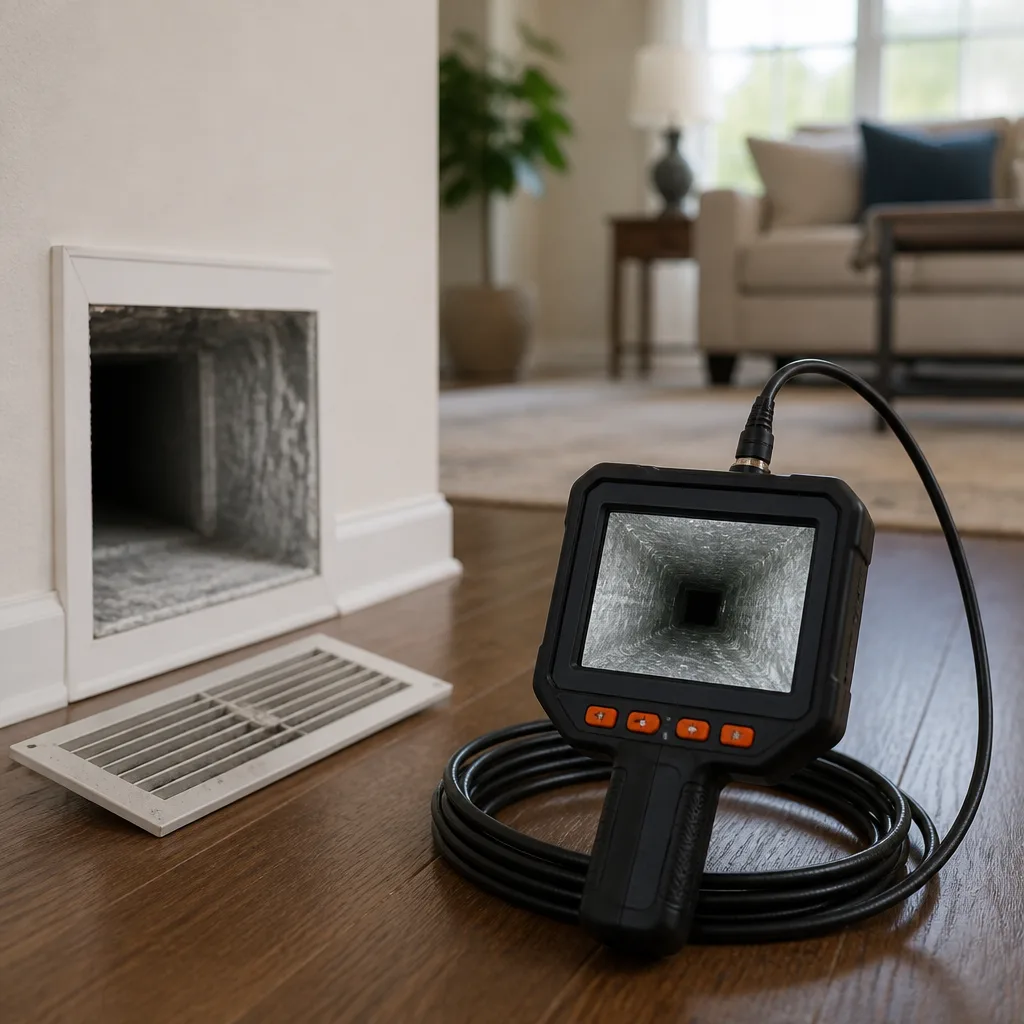 Camera inspection
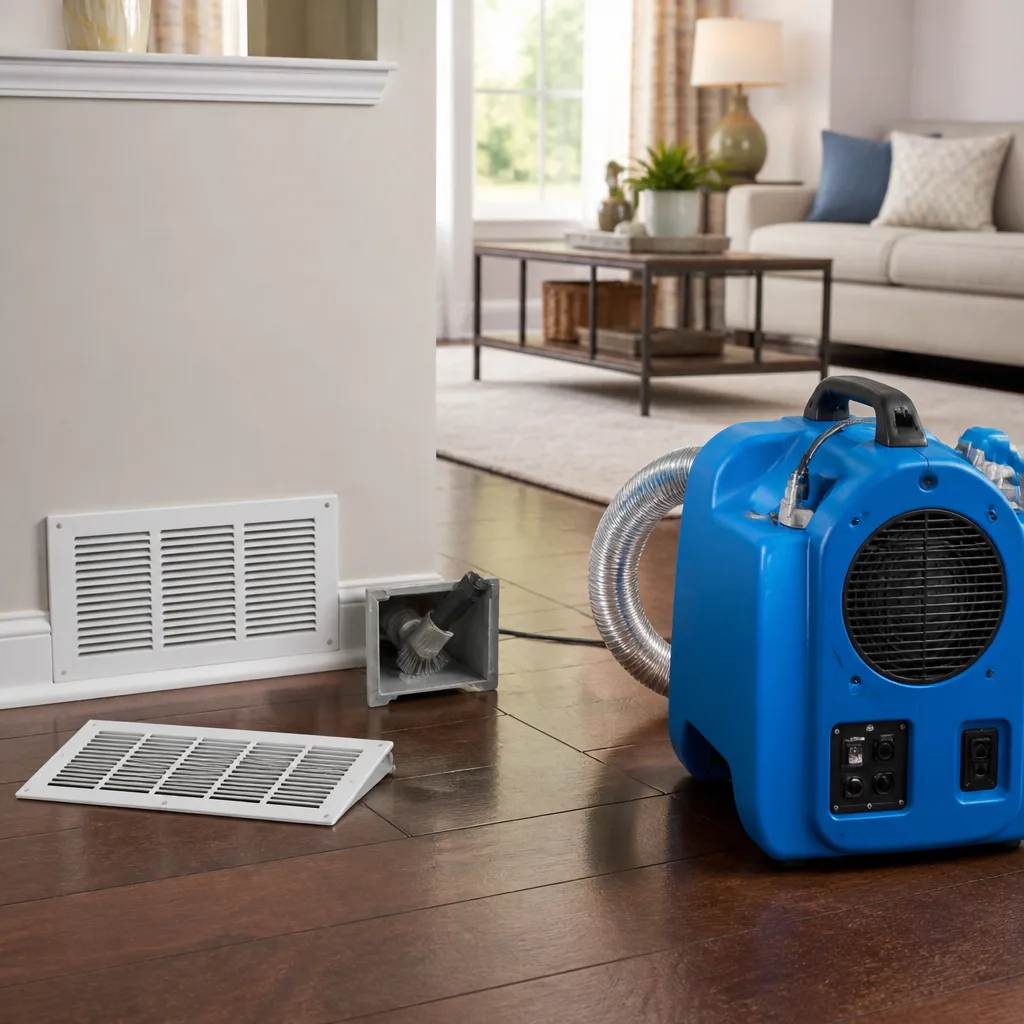 Sanitizing & deodorizing
Whole-system duct and dryer vent check with before-and-after photos - you see exactly what came out of your vents
That "$99 whole-house special" is a bait ad - the real number appears once they are in your hallway, or the "clean" is a shop-vac at the register. We photograph the inside of your ducts before and after instead.
DIY vs Professional Air Duct Cleaning: The Renton Homeowner’s Decision Guide
Most homeowners assume the gap between a shop vac and a professional duct cleaning comes down to effort or price. It doesn’t. It comes down to airflow and the physics of containment. A 6-gallon shop vac moves roughly 55 cubic feet per minute of air; the equipment a genuine IAQ contractor brings runs into the thousands of CFM with HEPA filtration and negative-pressure control. That’s not a difference you close with a longer hose and a fancier brush kit. In Renton, where older postwar housing stock near the downtown core sits alongside newer construction up the Renton Highlands, the debris that matters most tends to settle where only real negative pressure reaches it. This guide explains exactly where the DIY line sits, what you can legitimately handle yourself, and what you should never attempt with consumer tools.
Quick Answer
For light surface maintenance like register cleaning and filter inspection, DIY is genuinely useful. For source removal – actually pulling accumulated debris out of the duct system rather than redistributing it into the air – professional equipment is the only approach that works, because consumer tools cannot generate sustained negative pressure or true HEPA capture. A professional service makes sense for most Renton homes older than ten years, any home with occupants who have respiratory sensitivities, and any system coming off a renovation or known moisture problem.
Styles & brands we work with
- Whole-home duct cleaning
- Dryer vent cleaning
- Camera inspection
- Sanitizing & deodorizing
Table of Contents
- Why DIY Duct Cleaning Fails on Physics, Not Effort
- What Renton Homeowners Can Legitimately Do Themselves
- Why Brush Kits Sold Online Can Make Things Worse
- The Scenarios Where DIY Is Actually Sufficient
- What Equipment Capability to Verify Before You Hire
- Is Professional Cleaning Justified in Your Renton Home?
- Why Whole-System Scope Beats One-Trick Cleaning
- Common Mistakes to Avoid
Why DIY Duct Cleaning Fails on Physics, Not Effort
The core issue is negative pressure. Professional duct cleaning works by sealing the system, pulling a strong vacuum downstream, then agitating debris upstream so it travels toward the extraction point instead of into your living space. That requires two things a shop vac cannot deliver: high enough continuous CFM to move debris through long duct runs, and HEPA-level filtration on the exhaust side so whatever does get airborne is captured rather than pushed back into the room.
Here’s what the numbers actually look like. A consumer 6-gallon shop vac produces around 55 CFM at the hose. Purpose-built professional systems from brands like Rotobrush and Nikro are engineered to move several times that volume continuously, and truck-mounted Abatement Technologies equipment can reach into the thousands of CFM with proper HEPA containment. The difference is not a marketing pitch – it’s a measurable capability gap that determines whether debris leaves the system or merely changes address inside it.
When a homeowner runs a household vacuum into a duct, one of two things happens. Either the vacuum can’t overcome the static pressure of the duct run and simply tumbles surface dust without extracting it, or the vacuum pushes air past the filter and re-releases fine particulate into the room, briefly raising the very air quality problem the homeowner was trying to solve. Neither outcome is source removal.
What makes this genuinely frustrating is that the visual evidence is misleading. The register face looks cleaner after a quick vacuum pass. The carpet near the supply looks less suspicious. But the accumulations that matter – settled fines along the bottom of trunks, biological growth at seams, debris packed against the plenum – never moved. In our experience across Renton homes, the debris sitting at the bottom of a return trunk is often the exact debris the homeowner was trying to reach when they bought a brush kit. It’s still there when we arrive.
What Renton Homeowners Can Legitimately Do Themselves
There’s real work homeowners can and should do between professional cleanings. None of it involves running tools down a duct, but all of it materially extends the time between services and keeps small issues from becoming big ones. These are the tasks that don’t require negative pressure, HEPA filtration, or specialty extraction equipment:
- Clean the return and supply registers. Pop each grille off, wash it in a sink with mild soap, dry it fully, and wipe the frame. This is the single most effective DIY step because the grille collects everyday airborne dust before it enters the system.
- Inspect the filter slot monthly. Pull the filter, hold it up to a light. If you can’t see through it, replace it. This is especially relevant in Renton during the wetter shoulder seasons, when indoor humidity climbs and a loaded filter turns into a damp surface that grows odor between changes.
- Check accessible filter grilles and air-handler closets for visible dust load. A flashlight along the filter frame edge will show whether dust is bypassing or building up at the filter seat.
- Confirm the return is pulling. Hold a piece of tissue paper against each return grille while the system runs. It should be pulled firmly against the grille. Weak pull suggests a filter restriction, disconnected flex duct, or damper issue worth investigating before it becomes an air quality problem.
- Vacuum within a foot of registers using a HEPA-equipped household vacuum. This reduces the immediate debris reservoir that finds its way in through normal foot traffic.
If you have an access panel on the plenum (common on newer construction in the Renton Highlands and in Talley Farm area builds), you can look inside with a flashlight to see whether debris is coating the interior. Photograph what you see, but do not put your hand inside – ductwork can host sharp sheet-metal edges and mechanical linkages.
What Not to Attempt
Do not run a shop vac, leaf blower, compressed air, or consumer brush kit down a duct. Do not open sealed ductwork to insert a hose. Do not spray sanitizers or deodorizers into ductwork unless they are designed for HVAC interiors. The combination of high-velocity agitation with no containment is the exact failure mode that turns a “duct cleaning” into an indoor-air-quality flare-up.
Why Brush Kits Sold Online Can Make Things Worse
A brush kit only addresses half the equation. Agitation without simultaneous extraction is not source removal – it’s redistribution. Online kits from major retailers and direct-from-manufacturer DIY product lines typically include a flexible rotary brush that attaches to a household drill, a shop vac adapter, and a short length of hose. What they cannot include is the CFM and filtration to capture what the brush frees up.
This is why owners often report that their air feels dustier for a few days after a DIY cleaning attempt. That’s not a coincidence. The brush has scrubbed loose particulates from the duct wall, but the vacuum attached to the other end has neither the flow rate nor the sealed-capture filtration to trap them. Fine particulate rides out through registers and gets deposited into the room’s air column and onto surfaces.
What specialists watch for is not the dust that just happened (the tumbling fines will fall out of the air in time) but what happened to the biological and moisture complexes along seams. Agitating a lightly damp accumulation along the bottom of a trunk is one of the worst things that can be done to it. The microbial film gets fractured and discharged as aerosol instead of extracted and contained. This is why the professional process requires negative pressure upstream of any agitation tool, and it’s why we won’t recommend a brush kit even as a supplement to a professional cleaning.
There’s also a real risk of physical damage. Rigid brushes attached to drills routinely snap inside flex duct when they hit an elbow at speed, or scuff the inner liner of flexible runs. A compromised liner in a flexible duct is a restriction that continues to cost you airflow for the life of that section. If you want to understand what professional cleaning actually looks like inside a system, read about air duct cleaning – it explains the process no consumer tool can replicate.
The Scenarios Where DIY Is Actually Sufficient
DIY is enough when the system is young, was recently professionally cleaned, and the home’s indoor environment is stable. In those cases, the light maintenance covered above is not just sufficient – it’s genuinely what the system needs. Running a full professional cleaning every year on a ten-year-old system that’s never had water intrusion, pet dander issues, or renovation work is money spent for no measurable improvement.
DIY is also reasonable when the problem is clearly localized to the registers or filter. A house that just needs cleaner grilles, a fresh filter, and better dusting habits does not need extraction equipment. Here’s the straightforward split:
- DIY-appropriate: register and grille washing, filter replacement, visible dust on accessible filter frames, light seasonal checks.
- Not DIY: post-renovation drywall dust or construction debris, any visible biological growth on duct components, musty odor coming from supply registers, pest activity evidence inside the system, a system that has never been cleaned in a home older than ten years, and any situation where an occupant has asthma or other respiratory sensitivity.
That last category is where DIY creates the strongest false sense of completion. A homeowner with a post-renovation dust problem who tries a brush kit and a shop vac has done nothing to the fine drywall dust that’s settled deep into trunk runs, but the visible registers look cleaner and the house “feels” better for a few days. The dust re-settles, and the assumption becomes that duct cleaning doesn’t work – which is a false conclusion. The correct diagnostic is whether the tool could have possibly reached the problem.
In Renton, the humidity pattern matters here. Western Washington’s wet season keeps indoor air damp enough that fine dust has a tendency to cling rather than float, so accumulations stay put through a mediocre DIY attempt and only get visibly disrupted when they’re pushed with real velocity. If you’re already seeing musty smells during the rainy months, that’s a strong signal that the problem is deep in the system and is a professional call.
What Equipment Capability to Verify Before You Hire
Not all professional duct cleaning is created equal, and this is where a lot of Renton homeowners get caught. A generalist HVAC company will sometimes show up with a commercial-grade wet/dry vac and a brush head and call it duct cleaning. That setup, useful as it is for filter changes and coil cleaning, is not source-removal equipment. Here’s what to actually look for when you’re vetting:
- Named equipment brands. Rotobrush and Nikro systems are purpose-built for residential duct cleaning and are what working IAQ contractors use. Ask directly what equipment will be on site.
- HEPA filtration on the exhaust. The vacuum pulls air through a HEPA filter before returning it to the room. Without this, the cleaning is pushing fine particulate back into your living space.
- Negative-pressure capability. Abatement Technologies-style equipment allows the technician to seal the system and pull it under negative pressure during cleaning, so agitated debris travels toward the extraction point, not out of registers.
- Airflow rating of the extraction system. If the contractor can’t tell you roughly what CFM the system produces, they’re either working with consumer tools or they haven’t been trained on what matters.
- Scope of cleaning. A proper professional clean covers supply ducts, return ducts, the plenum, and the air handler face. Anyone quoting a low figure for “duct cleaning” but not addressing the return side is skipping half the system.
- Camera inspection capability. Before-and-after camera access inside the ducts is the only objective evidence of what was done.
Ask the contractor to send or show a photo of the equipment before booking. A true IAQ contractor will not hesitate; a generalist will usually dodge the question. If they can’t name what they’re bringing, they aren’t equipped to remove what’s actually in your system.
Where Honeywell and Aprilaire Fit In
If your home already has a Honeywell or Aprilaire IAQ system – filtration cabinet, whole-home humidifier, ERV – the cleaning has to be compatible with it. The filter cabinet creates a specific filter slot that debris can wedge into, and the humidifier pad or ERV core needs to be removed and stored during extraction. A contractor familiar with these product lines will handle that without damaging the equipment; a generalist often won’t.
Is Professional Cleaning Justified in Your Renton Home?
Whether a professional cleaning is worth the cost depends on four variables you can actually assess yourself. Run through this list honestly:
- System age. Any duct system older than ten years that has not been professionally cleaned is a strong candidate. Older housing stock – especially postwar homes in central Renton – tends to have longer duct runs and more accessible debris.
- Occupant health. Anyone in the home with asthma, allergies, or immune sensitivities changes the equation immediately. The same debris load that produces a tolerable dust level for one household can be an ongoing trigger for another.
- Time since last service. Five to seven years is the general interval for a well-maintained home. Two to three years is reasonable for homes with pets, high dust exposure, or near active construction.
- Recent triggers. A remodel, pest issue, water intrusion event, or move-in to a previously occupied home all justify a one-time professional clean regardless of interval.
When more than one of these signals is present, DIY isn’t going to get there. When all four are favorable – newer system, healthy occupants, recent cleaning, no triggers – the honest answer is that your money is better spent on filter changes and register cleaning for now.
The one thing to understand going in is that rents for “professional” duct cleaning vary widely, and cheaper quotes often reflect a shop-vac scope at a professional headline price. The right question isn’t “how much will this cost” but “what equipment is going to be in my house, and what does the process look like.” Once that’s clear, the pricing conversation is straightforward.
Why Whole-System Scope Beats One-Trick Cleaning
The ductwork is one component of an air pathway that also includes the air handler, evaporator coil face, return trunks, and dryer vent. A crew that only cleans the supply ducts has left half the system untouched, and any debris in the return trunk will simply redistribute into the freshly cleaned supply side within a season. Whole-system cleaning means every part of the path gets attention in a single visit.
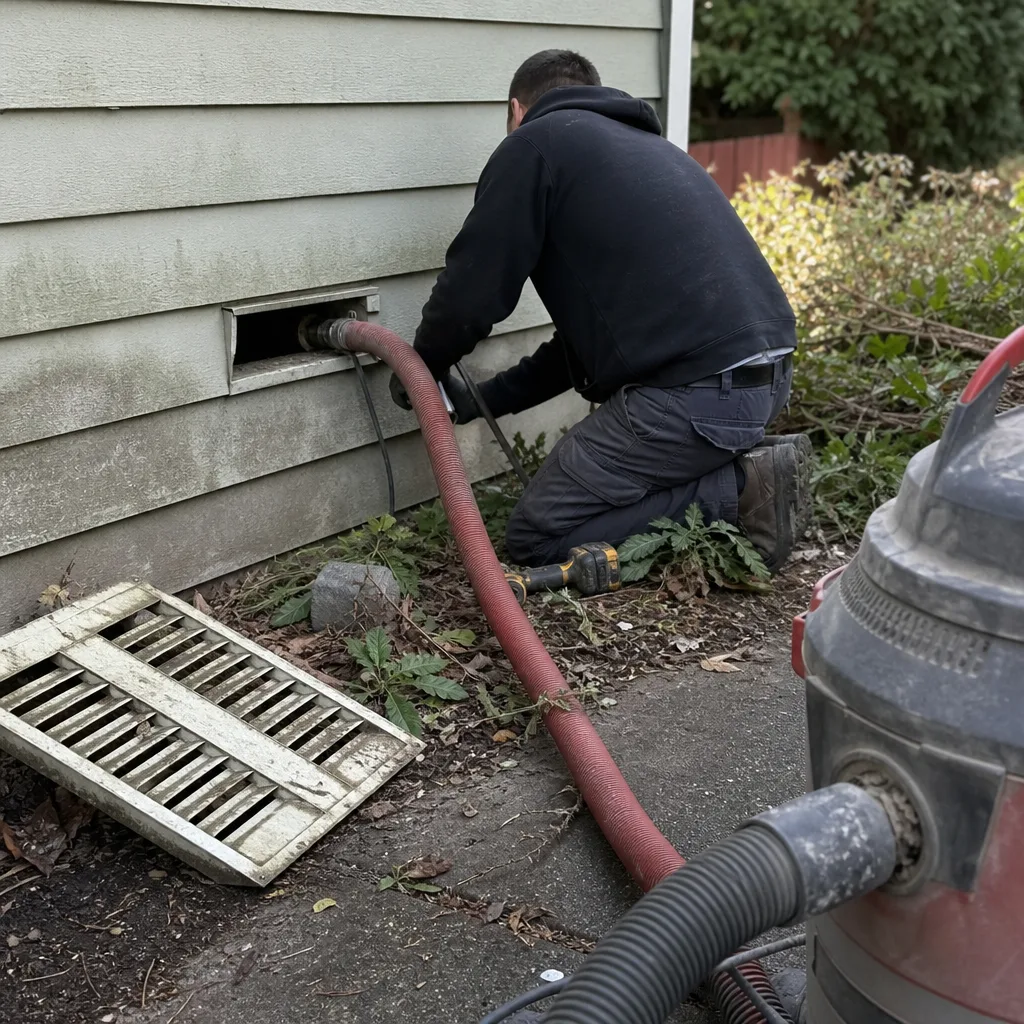
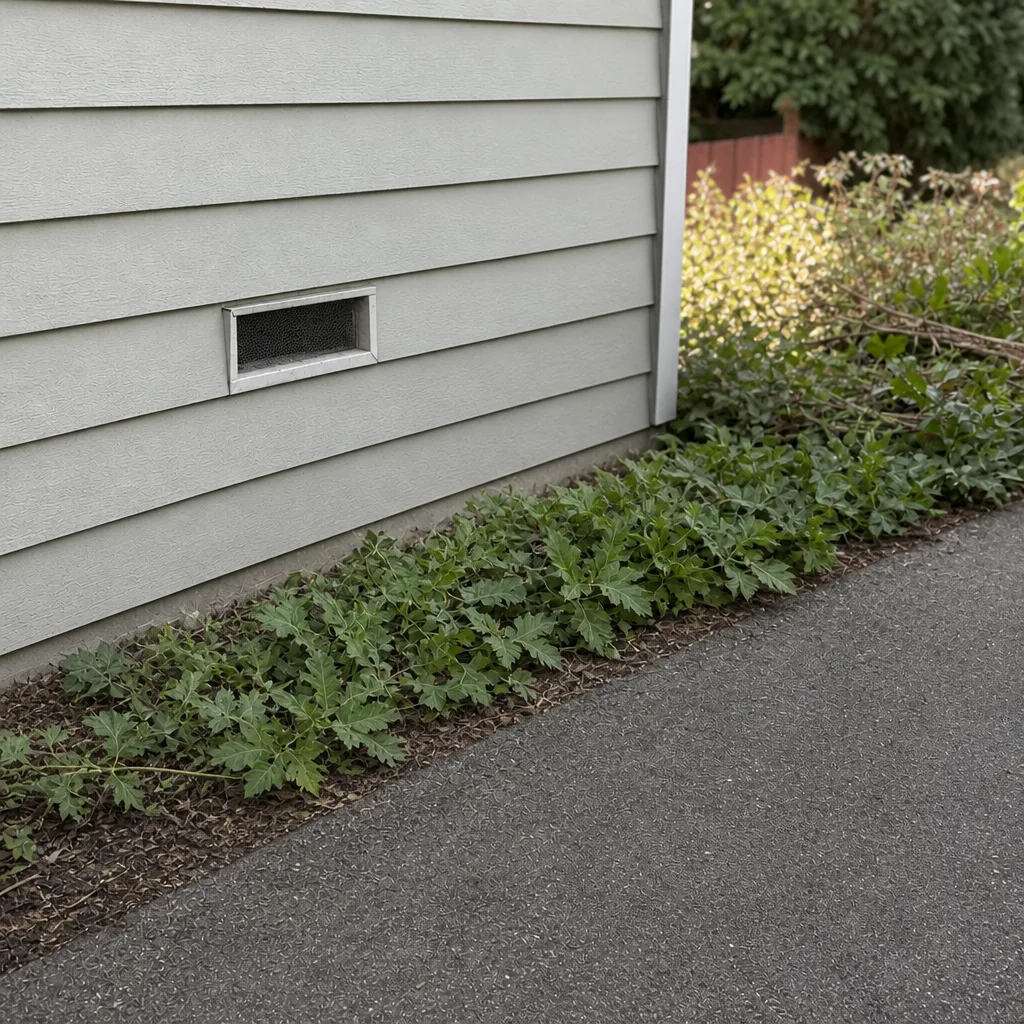
That logic extends to dryer vent cleaning. The dryer vent is a separate airflow path with its own lint accumulation risk and its own reasons for professional cleaning (lint fires are a known hazard, and dryer vents are frequently blocked by long runs or multiple elbows). A single visit that handles ducts and dryer vent saves the inconvenience of a second appointment and catches problems that a duct-only or vent-only provider would miss.
Similarly, the HVAC cleaning side of the system matters. The air handler cabinet and coil face routinely accumulate dust and biological film that supplements what’s entering the ducts. Cleaning the ducts without cleaning the air handler is like mopping a floor while ignoring the countertops – the source keeps depositing.
The last piece is repair. When cleaning reveals compromised ductwork – disconnected flex runs, unsealed seams, torn liners – the correct response is to repair it on the same visit, not hand the homeowner off to a second contractor. Duct Repair & Sealing done by the same crew that just cleaned the system means the fix matches the finding, and there’s no gap of weeks during which the freshly cleaned system re-contaminates.
What Sanitizing Adds
For systems with confirmed biological growth or persistent odor, an IAQ sanitizing step after cleaning is what closes the loop. This is where named product lines like Guardsman become relevant – the treatment needs to be compatible with the duct materials and with any IAQ equipment already installed. Sanitizing without a clean surface underneath does nothing; sanitizing after a proper extraction is what stops the film from re-establishing.
Common Mistakes to Avoid
- Renting a shop vac thinking you’ll save money. Two things typically go wrong: the vacuum’s CFM can’t move settled debris, and its filtration can’t contain the fines it does agitate. You’ve spent an afternoon and made the indoor air temporarily worse.
- Using online brush kits as a supplement. A brush with no simultaneous extraction materializes dust into the room air. It also frequently snaps inside flex duct or damages the liner, creating a restriction that lasts for the life of that run.
- Assuming cleaner registers mean cleaner ducts. The face of the grille is the least diagnostic part of the system. The bottom of the return trunk, the plenum interior, and the air-handler face are where the real accumulation lives.
- Booking based on the lowest quote. A quote that’s a fraction of typical professional rates is almost always a shop-vac scope under a professional headline. Ask what equipment is being brought before you book.
- Skipping the return side. Some cleaners only address supply ducts because it’s faster. Debris in your return trunk feeds back into the system, so a supply-only “cleaning” doesn’t solve the problem.
- Ignoring the dryer vent separately. The dryer vent is a distinct duct path with a distinct hazard. If the professional you’re considering doesn’t handle it, you’ve still got that task to book elsewhere – and that second provider may not do the job as thoroughly.
- Delaying after a renovation. Drywall dust and construction fines are some of the easiest debris to remove professionally and some of the hardest to remove with DIY. Waiting weeks after renovation means more of that dust gets pulled through the blower and spread deeper into the system.
See the difference
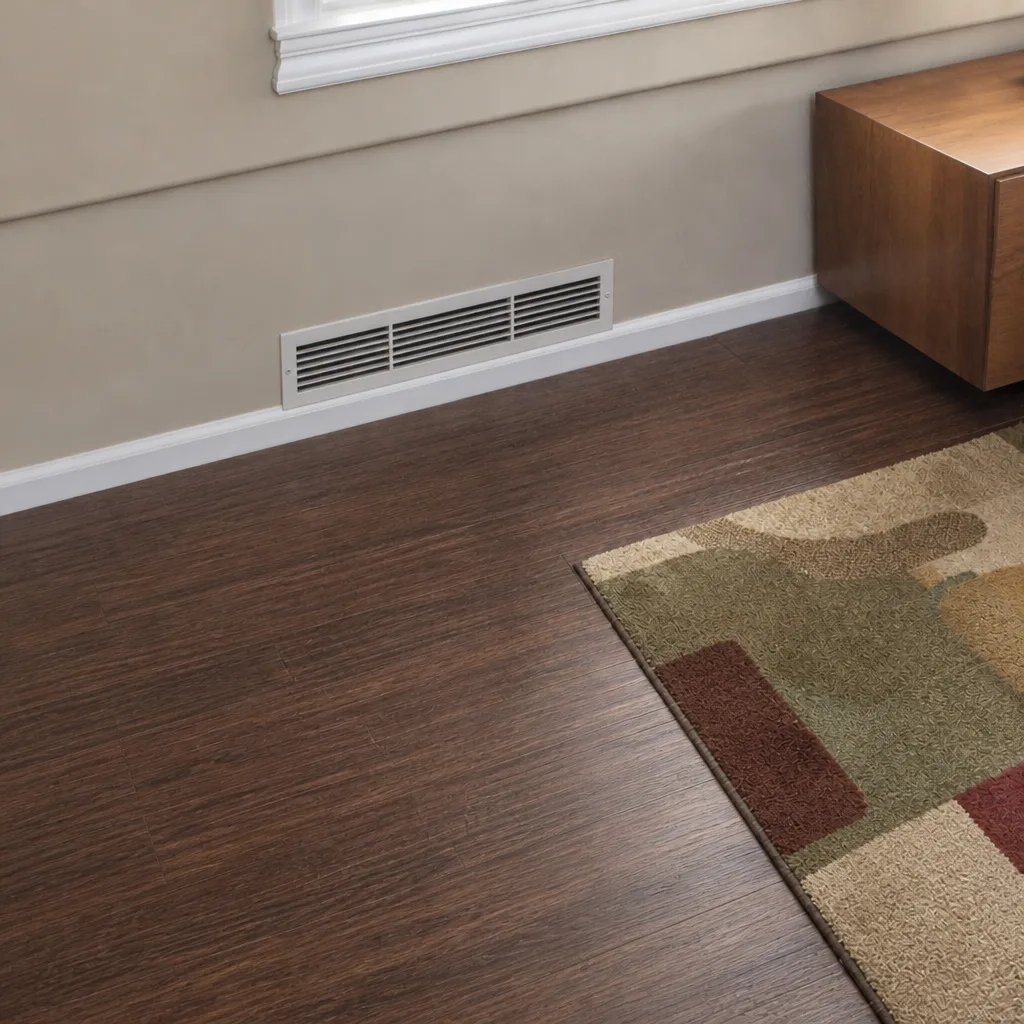
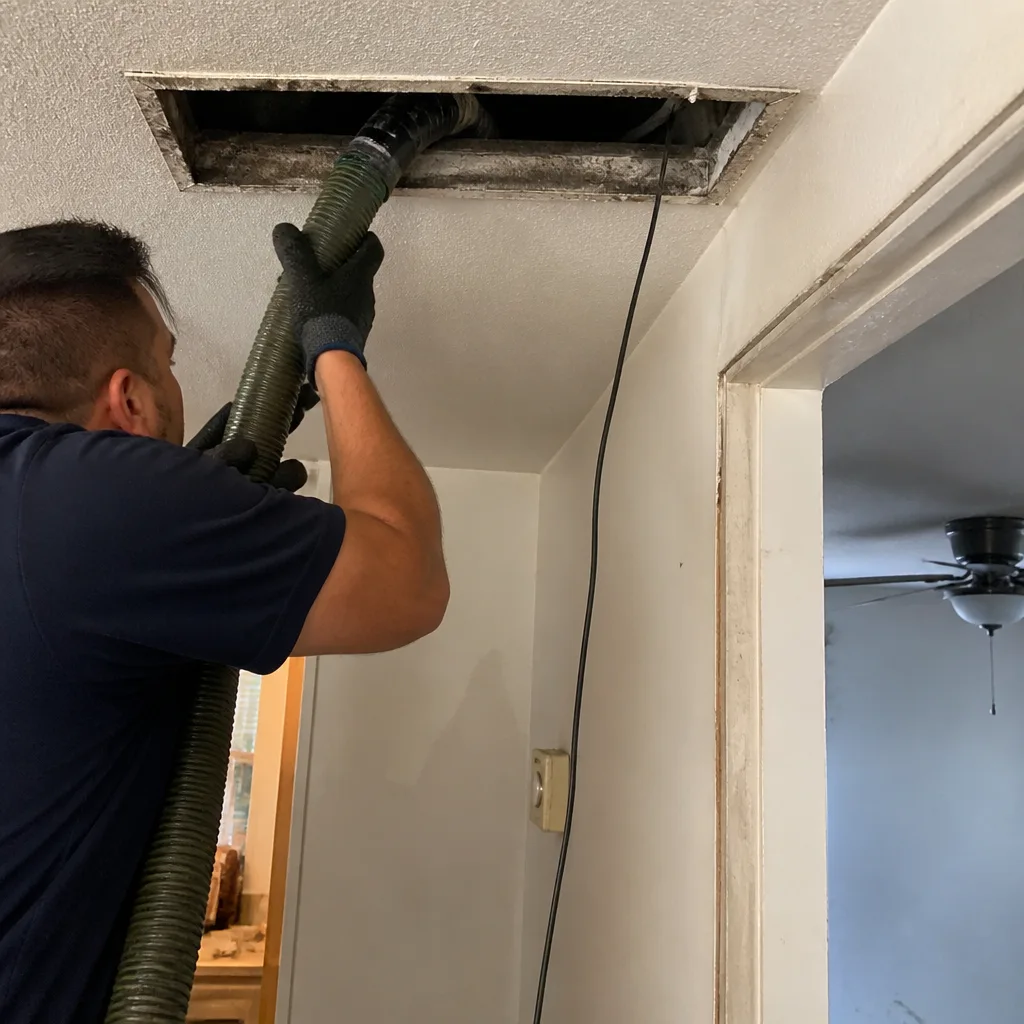 Before
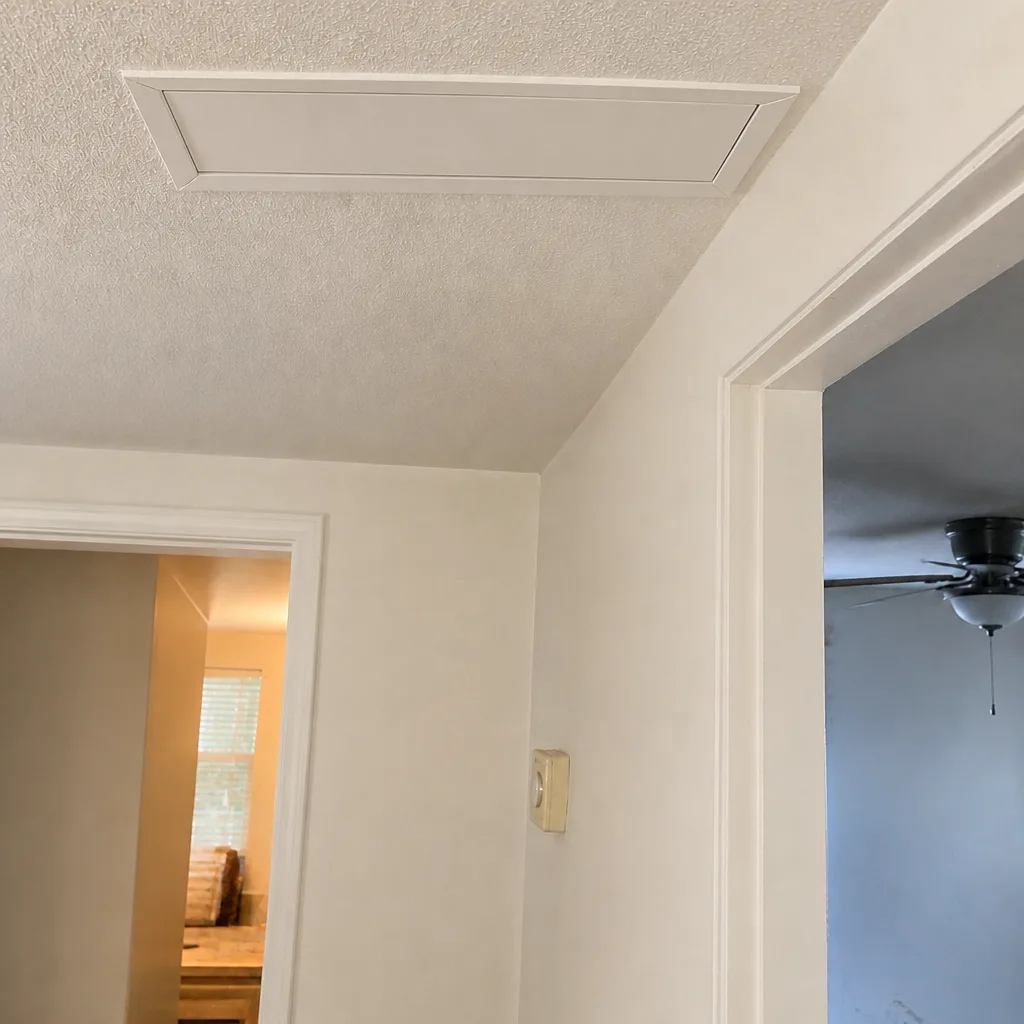 After
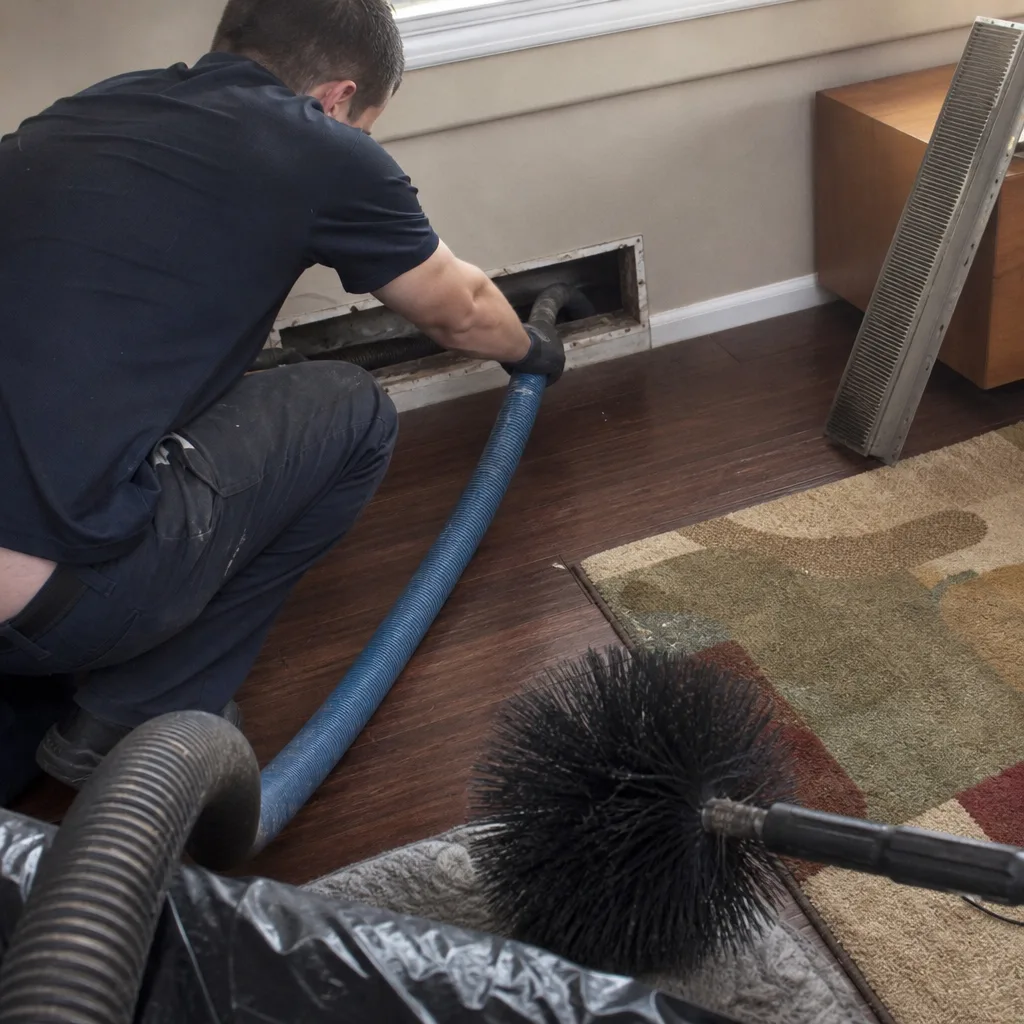 Before
 After
 Before
 After
When to Call a Professional
Call for professional cleaning when any of these are true: your system is ten years or older and has never been cleaned, someone in the home has respiratory concerns, you’ve had recent renovation work or a known water or pest intrusion, you smell musty or dusty odor at supply registers, or you’ve tried DIY and the problem hasn’t changed. There’s no shame in calling after a failed brush-kit attempt – that’s a normal path, and it’s better than continuing to circulate debris through a brush-only approach.
Renton Air Duct Cleaning Pros offers free estimates in Renton – call (888) 423-4218. We answer 24/7. Fast dispatch from 7am to 7pm, Sunday through Friday. The estimate is free, the price is set per job by the written estimate before any work starts, and you get before-and-after photos of your own system so you can see exactly what changed.
Frequently Asked Questions
It can be, primarily because consumer tools agitate debris without capturing it. Running a shop vac or brush kit into ductwork typically lifts fine particulate into the room air rather than removing it, and biological film on duct seams can aerosolize in ways that visibly worsen indoor air quality. It’s not that DIY is dangerous every time – it’s that the odds of making the air worse are high enough that a professional clean is the safer move. Call (888) 423-4218 for an exact quote – estimates are free.
Every five to seven years for a well-maintained home with no triggers; every two to three years for homes with pets, high dust load, or near active construction. A system that’s never been cleaned and is older than ten years should get a one-time professional clean regardless. Skips aren’t a safety issue in most cases, but the interval matters because debris that sits long enough is harder to extract. Call (888) 423-4218 for an exact quote – estimates are free.
Purpose-built extraction equipment – Rotobrush and Nikro are the common residential systems – with HEPA filtration and negative-pressure containment. Truck-mounted Abatement Technologies equipment is the higher capability tier. If the contractor can’t name what they’re bringing or how they’ll maintain negative pressure, treat that as a warning sign. Call (888) 423-4218 for an exact quote – estimates are free.
Almost always scope and equipment. A very low quote usually means a shop-vac on a hose, supply-side only, no HEPA filtration, no negative pressure, and possibly no return-side work. That’s not the same service – it’s a different job that happens to share a name. Ask what CFM the equipment produces and whether returns are included before comparing prices. Call (888) 423-4218 for an exact quote – estimates are free.
Before-and-after photos taken inside your own ducts are the standard. Ask the contractor to show you camera footage or photos of the return trunk and plenum before and after – not stock images, your system. That’s the difference between “we cleaned it” and verifiable work. Call (888) 423-4218 for an exact quote – estimates are free.
Yes, mildly. Western Washington’s wet season keeps indoor air damper through the cooler months, which encourages dust to cling to duct surfaces and can support mild biological growth on seams when there’s any moisture intrusion. Homes near the Cedar River corridor or with crawl spaces that get damp seasonally tend to see faster accumulation than dryer inland homes. It’s not a dramatic shift, but if you’re smelling mustiness in the ducts come October, that’s the signal. Call (888) 423-4218 for an exact quote – estimates are free.
The Bottom Line
DIY duct cleaning has a real role – register cleaning, filter inspection, visual access checks – and a real limit: it cannot generate the negative pressure or HEPA filtration that source removal requires. A shop vac’s 55 CFM against a professional system’s thousands is not a gap you close with a better brush. If your Renton home is older than ten years, has respiratory-sensitive occupants, or is coming off a renovation or water event, the professional route is what actually solves the problem. If you’re not sure where you fall, a free estimate is the cheapest diagnostic. Call (888) 423-4218. We answer 24/7. Fast dispatch from 7am to 7pm, Sunday through Friday. One flat price per system agreed before work starts, before-and-after photos of your own system, and repair handled on the same visit if we find compromised ductwork. Start with Renton Air Duct Cleaning Pros and we’ll help you sort out what your system actually needs.
Written by the team at Renton Air Duct Cleaning Pros.