
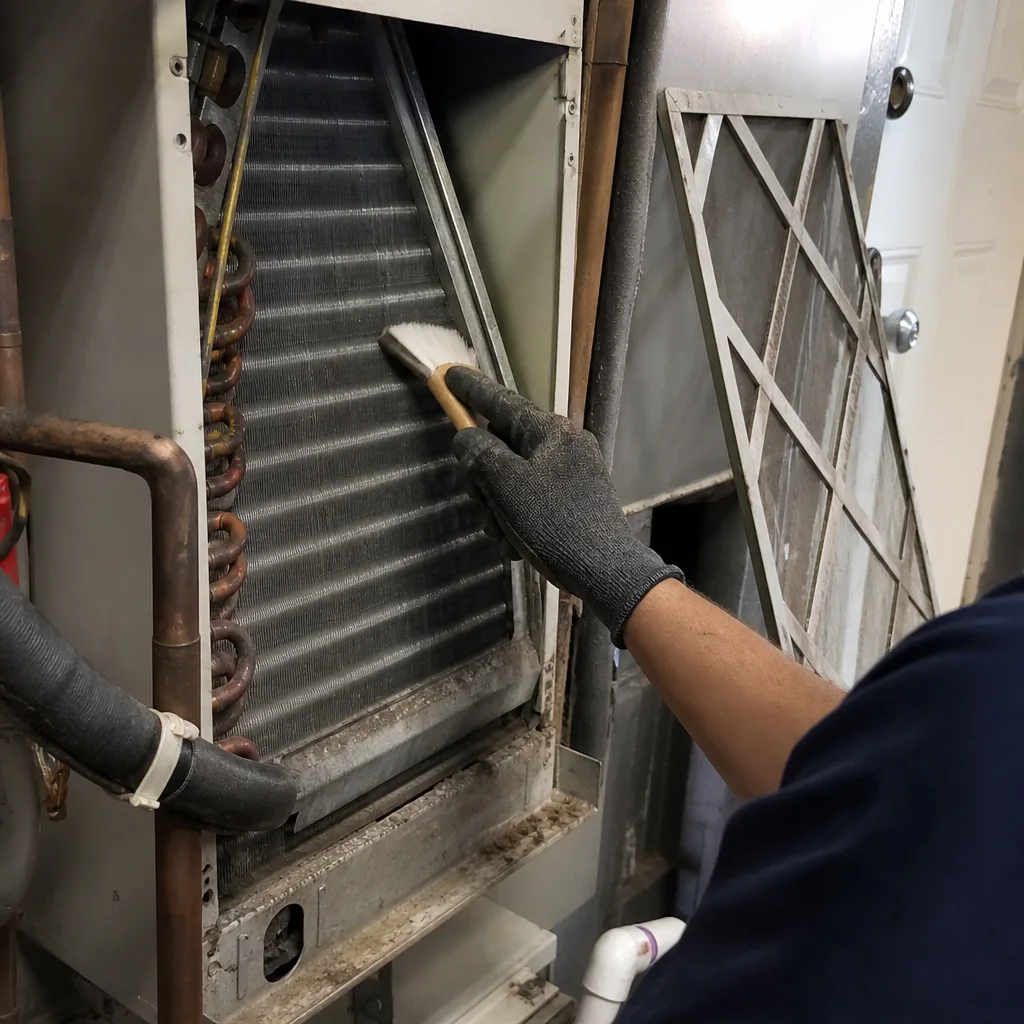
Last updated November 25, 2026
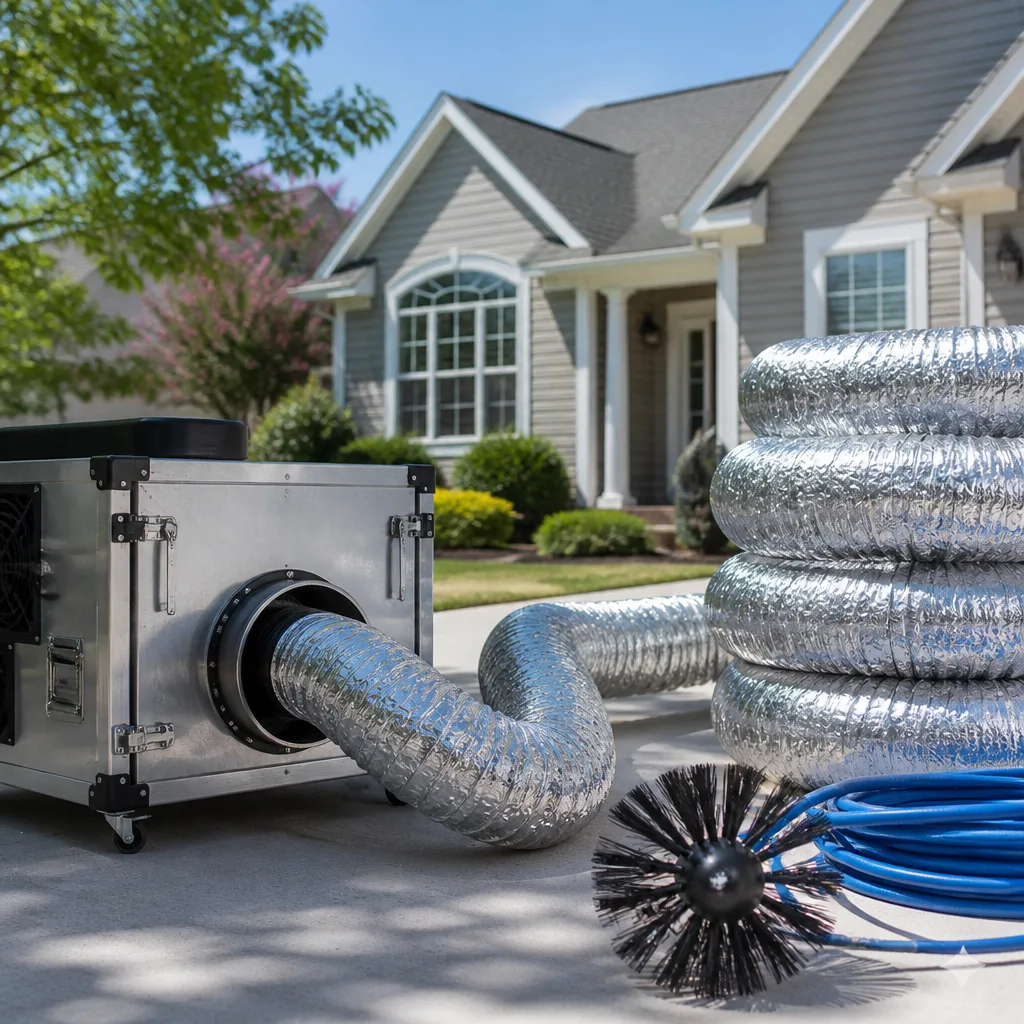 Whole-home duct cleaning
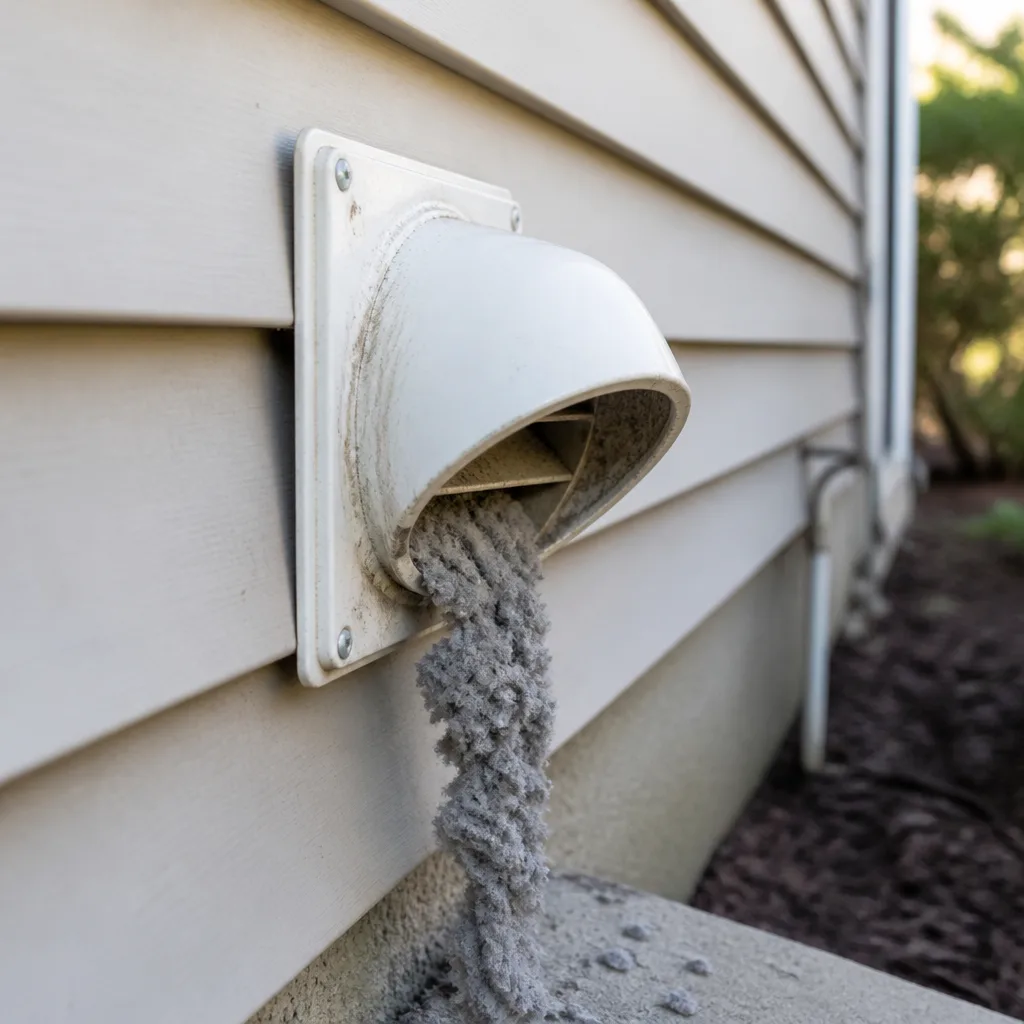 Dryer vent cleaning
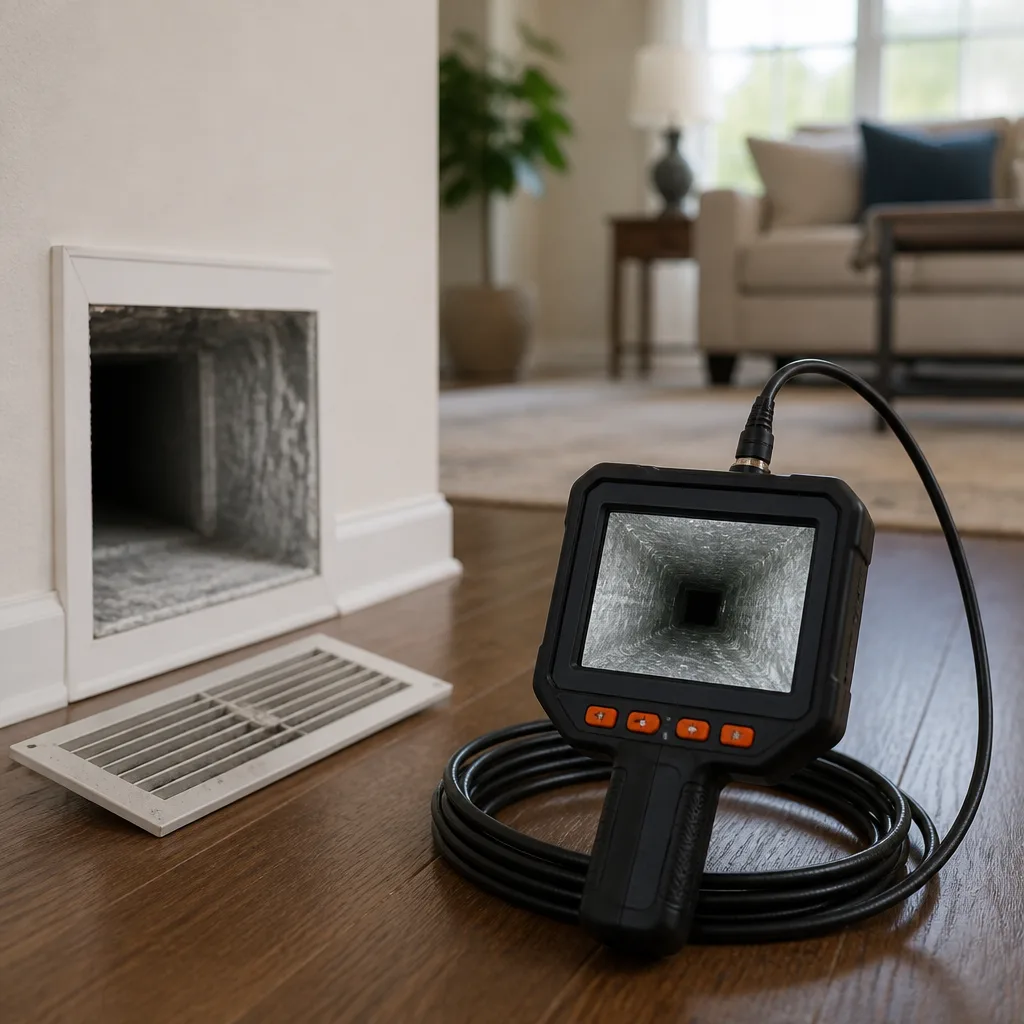 Camera inspection
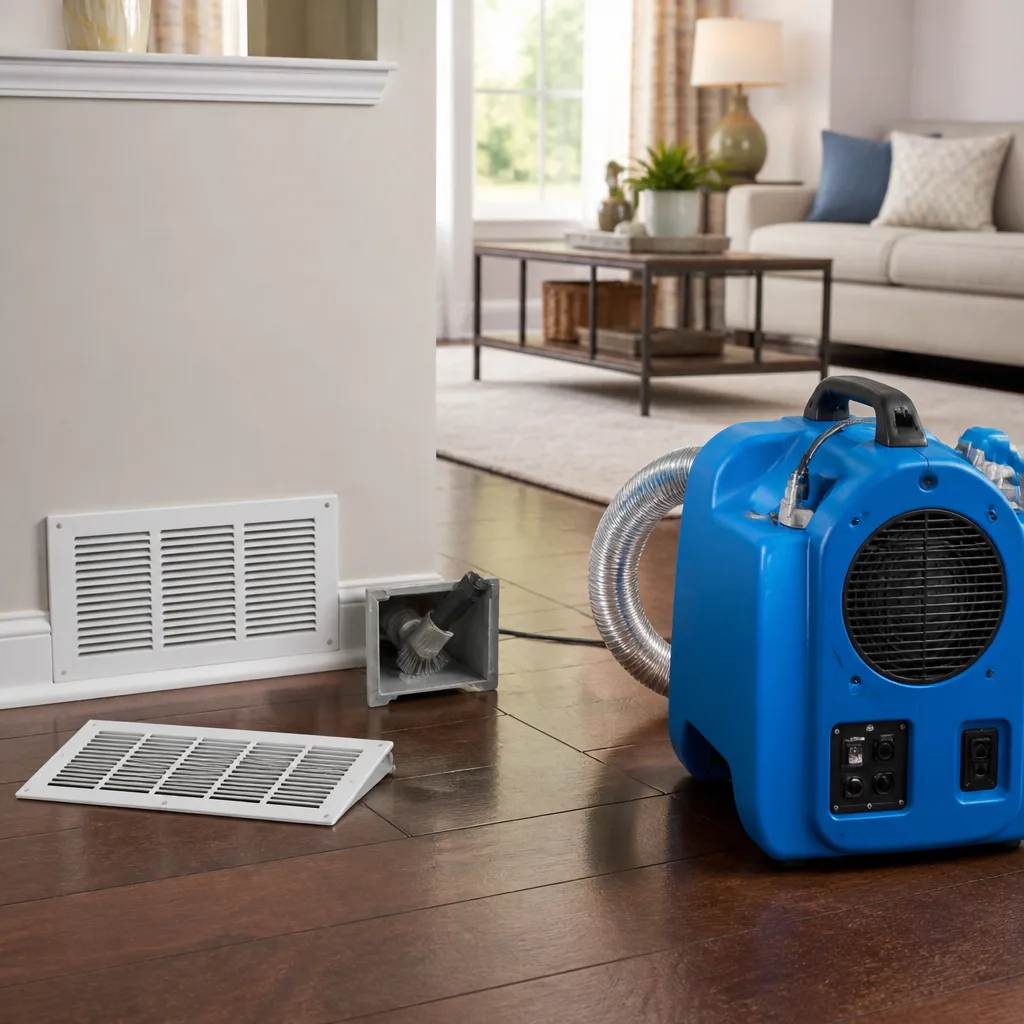 Sanitizing & deodorizing
Whole-system duct and dryer vent check with before-and-after photos - you see exactly what came out of your vents
That "$99 whole-house special" is a bait ad - the real number appears once they are in your hallway, or the "clean" is a shop-vac at the register. We photograph the inside of your ducts before and after instead.
Air Duct Cleaning Cost Breakdown: The Renton Homeowner’s Reference for 2026
The lowest quote you get for duct cleaning in Renton is usually not a discount. It’s a smaller job. Most budget proposals leave out the blower compartment, the return plenum, and the register boots, which happen to be the three spots where contamination collects most heavily in Puget Sound homes. Add those components back to the “cheap” bid and it often climbs above the thorough one. That’s not a sales pitch, it’s a scope problem. This guide pulls a duct cleaning bill apart line by line: what drives price in the 2026 Renton market, how your home’s layout changes the number, which add-ons are real and which are reflexive, and how to read a low quote for exactly what it’s missing. Read it before you call anyone.
Quick Answer
Full-system air duct cleaning in Renton typically runs $450 to $1,100 for a standard single-family home in 2026, and $650 to $1,500 or more for larger homes, multi-zone systems, or homes with heavy contamination in the blower and return plenum. The final price is set by a written, itemized estimate after an inspection, not by square footage alone. A quote that doesn’t name the components it includes can’t be compared to one that does.
Styles & brands we work with
- Whole-home duct cleaning
- Dryer vent cleaning
- Camera inspection
- Sanitizing & deodorizing
Table of Contents
- What’s Actually in a Full-System Cleaning (Line by Line)
- Why Equipment Changes the Price
- How Your Renton Home’s Layout Affects the Bill
- Why Square Footage Is a Poor Way to Quote a Job
- Legitimate Add-Ons vs. Reflexive Upselling
- How to Read a Suspiciously Low Quote
- What Post-Job Verification Should Look Like
- How to Build an Apples-to-Apples Comparison
What’s Actually in a Full-System Cleaning (Line by Line)
A legitimate full-system cleaning is not one task. It’s a set of tasks performed at defined access points, and each one carries its own time and equipment cost. When a contractor itemizes, you can see the difference between a $400 job and a $900 job in black and white. Here’s what a proper estimate breaks into, and what each component typically adds to a Renton bill in 2026.
The core components and their cost drivers
- Access point creation and resealing: $75-$200. Technicians cut and reseal access holes at the plenum, trunk, and key branch runs. This is the component bargain quotes skip entirely, because cutting access takes time and skill and leaves visible work behind. Proper resealing matters for system pressure and for not leaking air into a crawlspace.
- Linear footage of ductwork: $0.20-$0.60 per linear foot for the cleaning labor. A compact ranch might have 90 feet of main runs. A multi-level home in the Renton Highlands with a finished basement can push past 200 feet. Footage, not floor area, is what the truck actually works through.
- Blower compartment and air handler cleaning: $100-$250. This is where the fan sits. Dust, hair, and debris coat the blades and the cabinet. Left dirty, the blower throws that material right back into your supply ducts after you’ve paid to clean them. A quote that doesn’t mention the blower isn’t cleaning the system, it’s cleaning part of it.
- Return plenum cleaning: $100-$200. The return side is the dirtiest side in most homes because it’s under negative pressure and pulls in whatever the filter misses. It’s also the most commonly omitted line in low bids.
- Register and boot cleaning: $5-$15 per register. The boot is where the duct meets the floor or wall. Crud collects in the shoulder of the boot and blows straight into the room. Ten to twenty registers is normal for a Renton home.
- Post-job verification: included in a professional estimate, absent from a cheap one. More on this below.
Total up the “optional” lines and you see the pattern fast. A $350 bid that cleans only the visible trunk runs is not $350 worth of a $900 job. It’s a different job that will need to be redone. If you want the cleaning itself described in full, our air duct cleaning page covers the process step by step.
Why Equipment Changes the Price
The single biggest reason two quotes for “duct cleaning” in Renton come back hundreds of dollars apart is the machine in the driveway. A shop vac and a rotary brush can be bought at a hardware store for a few hundred dollars. A purpose-built duct-cleaning system is a different class of tool, and the price difference shows up in your estimate and in the result.
What professional-grade equipment actually is
We run Rotobrush and Nikro systems, which are purpose-built duct-cleaning platforms: rotary agitation heads on long flexible shafts, high-volume negative-pressure vacuum, and HEPA filtration. These aren’t repurposed consumer tools. They’re the equipment certified indoor-air contractors use because they can reach the full length of a branch run and pull the loosened material out under controlled vacuum instead of pushing it into the room.
The containment side matters just as much. We use Abatement Technologies negative-pressure equipment, which keeps the system under vacuum during cleaning so dislodged debris travels to the collector instead of puffing out of every register. Negative-pressure containment is a standard most residential duct cleaners skip entirely, because the equipment is expensive and the setup takes time. When a quote is dramatically lower, ask what containment equipment the crew brings. If the answer is vague, the price reflects the answer.
Compatibility with equipment you already own
Plenty of Renton homes have Honeywell or Aprilaire filtration and humidification components installed at the furnace or air handler. Cleaning around those systems takes knowing how they’re assembled, what can be removed for cleaning, and what shouldn’t be touched. A generalist with a vacuum doesn’t have that fluency. We do, and it’s part of why the estimate reflects real scope rather than a guess.
None of this makes the job expensive for its own sake. It makes the price honest about what full-system cleaning takes. You can see the same principle applied to the furnace and coil side on our HVAC cleaning page.
How Your Renton Home’s Layout Affects the Bill
Two Renton houses can be the same square footage and carry a $300 price difference. The reason is configuration, not floor area. What a technician actually needs to know before quoting is how the system is arranged, where the access points land, and how much ductwork the machine has to work through.
Basement air handler vs. slab ranch with attic ducts
A Renton craftsman with a basement air handler gives a crew room to work. Access to the plenum is close, the trunk runs are exposed or easily accessed in the basement ceiling, and negative-pressure setup is fast. A slab-foundation ranch with ducts in a hot, low attic is a harder job. The crew works in cramped, hot space, access points are harder to place, and there’s more flexible ductwork, which is harder to clean thoroughly than rigid metal. Same square footage, different hours, different bill.
Other configuration factors that move the number
- Number of zones or systems: a two-zone home has two air handlers, two return plenums, and roughly double the component cleaning.
- Duct material: rigid metal cleans faster and more predictably than flex duct. Older flexible runs in a Renton home may need closer inspection and gentler handling.
- Crawlspace access: common in older Renton neighborhoods. Crawlspace work means more time, more setup, and more protective measures.
- Register count: a home with 20 registers carries more boot cleaning than one with 10.
- Contamination level: a system that’s never been cleaned, or one following a remodel, takes longer than a maintenance cleaning.
This is exactly why a phone quote based on “how many square feet?” is close to meaningless. A number given before anyone looks at the system is a guess dressed up as an estimate. A written estimate after inspection is the only one worth comparing.
Why Square Footage Is a Poor Way to Quote a Job
Floor area tells you how big the house is. It tells you almost nothing about the duct system inside it. A 2,000-square-foot home with a compact single-zone layout and rigid metal ducts in a basement is an easier, cheaper cleaning than a 1,600-square-foot home with two systems, flex duct in an attic, and a crawlspace return. Charging by square footage rewards the first homeowner’s simplicity and punishes the second for nothing.
So what does a technician actually need to quote accurately? Here’s the short list, and it’s what a professional will ask or inspect:
- Number and location of air handlers. Each one is a separate cleaning scope.
- Approximate linear footage of trunk and branch runs. Not floor area.
- Duct material throughout. Rigid metal, flex, or a mix, and where each is.
- Access point locations and how many will be needed. This is labor.
- Number of supply and return registers. Boot cleaning is per-register labor.
- Condition and contamination level. Visible debris, mold-like growth, or post-remodel dust all change the time.
- Return plenum and blower condition. The two components most often left off cheap quotes.
- Any existing IAQ equipment at the furnace that needs to be worked around.
Notice that “total square footage” isn’t on that list. A contractor quoting from floor area alone is quoting from the wrong data. When we prepare an estimate in Renton, item 8 is part of the inspection, because a home with a Honeywell or Aprilaire setup needs cleaning matched to that system, not a generic run-through.
Legitimate Add-Ons vs. Reflexive Upselling
Add-on services are where duct cleaning’s bait-and-switch reputation comes from, and fair enough. Some apply to your system and some are pitched to everyone who calls. The difference is whether the technician can tell you what the add-on does for your specific ducts, based on what they found during inspection.
Air quality sanitizing: when it’s warranted
Sanitizing is legitimate when there’s a reason for it: visible mold-like growth in the system, contamination after water intrusion or a pest issue, or a specific problem with odors coming from the ducts. It’s not warranted as a default line item on every job. If a technician recommends sanitizing before anyone has looked inside your ducts, that’s a reflexive upsell. We use Guardsman-grade protection products during the sanitizing phase, applied after cleaning, not as a substitute for it. Sanitizer doesn’t fix a dirty system. Cleaning does.
UV installation: an honest caveat
UV systems can address certain concerns at the coil, and they’re sometimes worth installing. But UV is not a duct-cleaning add-on. It’s an equipment installation, and whether it makes sense depends on your system and the concern you’re trying to solve. A duct cleaner who pitches UV on the same visit as a cleaning, before any inspection has happened, is selling equipment, not fixing a problem. Ask what the UV light is meant to do in your specific system and how you’ll know it’s working.
Duct sealing: often the most justified add-on
Leaky ducts waste a meaningful share of the air you pay to condition, and leaks are one of the most common findings in Renton homes, especially where flexible ductwork connects to rigid fittings. Duct repair and sealing is a core service for us, not an afterthought, which means when a cleaning reveals a disconnected joint or a split flex run, we can address it on the same visit rather than telling you to call another contractor. That’s not an upsell. That’s closing a gap that would otherwise undo the cleaning.
Here’s the test for any add-on: does the technician explain what it does, why your system needs it based on what they found, and what happens if you skip it? If not, you’re being pitched, not advised.
How to Read a Suspiciously Low Quote
A quote that comes in far below the market range isn’t automatically a scam. Sometimes it’s a small job, or a special situation. But below-market quotes almost always leave out the same three components, and the omissions cost you in ways that show up within a few months.
What’s almost certainly missing from a low bid
- The blower compartment. Skipping it means the fan throws settled debris back into freshly cleaned ducts the moment the system runs.
- The return plenum. The dirtiest side of the system, left untouched.
- Register and boot cleaning. Debris in the boots blows straight into rooms.
- Access point resealing. Or unsealed after access, which leaks conditioned air into the crawlspace or attic.
- Negative-pressure containment. Without it, dislodged debris redistributes through the house during cleaning.
What does that omission cost you in system performance over six months? First, dust returns because the blower keeps throwing it back. Second, the system runs against a dirty return with restricted airflow, which raises energy use and puts strain on the air handler. Third, you’ll be calling someone to do the job properly within the year, which means paying twice. A job that needs repeating wasn’t a saving.
The one honest reason for a lower price is scope: a single-system home with an accessible basement handler, rigid metal ducts, and a recently cleaned system is a smaller job than an attic-and-crawlspace home with two systems. When quotes differ, ask each contractor what components their estimate covers. If one can’t tell you, that’s your answer.
What Post-Job Verification Should Look Like
You don’t have to take anyone’s word for whether the work was done. A professional cleaning should be verifiable, and verification should be part of the service, not an extra you have to ask for.
What proper verification includes
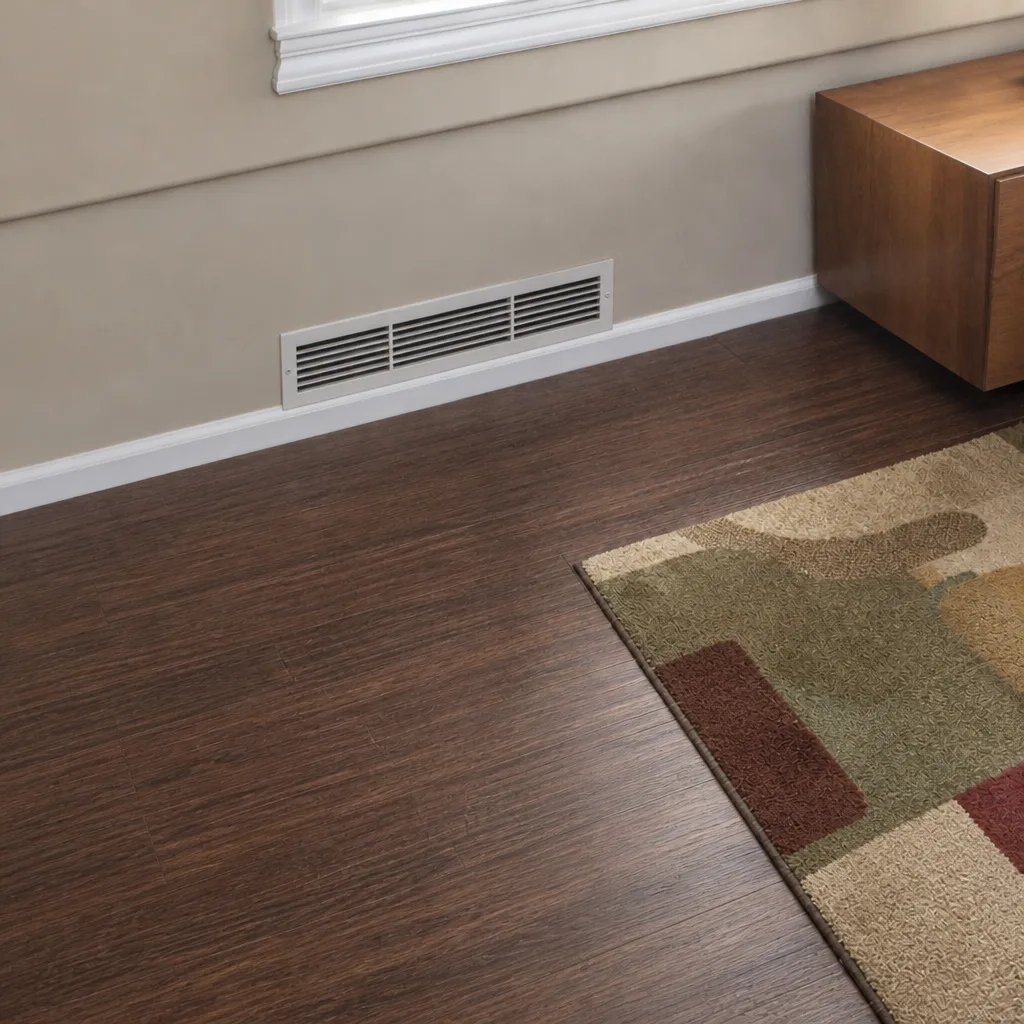
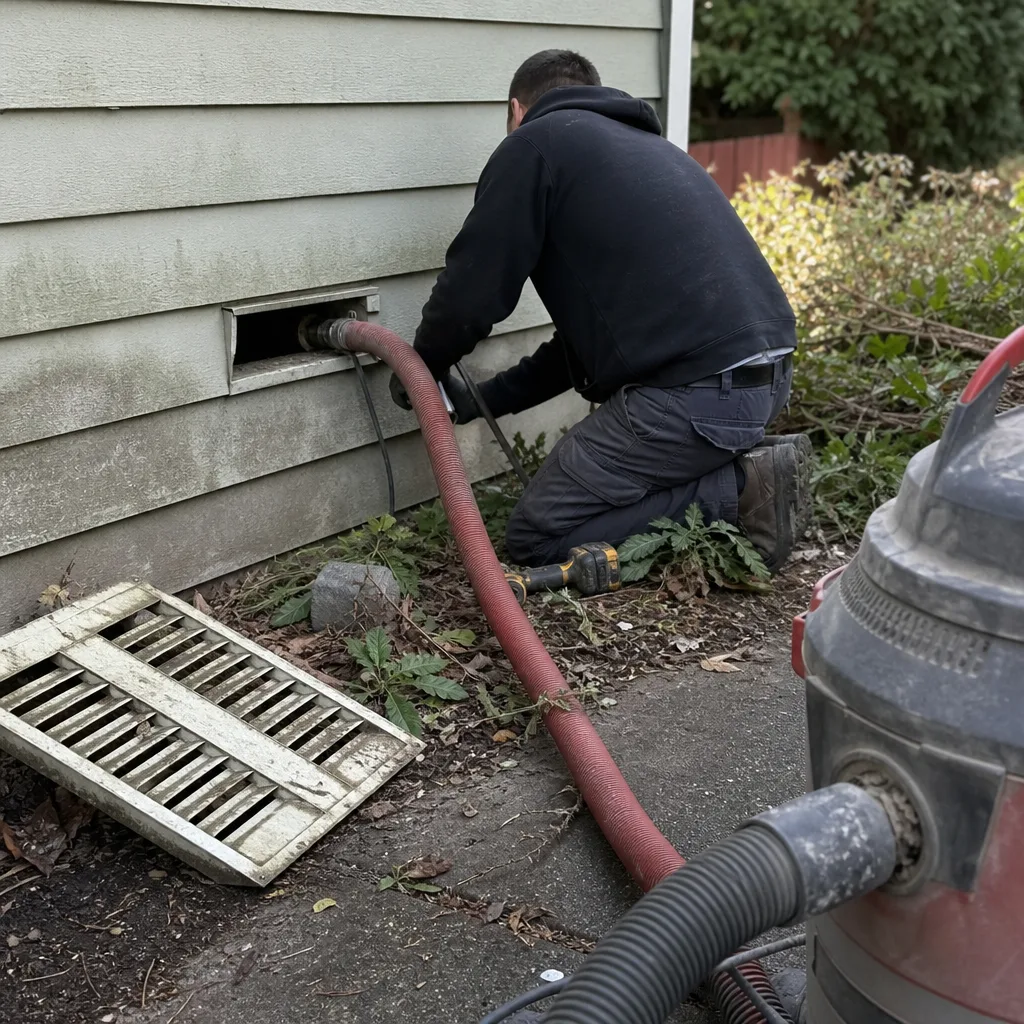
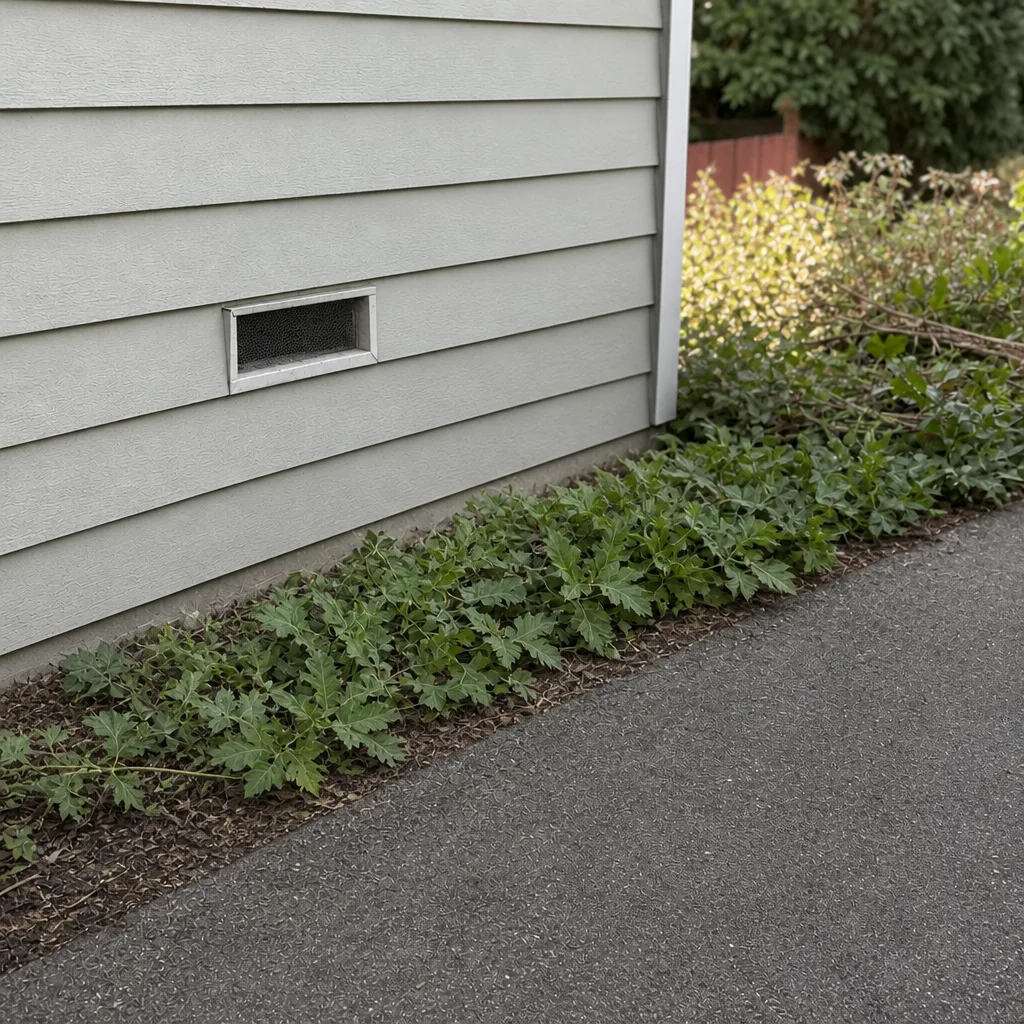
- Before-and-after photos of your own ducts, taken at the access points, showing the actual condition of the trunk, plenum, and boots. Not stock photos from a brochure. Yours.
- A walkthrough at the registers, so you can see the boots and confirm the debris is gone.
- A description of anything found during cleaning, such as a disconnected joint or a damaged flex run, so you know what needs repair and whether it can be handled on the same visit.
- Confirmation that access points were resealed.
This is where our process is designed to be checkable. “See what’s inside your system” is the standard we hold ourselves to. When the technician shows you before-and-after photos of your own ducts, you’re not relying on trust, you’re looking at the evidence. If a contractor cleans and then can’t produce a single photo of your system before and after, ask why.
Air quality is measurable far more than it is felt. Before-and-after photos are the simplest honest proof. A thorough cleaning on equipment that can actually reach the full duct run, with containment keeping debris out of your living space, is what the estimate should be paying for.
How to Build an Apples-to-Apples Comparison
The trouble with duct cleaning quotes is that they’re rarely itemized the same way, so a homeowner in real estate terms is comparing a house listing to a room rental and calling them both “shelter.” Here’s how to line up two or three Renton quotes so you’re comparing the same job.
The comparison steps
- Ask for a written, itemized estimate. One line per component: access points, linear footage, blower, return plenum, registers/boots, verification, and any add-ons. If a contractor won’t itemize, move on.
- Check that the blower, return plenum, and register boots are on every bid. If they’re missing, ask for a revised estimate that includes them. Now compare the real numbers.
- Ask what equipment the crew brings. Professional duct-cleaning systems and negative-pressure containment, or a shop vac.
- Ask about access points and resealing. How many, where, and how are they sealed after?
- Ask about verification. Will you get before-and-after photos of your own ducts?
- Ask whether repairs can be handled on the same visit. A compromised duct found during cleaning is a gap in the system. If it needs a second contractor, it needs a second visit.
When you do this, the gap between the “cheap” and “thorough” bids usually narrows or flips. The thorough bid looked expensive until you asked the cheap one to include the same components. At that point they cost the same, and the difference is equipment, containment, and verification, which is what you should be paying a specialist for.
For the full picture on how a complete cleaning runs from start to finish, see our air duct cleaning service page, and for the dryer side of the air pathway, our dryer vent cleaning page covers why lint buildup is a separate job that deserves its own visit.
Common Mistakes to Avoid
- Choosing the lowest quote without itemizing it. A $350 bid and a $900 bid for the same home are rarely the same job. Ask what’s included before you decide.
- Assuming square footage is a price guide. A small home with attic flex duct and two systems can cost more to clean than a larger home with an accessible basement handler. Configuration drives price, not floor area.
- Buying sanitizing as a default. If a technician recommends sanitizing before looking inside your ducts, that’s a pattern, not a reason. Sanitizer is warranted when there’s mold-like growth, water damage, or a specific odor problem.
- Skipping the blower compartment to save money. Cleaning supply ducts while leaving the blower dirty means the fan pushes settled debris right back into the ducts. You’ll see it within months.
- Not asking about containment equipment. Without negative pressure, dislodged debris redistributes into living space during the cleaning. Ask what equipment keeps dust out of the rooms.
- Treating a dirty filter as a duct-cleaning issue. Filters need changing on their own schedule. Duct cleaning doesn’t fix a system that’s running with a clogged filter, and the two are separate maintenance.
- Booking a cleaning before checking access and resealing. If access points go unsealed, you’ve paid for cleaning and gotten a new source of air leakage into the crawlspace or attic. Confirm sealing is part of the job.
See the difference
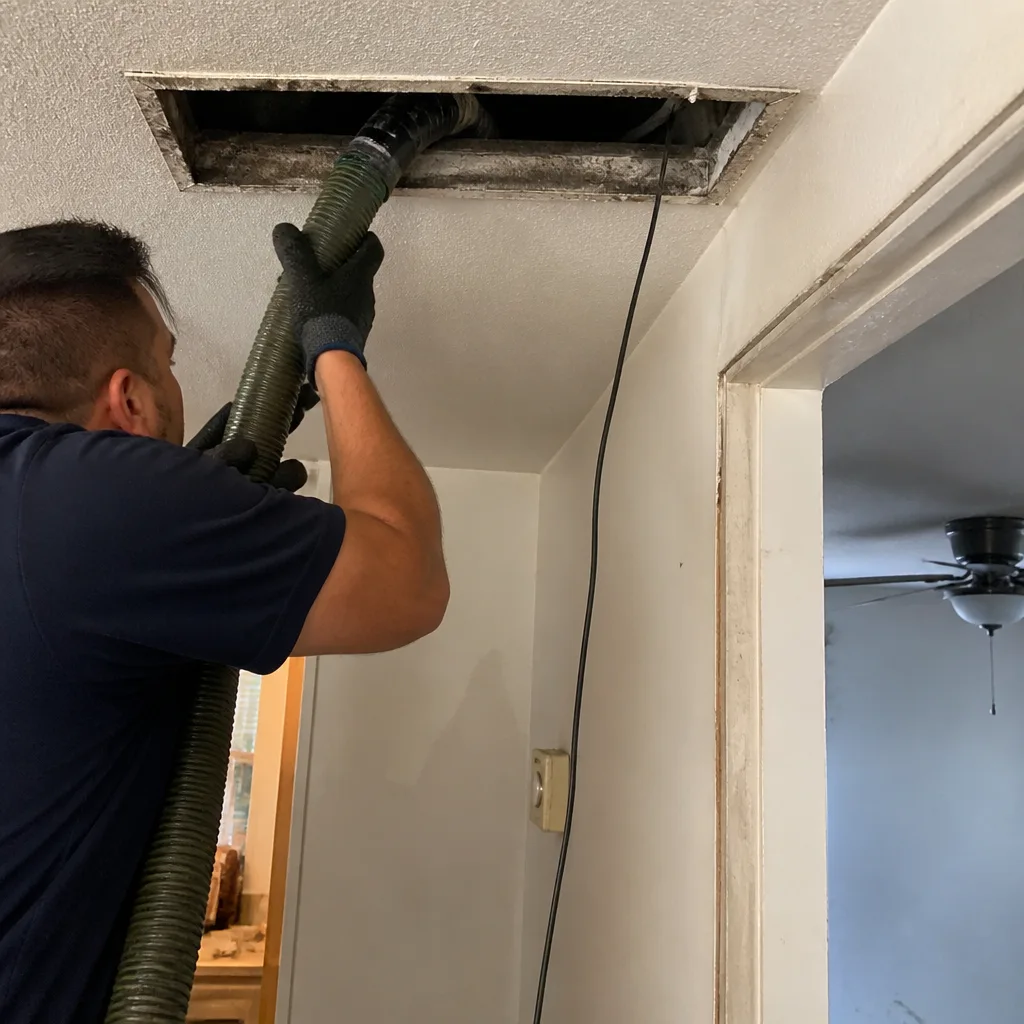 Before
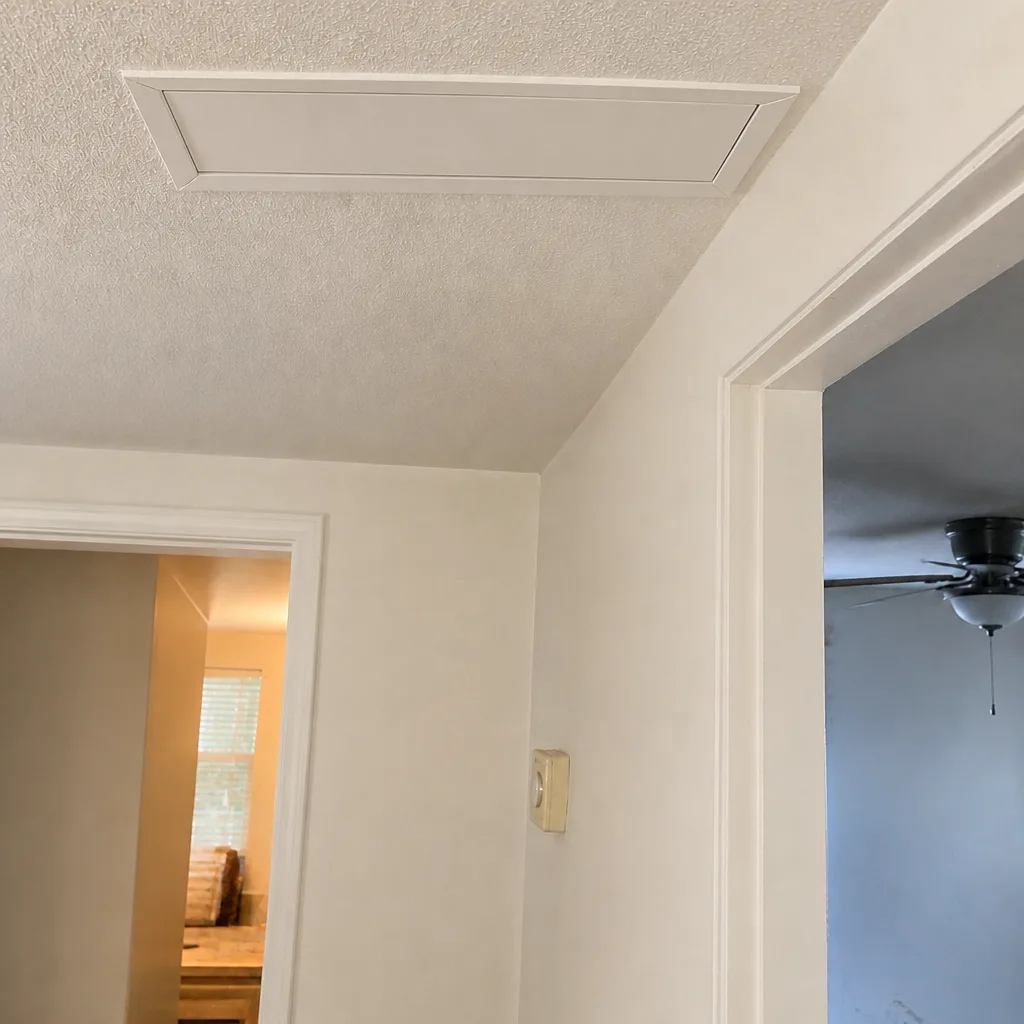 After
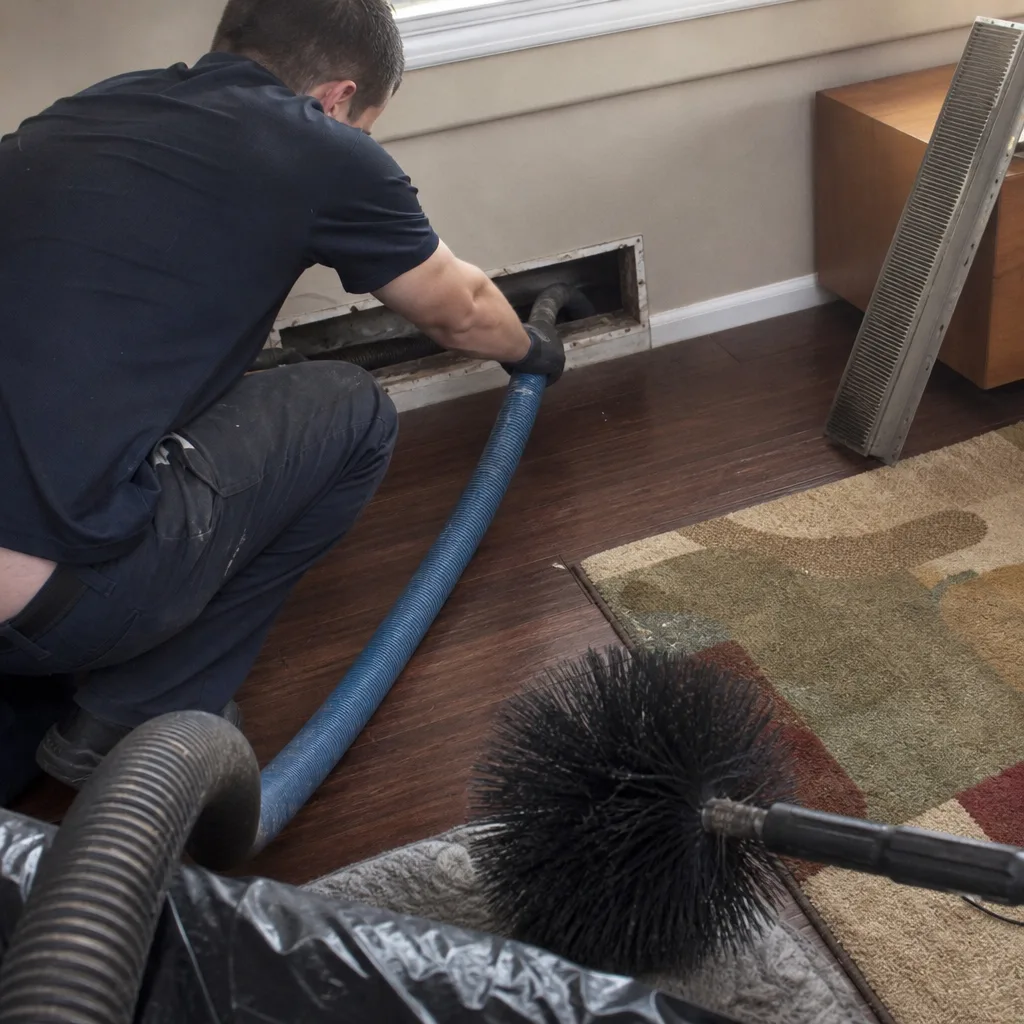 Before
 After
 Before
 After
When to Call a Professional
Not every home needs duct cleaning every year. Some signs are clear calls for a professional look. Visible dust puffing from registers when the system starts, or persistent dust settling on surfaces just days after cleaning, usually points to a dirty blower or return. Musty odors from vents, especially after rain, or any visible mold-like growth inside a register boot are reasons to have the system inspected before assuming a filter change will solve it. Beyond that, a system that’s never been cleaned since a major remodel, or a home with recent water intrusion or pest activity in the ducts, benefits from an inspection. New construction dust is a common trigger. So is unexplained energy cost creep, though that has several causes and cleaning is only one. What you shouldn’t do is guess. An inspection tells you what’s actually in the system. Renton Air Duct Cleaning Pros offers free estimates in Renton. Call (888) 423-4218. We answer 24/7. Fast dispatch from 7am to 7pm, Sunday through Friday.
Frequently Asked Questions
Full-system air duct cleaning in Renton typically runs $450 to $1,100 for a standard single-family home in 2026, with larger or multi-zone homes and heavily contaminated systems running $650 to $1,500 or more. The written, itemized estimate after inspection sets the final price. Complete estimates cover access points, linear footage, blower compartment, return plenum, register boots, and verification. Call (888) 423-4218 for an exact quote. Estimates are free.
Cheap quotes are usually a smaller job, not a discount. They commonly omit the blower compartment, return plenum, register boot cleaning, and access point resealing, which are the components that take the most time. Add those back and the cheap bid is often a similar total. Ask any contractor to itemize their estimate before you compare numbers. Call (888) 423-4218 if you’d like a written estimate with every component listed.
Ask for before-and-after photos of your own ducts, taken at the access points, plus a walkthrough of the registers after cleaning. A professional cleaning should be verifiable, not taken on faith. We provide before-and-after photos of your system as part of the job. If a contractor can’t show you your own ducts before and after, ask why. Call (888) 423-4218 to book an inspection.
Yes, more than square footage does. A home with a basement air handler and exposed rigid metal trunk has easier access and cleans faster than a slab ranch with ducts in a low attic and runs through a crawlspace. Multiple systems, higher register counts, and heavy contamination all add to the job. Call (888) 423-4218 and we’ll inspect your system and tell you which factors apply.
Most Renton homes don’t need duct cleaning every year. Cleaning is usually warranted after a major remodel, after water intrusion or pest activity in the ducts, when visible debris or mold-like growth is present, or when heavy dust keeps returning despite clean filters. Steady dust and energy costs are reasons to have the system inspected, not a schedule. An inspection tells you what’s actually there. Call (888) 423-4218 to schedule one.
Only when there’s a specific reason. Sanitizing is worth it when there’s mold-like growth, water damage, or an odor problem inside the system, not as a default line item. UV installation is an equipment decision that should follow an inspection, not a reflexive add-on. Duct sealing is the add-on most often genuinely justified, because leaky ducts waste conditioned air and undermine the cleaning. Call (888) 423-4218 and we’ll tell you which, if any, apply to your system.
The Bottom Line
Duct cleaning pricing in Renton looks impossible to compare because quotes rarely itemize the same components. Fix that and the market becomes clear. A legitimate full-system cleaning here runs about $450 to $1,100 for a standard home in 2026, itemized across access points, linear footage, blower, return plenum, register boots, and verification. The cheap quote is usually a smaller job missing the three dirtiest components. Your home’s layout and equipment matter more than its square footage. And before-and-after photos of your own ducts are the honest proof the work was done. Ask for an itemized estimate. Then compare.
Ready to see what’s actually inside your system? Renton Air Duct Cleaning Pros cleans the whole air pathway, from supply and return ducts to the blower, registers, and dryer vent, on professional-grade Rotobrush, Nikro, and Abatement Technologies equipment. Call (888) 423-4218 for a free estimate. We answer 24/7. Fast dispatch from 7am to 7pm, Sunday through Friday. Visit Renton Air Duct Cleaning Pros to get started, or see how our HVAC cleaning visit handles the air handler side of the system.
Written by the team at Renton Air Duct Cleaning Pros.