
Last updated November 25, 2026
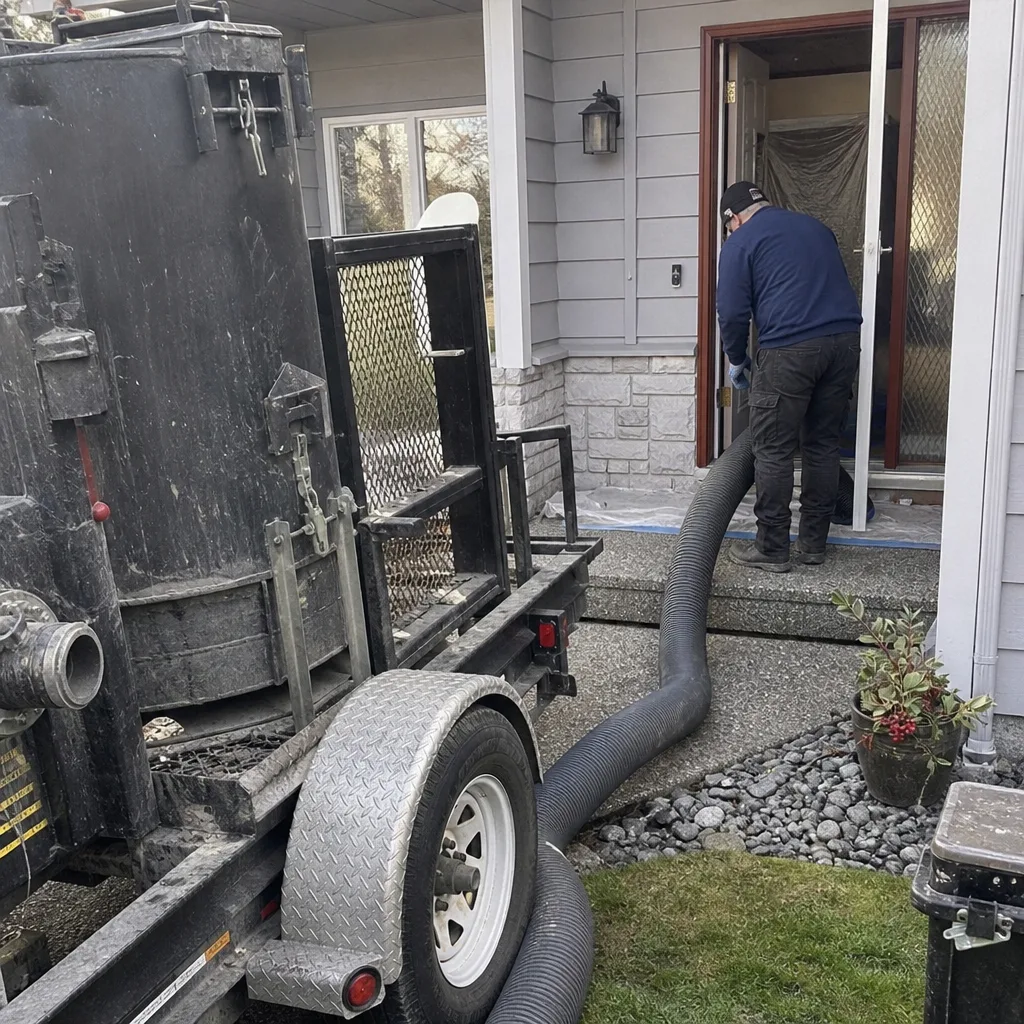
 Whole-home duct cleaning
 Dryer vent cleaning
 Camera inspection
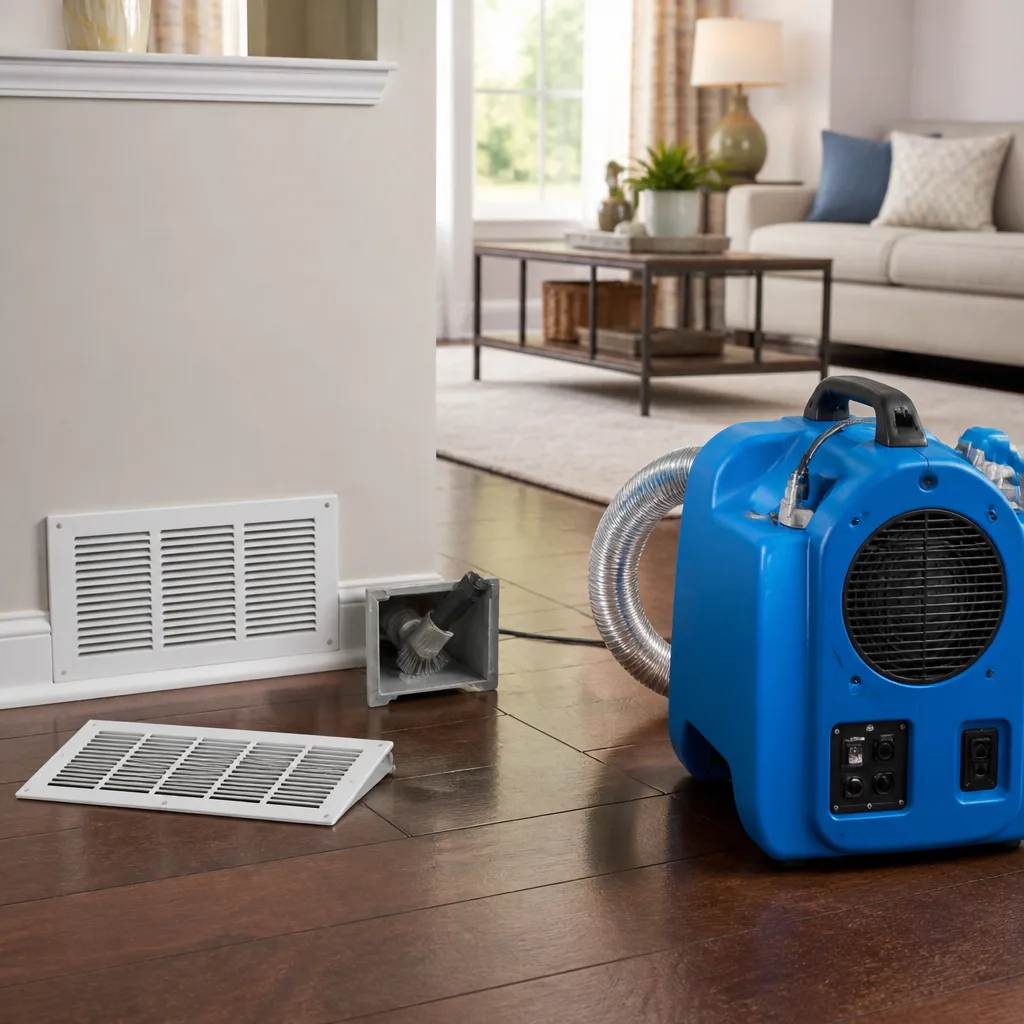 Sanitizing & deodorizing
Whole-system duct and dryer vent check with before-and-after photos - you see exactly what came out of your vents
That "$99 whole-house special" is a bait ad - the real number appears once they are in your hallway, or the "clean" is a shop-vac at the register. We photograph the inside of your ducts before and after instead.
Air Duct Cleaning Troubleshooting in Renton: Common Problems and How to Fix Them
Here’s the mistake most homeowners make: when one room in the house is always stuffy no matter how you adjust the thermostat, they assume the thermostat is the problem. It almost never is. The usual culprit is a collapsed flex duct segment or a disconnected trunk line behind the drywall – a mechanical failure, not a settings issue. Dust, musty smells, and uneven airflow all tend to trace back to something physical inside the system, not the air itself. This guide walks you through symptom-to-source troubleshooting so you can identify the likely cause before anyone shows up to look. You’ll learn how to read your registers, tell contamination apart from restriction, and know when a cleaning actually solves the problem.
Quick Answer
Most air duct problems in Renton come down to one of two things: a restriction (crushed, disconnected, or undersized ductwork cutting off airflow to part of the house) or contamination (buildup of dust, debris, or microbial growth inside the system affecting air quality). Restriction problems need duct repair and resealing; contamination problems need a proper cleaning with agitation and negative-pressure vacuuming. Diagnosing which one you have – using the odor, the location of the symptom, and a look inside a register – determines whether cleaning will fix it or whether it’s wasted money.
Styles & brands we work with
- Whole-home duct cleaning
- Dryer vent cleaning
- Camera inspection
- Sanitizing & deodorizing
Table of Contents
- Mapping Symptoms to Duct Zones
- Reading Odors: Musty, Burning, or Metallic
- Restriction vs. Contamination: The Diagnostic Split
- When Agitation Fixes It and When Vacuuming Does
- Why Post-Job Camera Inspection Matters
- How Renton’s Climate and Housing Shape the Problem
- Common Mistakes
- When to Call a Professional
Mapping Symptoms to Duct Zones: Which Register Feeds Which Room
Before you call anyone, walk the house and note where the symptom lives. If the stuffy room is directly above the furnace closet, you’re probably looking at a short run with a collapsed flex segment. If the cold room is at the far end of a split-level, the issue is more likely pressure loss across a long trunk line. In a typical Renton split-level or rambler with a central furnace, the supply trunk runs along the mechanical closet and branches out to perimeter registers – which means the farthest rooms get the weakest airflow, even on a healthy system.
Do this walkthrough first:
- Stand at each supply register and hold a piece of tissue or a strip of toilet paper against it. A strong, steady flutter is healthy; a limp or barely-moving strip is a restriction signal.
- Check every return register. A return with weak suction pulls conditioned air from cracks and gaps instead of the rooms you want.
- Note which rooms are consistently hot or cold. A pattern (always the master, always the bonus room) points to the zone; a random fluctuation points to the thermostat or equipment.
- Look at ceiling registers for dust trails radiating outward. That streaking pattern usually means the register boot is loosely sealed to the drywall, pulling attic or crawlspace dust into the stream.
Renton’s older mid-century ramblers often have undersized return paths compared to modern builds, and additions done over the decades can leave a branch line buried behind a wall. Mapping the symptom to a specific branch cuts the time it takes a technician to find the cause – which is exactly why a homeowner’s notes speed up the real fix.
Reading Odors: Musty, Burning, or Metallic
Odor is the fastest diagnostic tool a homeowner has, and it’s the one most people ignore until it’s overwhelming. Each smell class points to a different source inside the system.
- Musty or earthy: Usually biological growth or damp debris somewhere the duct stays cool and slightly wet – often a run passing through an unconditioned crawlspace or a boot near a bathroom exhaust. Renton’s wet winters keep crawlspace humidity high, and a duct with a small gap in its vapor barrier can pull that moisture into the airstream.
- Burning or hot-plastic: This one is urgent. It can signal the blower motor overheating, a furnace issue, or debris touching a heat exchanger. Turn the system off and have it looked at. Do not push through it.
- Metallic or “electric”: Often a sign of loose metal duct sections rubbing, an ungrounded component, or a failing blower bearing. Worth a technician’s look before it becomes a bigger repair.
- Sour or “gym-bag”: Usually moisture-loving growth on a damp coil or in a drain pan, not the ducts themselves. A cleaning without addressing the coil won’t fix it.
Notice where the smell is strongest. If it hits you when the system kicks on but fades after a minute, the source is likely in the return. If it lingers in one room, that branch is the one to check. Note the timing too – smells that only appear on heat mode point to the heat exchanger or furnace area, while smells on cool mode point to a wet evaporator coil. Call (888) 423-4218 for a free estimate if the odor is persistent, and skip the DIY guesswork on anything burning-related.
Restriction vs. Contamination: Two Problems, Two Solutions
This is the single most useful distinction in air duct troubleshooting, and it’s the one that gets skipped by a lot of crews. A restriction problem is an airflow problem. A contamination problem is a cleanliness problem. They present differently and they are fixed differently.
| Symptom | Restriction Problem | Contamination Problem |
|---|---|---|
| Airflow | Weak or uneven across rooms | Normal but air quality poor |
| Energy bills | Rising, system runs long | Little change |
| Dust in room | Low; mostly settled near a leak | High; constant film on surfaces |
| Smell | Usually none | Musty, dusty, or sour |
| Fix | Duct repair and resealing | Full-system cleaning and sanitizing |
If you have both – which is common in older Renton homes – a cleaning without repair leaves the restriction in place, and repair without a cleaning leaves contamination in the resealed system. That’s why we treat air duct cleaning and duct repair as the same visit. It also explains why a homeowner who pays for a cleaning and still has a cold bedroom isn’t being scammed – they just had a contamination problem when the real issue was a restriction, or vice versa. Diagnosing correctly first is what makes the fix stick.
When Agitation Fixes It and When Negative-Pressure Vacuuming Does
Not every cleaning job needs the same equipment. The two core requirements are agitating debris that’s stuck to duct walls and maintaining negative pressure so loosened debris doesn’t escape into the living space. Which tool leads depends on the condition of the system.
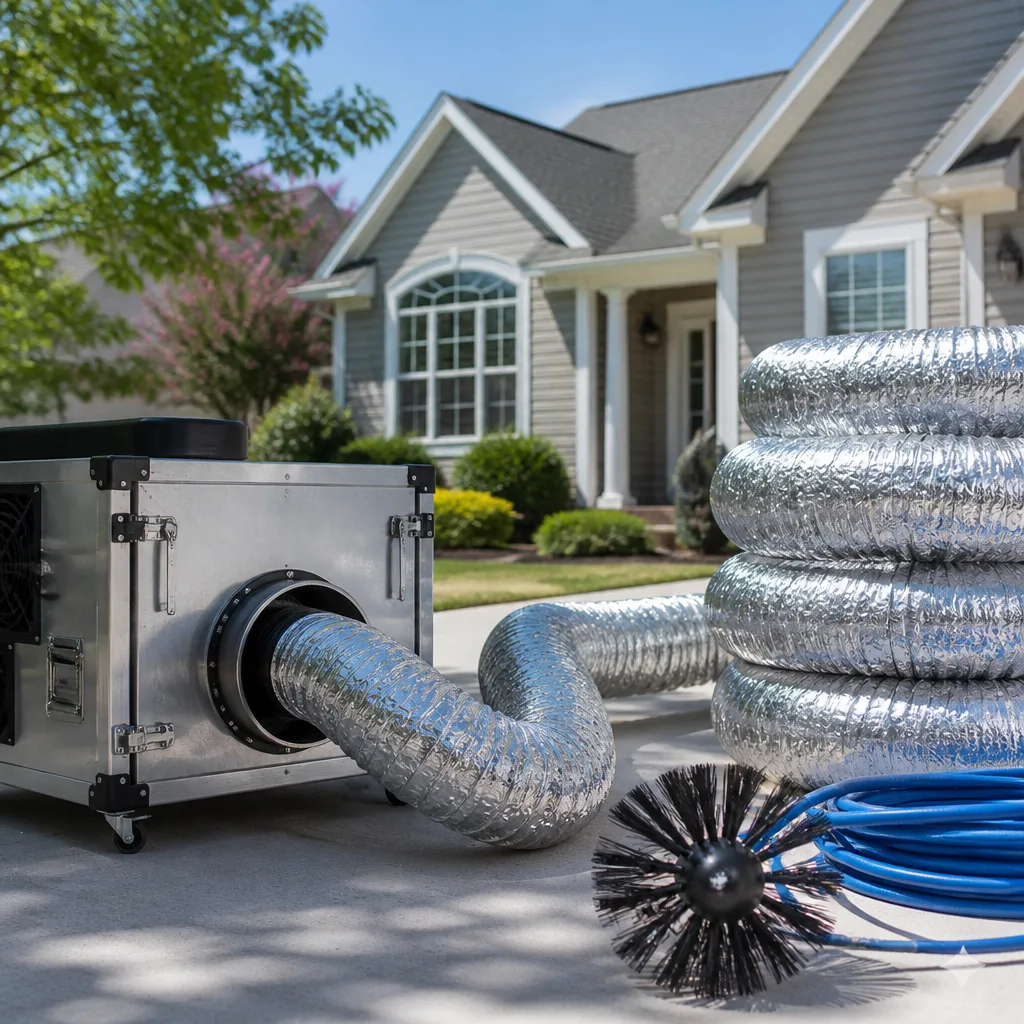
Rotation-brush or air-whipper agitation is what loosens caked-on dust from galvanized trunk lines and flex duct interior walls. A Rotobrush-style system with a rotating brush or high-pressure air tool breaks the bond that keeps dust clinging – and without agitation, a vacuum alone just skims the surface.
Negative-pressure vacuuming is what captures the loosened debris and keeps it out of the room. A Nikro-style high-volume unit connected to the main trunk pulls the whole system under negative pressure, and Abatement Technologies containment gear keeps the work area sealed so the dust goes into the collection unit, not your kitchen. This is the step most residential duct cleaners skip because it requires real setup, not a shop vac and a hose.
Rule of thumb:
- Light, dry, evenly distributed dust and no odor: agitation plus vacuum, then a camera check.
- Caked, heavy, or damp debris with odor: agitation first, negative-pressure vacuum throughout, then sanitizing with a treatment product.
- Any signs of biological growth: the vacuum needs to run the entire visit and the treatment phase needs to follow.
- Restriction found during cleaning: repair the run and reseal before the vacuum is shut off, or the problem goes straight back into the system.
If you’re also cleaning the ductwork around the equipment itself, this same split applies – see HVAC cleaning for how the coil, blower, and drain pan are handled as part of the same pathway.
Why Post-Job Camera Inspection Matters
A cleaning without a camera inspection before and after is a cleaning you can’t verify. Homeowners have every right to ask how they know the work was actually done – and the honest answer is: with photos of the inside of their own ducts, from their own system, before and after.
Here’s how a good inspection sequence works:
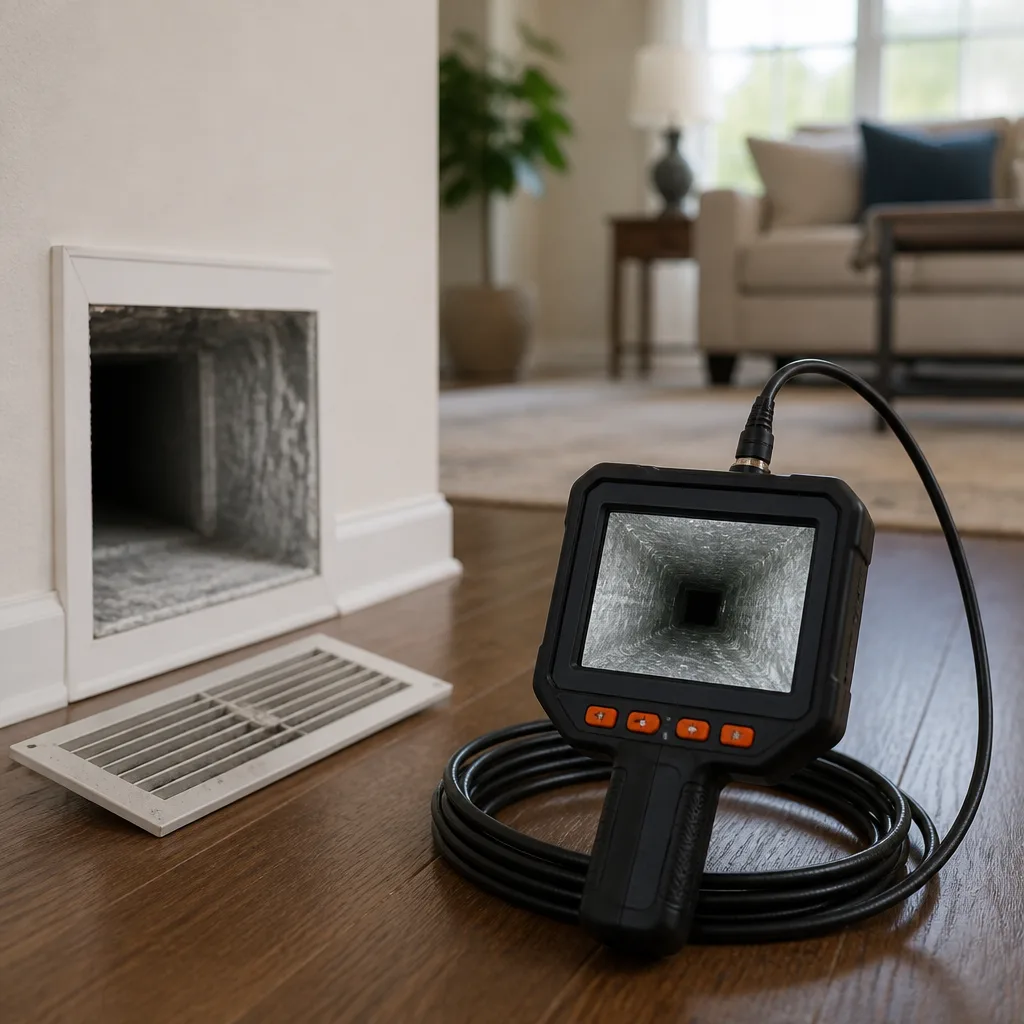
- Pre-cleaning camera pass: A camera is inserted into the main trunk and at least one branch line. The technician captures what’s actually there – buildup, disconnected joints, crushed segments, moisture – before anything is touched.
- Work performed based on the footage: If a joint is disconnected or a flex run is crushed, that’s flagged before the vacuum runs, so loose debris doesn’t get pushed into the wrong place.
- Post-cleaning camera pass: The same locations are re-photographed. You see the difference.
- Report and follow-up recommendations: Any remaining issue – a leaking joint, a hot spot at the coil, a return that needs a reseal – gets noted so you know what to schedule next.
Without step one and step three, you’re paying for something you can’t confirm. The camera is the confirmation. It also catches problems a cleaning alone won’t fix, like a trunk line pulled loose at a fitting – which is why we do duct repair and resealing in the same visit rather than sending you to another contractor. See what’s inside your system, not what a salesman says is inside it.
How Renton’s Climate and Housing Shape the Problem
Renton sits in a wet, mild climate with a long damp season and short dry summers. That shapes duct problems in ways a homeowner in Arizona won’t see.
- Crawlspaces stay humid. Many Renton ramblers and split-levels run ductwork through a crawlspace that stays damp through fall and winter. Any small gap in a duct joint pulls that moist air into the system, and moisture plus dust equals growth. The smell follows.
- Older housing stock means older duct paths. Renton’s mid-century neighborhoods have ductwork that was laid out for a different era of equipment. Additions, remodels, and converted garages leave branch lines disconnected or rerouted, and the new room gets a fraction of the airflow the original layout promised.
- Cooling coils get wet and stay wet. In a mild climate, the AC runs less, so a wet evaporator coil or a slow drain pan can sit damp for weeks without drying out. That’s a common source of the “gym-bag” smell.
- Winter heating dries the air. Homes that run a Honeywell or Aprilaire humidifier on the furnace need the humidifier’s own ductwork and pad checked as part of the full-system pass, not treated as a separate appliance. Dust and mineral scale build up there too.
The takeaway: in Renton, duct problems are often tied to moisture and to decades-old layout changes, not just dust. A cleaning that ignores the crawlspace runs and the humidifier tie-in misses half the picture. The full air pathway – supply, return, HVAC unit, and humidifier connections – is what we clean, because that’s where the air actually travels. If you want to see what’s happening in the ducts, that’s the place to start.
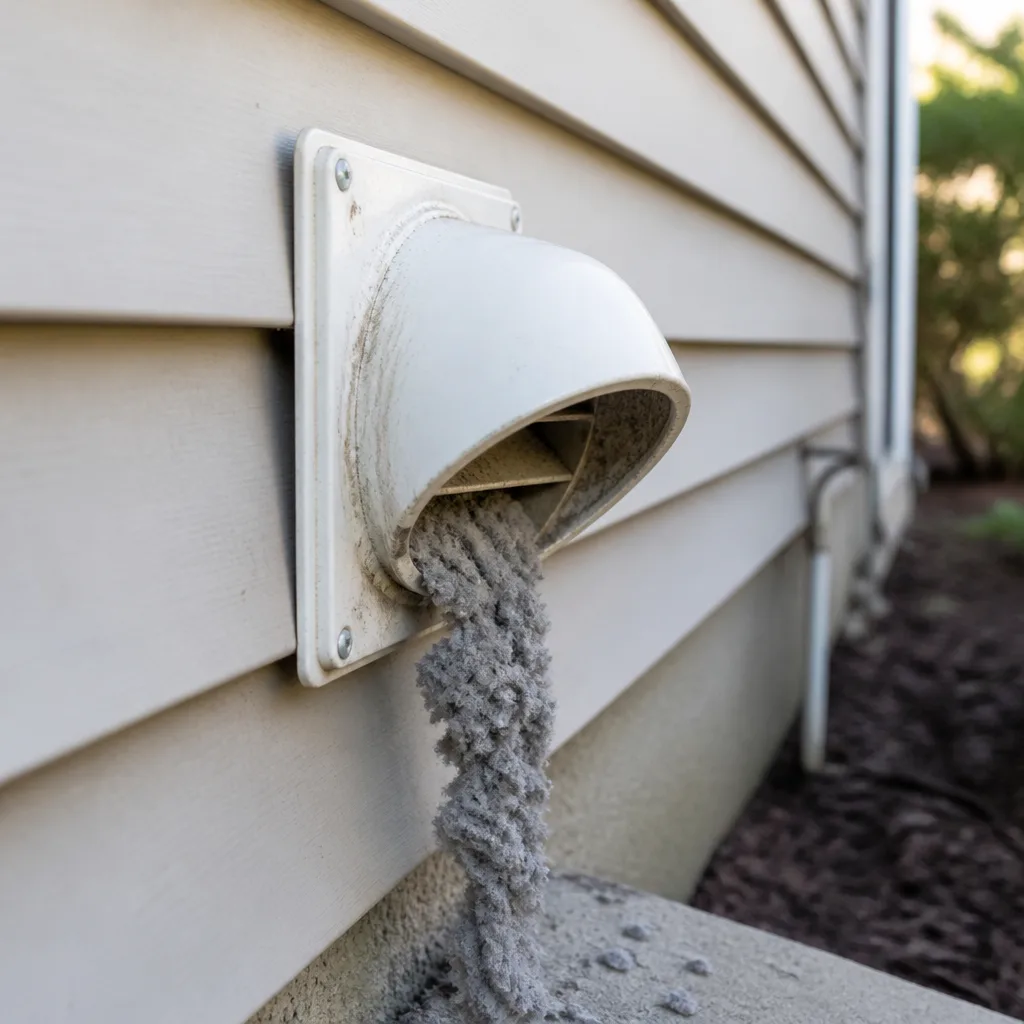
Dryer vents are a separate but related pathway with their own troubleshooting rules – lint accumulation, crushed flex behind the dryer, and long runs with too many elbows are the usual causes of a slow-drying load. That’s covered in dryer vent cleaning and deserves its own inspection pass on the same visit.
Common Mistakes to Avoid
- Assuming a cleaning fixes every airflow complaint. If the real problem is a disconnected trunk or a crushed flex run, a cleaning won’t restore the airflow – you’ll still have a cold bedroom. Ask for a camera pass before you book.
- Hiring on price alone. A very low quoted price usually means a shop vac, no containment, and no inspection. The whole point of professional equipment is that the debris goes into a sealed collection unit instead of back into your living room.
- Ignoring a burning smell. Any hot-plastic or burning odor warrants turning the system off and calling for a look. Do not run the system “just to see if it clears.”
- Skipping the crawlspace runs. In Renton, the damp crawlspace branch is where musty smells start. If a cleaning only touches the visible trunk and registers, the source is still there.
- Not confirming post-job condition. Without before-and-after photos of your own ducts, you have no way to know what changed. Ask for them, and look at them.
- Treating the humidifier or IAQ gear as off-limits. A Honeywell or Aprilaire unit on the furnace has ductwork and a pad that collect dust. A cleaning that ignores it doesn’t clean the whole air pathway.
- Letting a small reseal job become a big one. A disconnected joint pulls attic or crawlspace air into the system every time the blower runs. Resealing it during the same visit is far simpler than tracking down the source six months later.
When to Call a Professional
Some troubleshooting is a homeowner’s job: walking the registers, noting the smell, checking which rooms are weak. But certain symptoms cross the line into professional territory. A burning odor, weak airflow that persists after a filter change, visible dust streaking at a register boot, musty smell that returns within weeks of a cleaning, or a system that’s had a major remodel or addition since the last inspection – all of those warrant a proper look with camera equipment and negative-pressure vacuuming. The same goes for any ductwork that runs through a crawlspace you can’t safely access, or any suspected growth that needs proper treatment.
Renton Air Duct Cleaning Pros offers free estimates in Renton – call (888) 423-4218. Our technicians have up to 12 years of experience, and we bring professional-grade Equipment – Rotobrush and Nikro systems, Abatement Technologies containment, and Guardsman treatment products – to a job most generalist crews under-equip. One flat price per system agreed before work starts. Before-and-after photos of your own ducts. And if we find a restriction during the cleaning, we repair and reseal it on the same visit.
See the difference
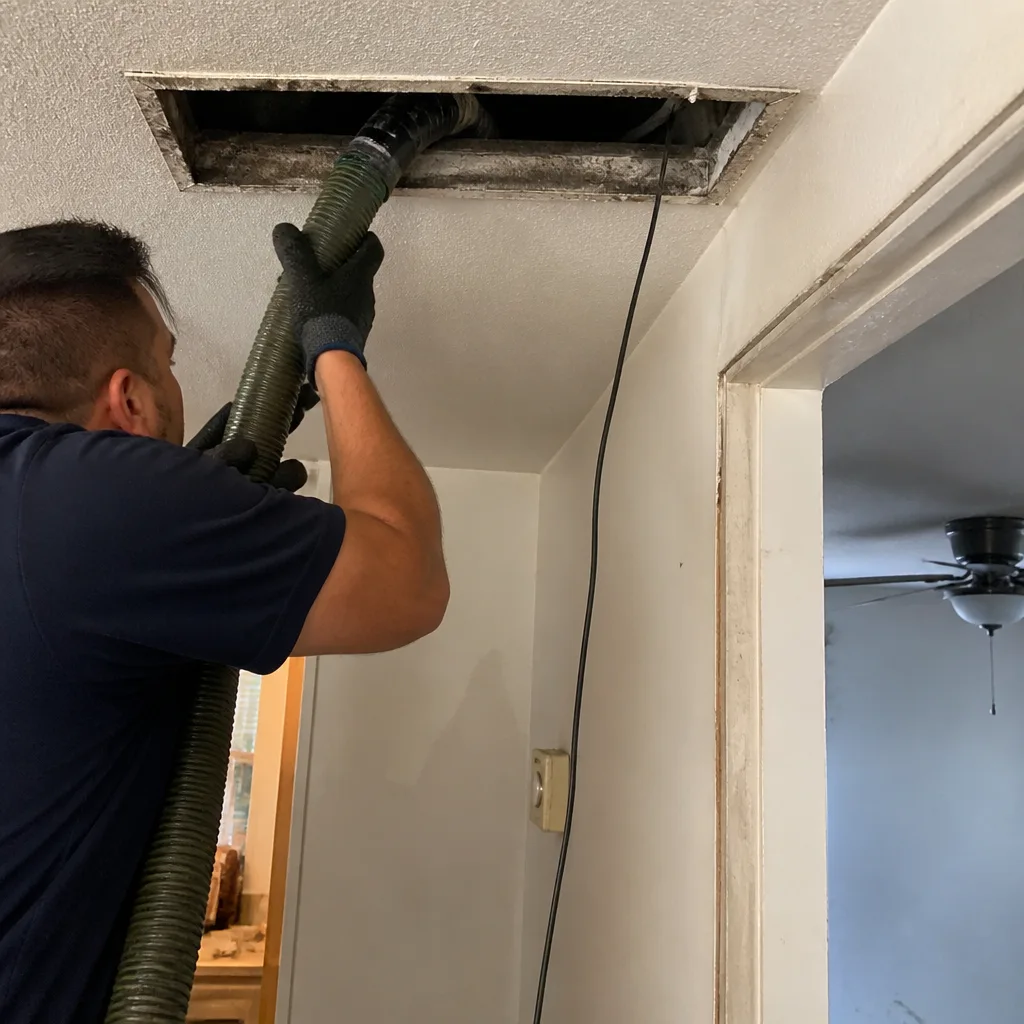 Before
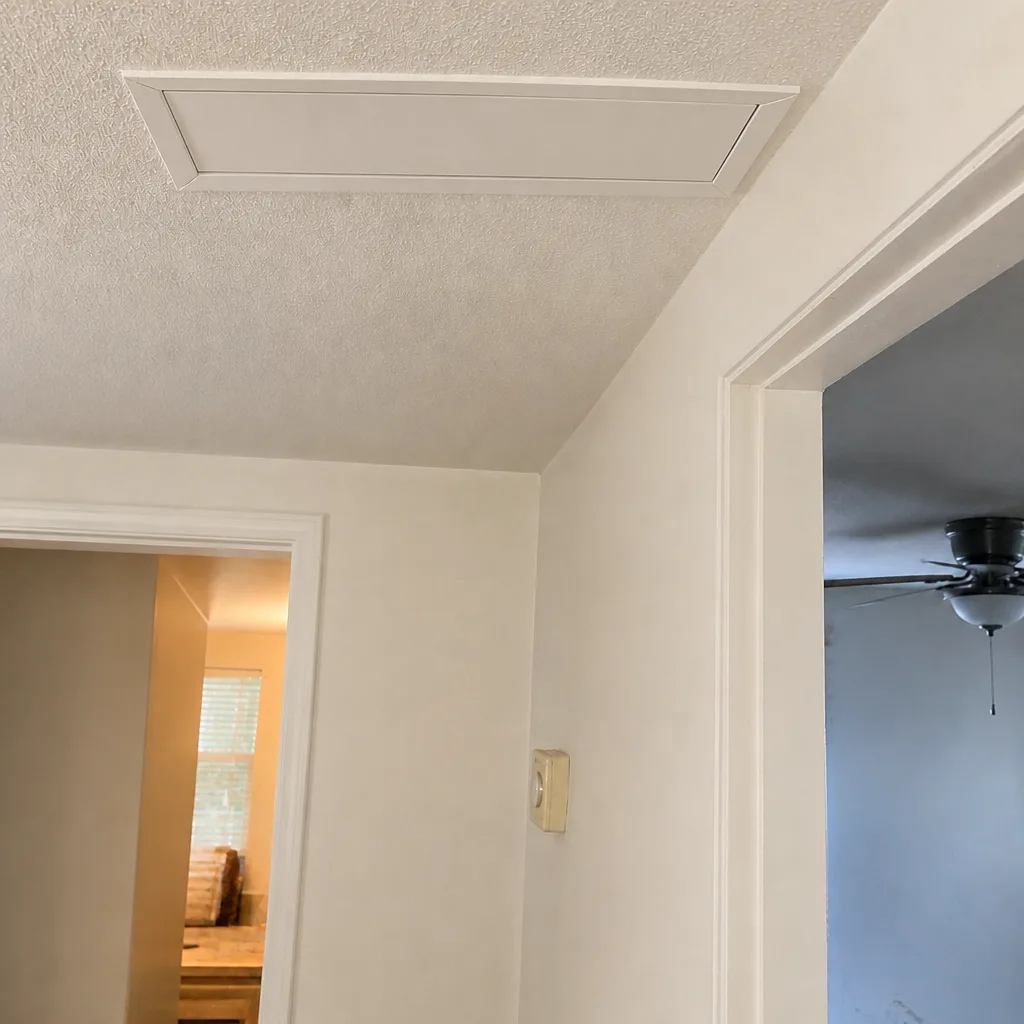 After
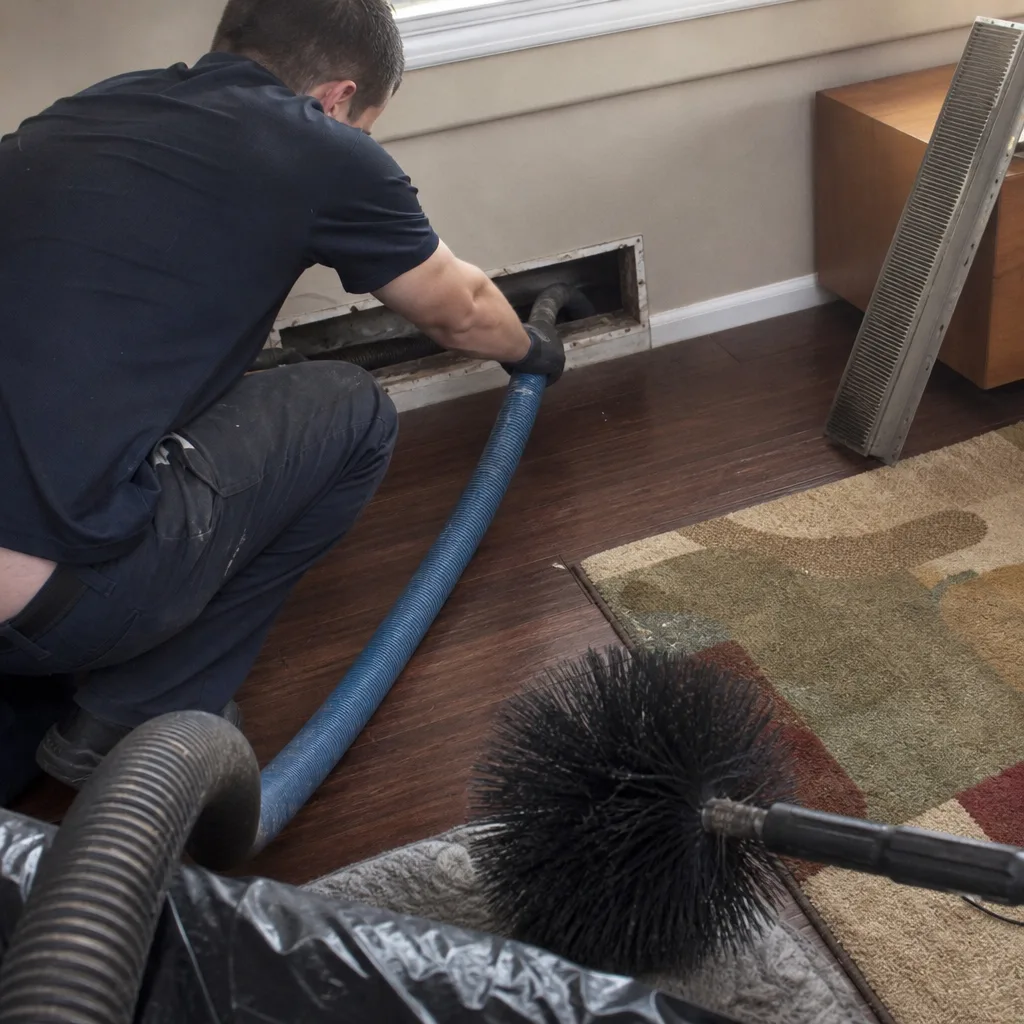 Before
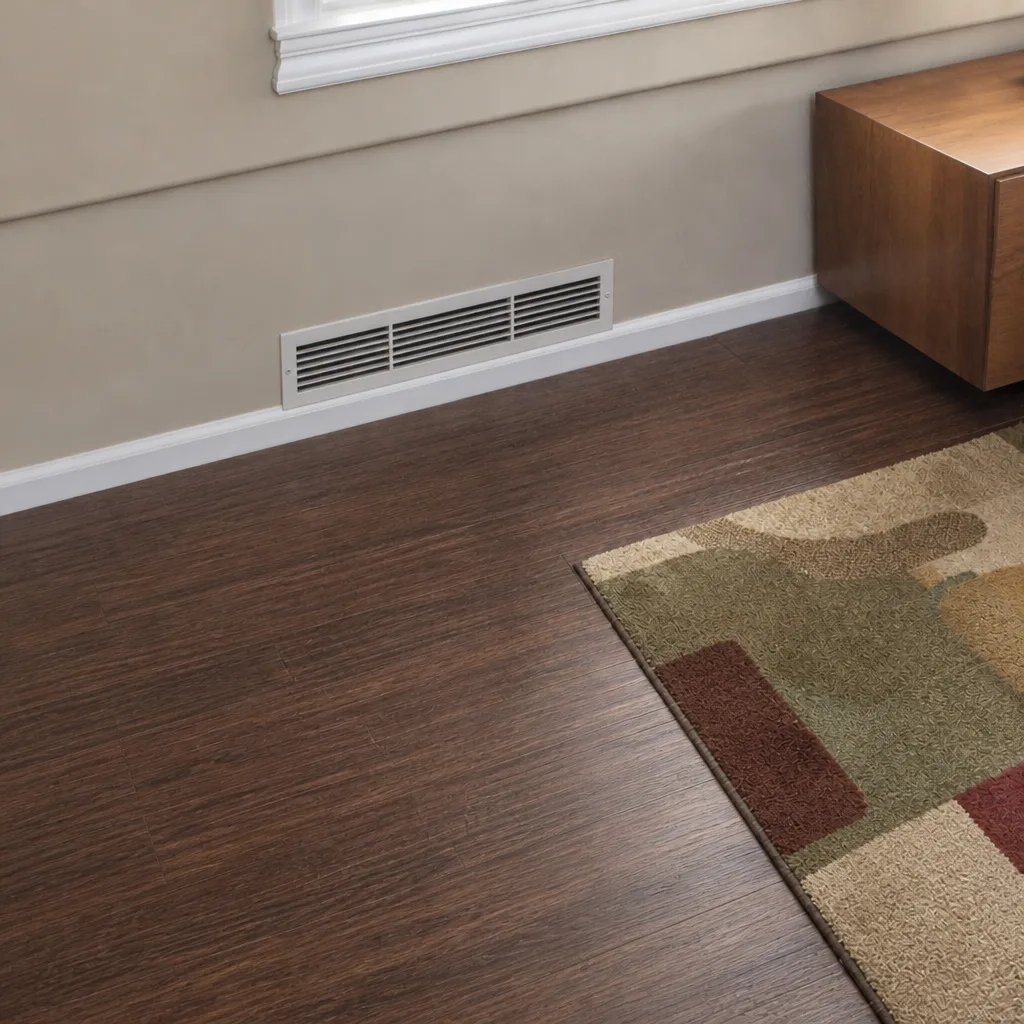 After
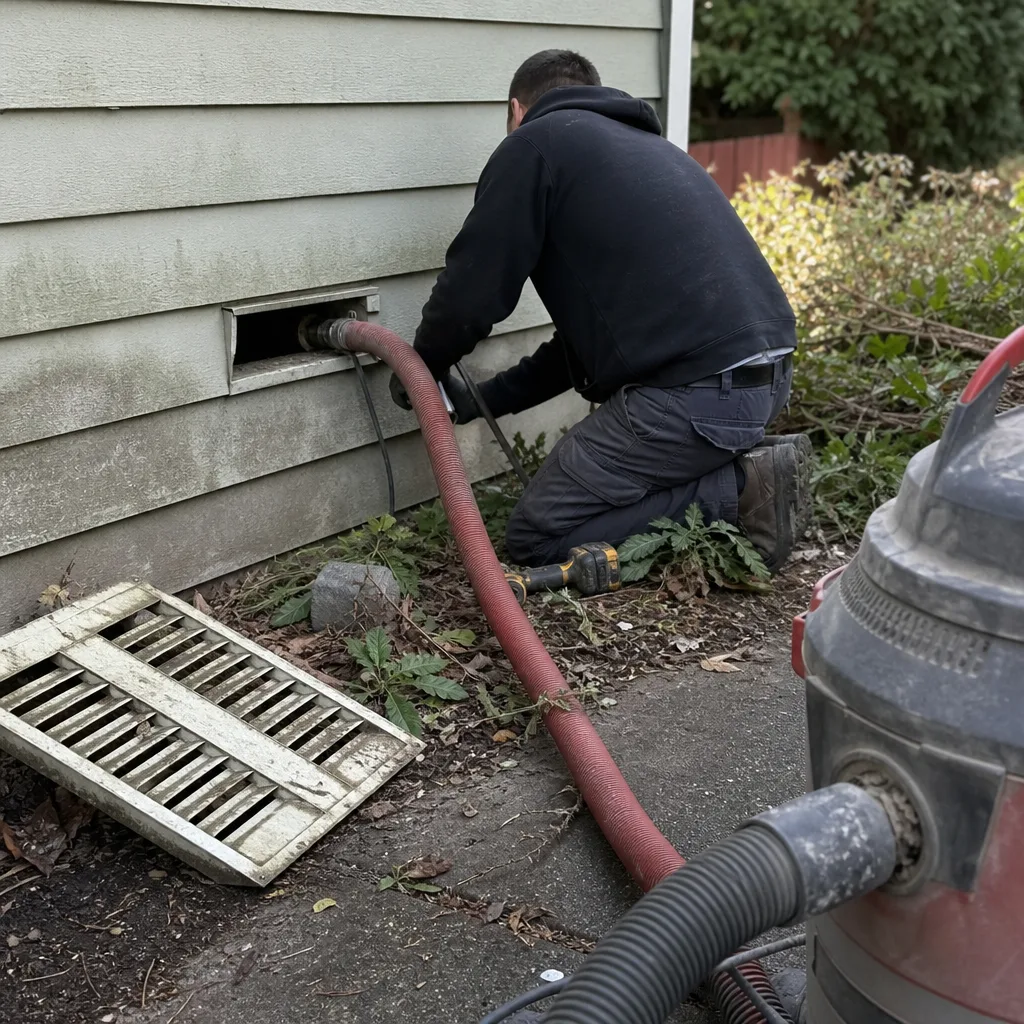 Before
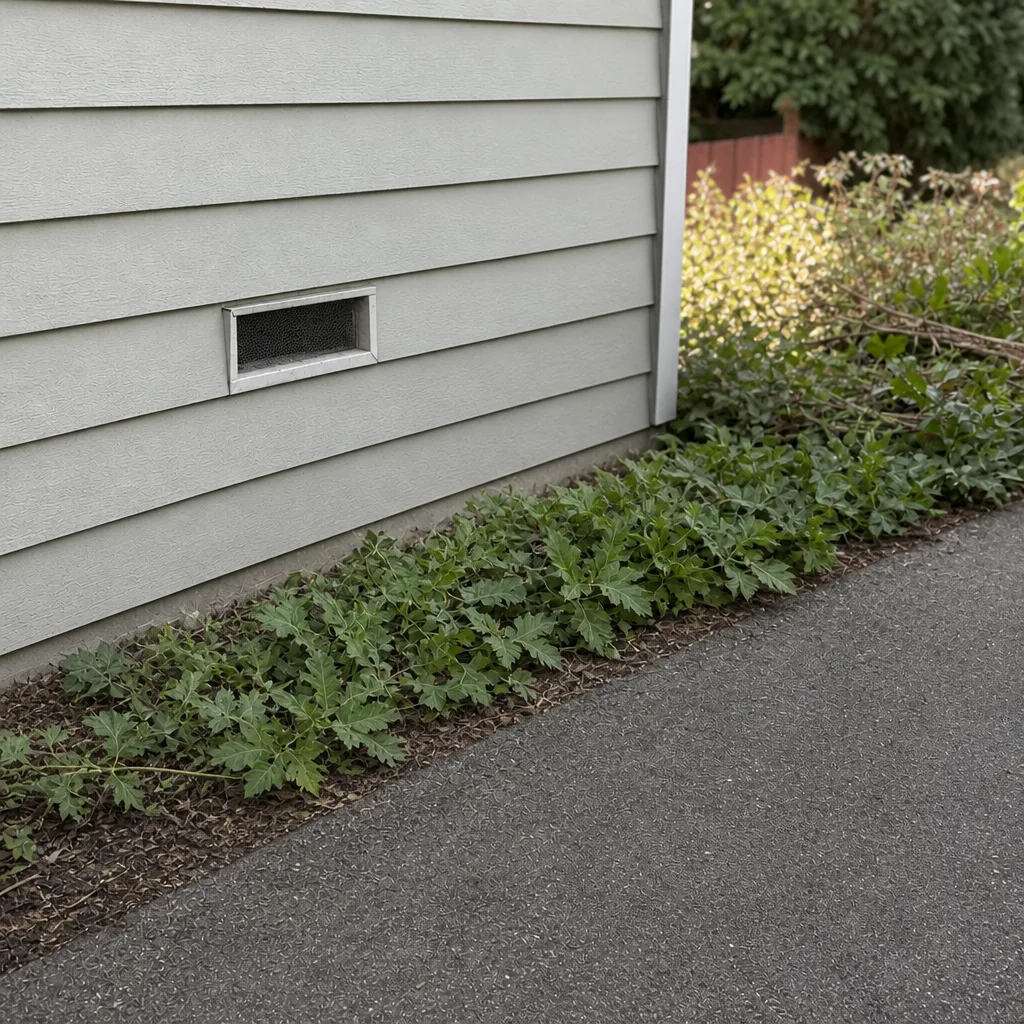 After
Frequently Asked Questions
Most whole-home duct cleanings in the Renton area land in a typical range of a few hundred dollars, with the exact price set by the written estimate after a technician sees the system size, the number of runs, and any repair needed. We price per system, not per vent, and we don’t quote a teaser number over the phone and then surprise you on site. Call (888) 423-4218 for an exact quote – estimates are free.
Cheap quotes usually mean a shop vac and no containment, which stirs debris into your living space instead of capturing it. Professional cleaning requires a high-volume negative-pressure vacuum (like a Nikro unit) connected to the trunk, containment gear, and a camera inspection – equipment that costs real money to run, which is why the low quote isn’t doing the same job. Call (888) 423-4218 if you’d like to compare what a proper full-system estimate looks like.
You see before-and-after photos of your own ducts, taken by camera inside your system. If a company can’t show you what was inside the ducts before the cleaning, they can’t prove what changed. We provide the photos as part of the job. Call (888) 423-4218 to schedule an estimate.
There’s no single right interval, but most homes benefit from a full-system check every few years, and sooner if you’ve had a remodel, a pet added to the household, water intrusion in a crawlspace, or a musty smell that keeps coming back. Homes with heavy dust or allergy concerns often want a check more often. Call (888) 423-4218 for a free estimate and we’ll give you a straight answer for your specific system.
A single room that’s consistently off is almost always a duct restriction – a collapsed flex segment, a disconnected branch, or an undersized run serving that room – not a thermostat issue. The fix is a camera inspection to confirm the obstruction and a repair and reseal of that run, often in the same visit as a cleaning. Call (888) 423-4218 to get it looked at.
Yes – a humidifier tied into the furnace has its own ductwork and pad that collect dust and mineral scale, and a full-system cleaning should include those connections, not treat them as a separate appliance. We work with both product lines and can clean the humidifier ductwork as part of the same visit. Call (888) 423-4218 to schedule a free estimate.
The Bottom Line
Air duct problems in Renton are diagnosable, and most of them come down to restriction or contamination – two different problems that need two different fixes. The walkthrough at your registers, the smell, and the location of the symptom give you a working hypothesis before anyone arrives. The camera inspection before and after the job is what confirms the fix. Professional-grade equipment – agitation tools, high-volume negative-pressure vacuuming, real containment – is what makes the difference between a cleaning that works and one that just looks like work. And repair found during the visit belongs in the same visit, not on a separate invoice. If you want to see what’s actually inside your system, call (888) 423-4218. We answer 24/7. Fast dispatch from 7am to 7pm, Sunday through Friday.
Learn more about Renton Air Duct Cleaning Pros and what a full-system service visit includes.
Written by the team at Renton Air Duct Cleaning Pros.