
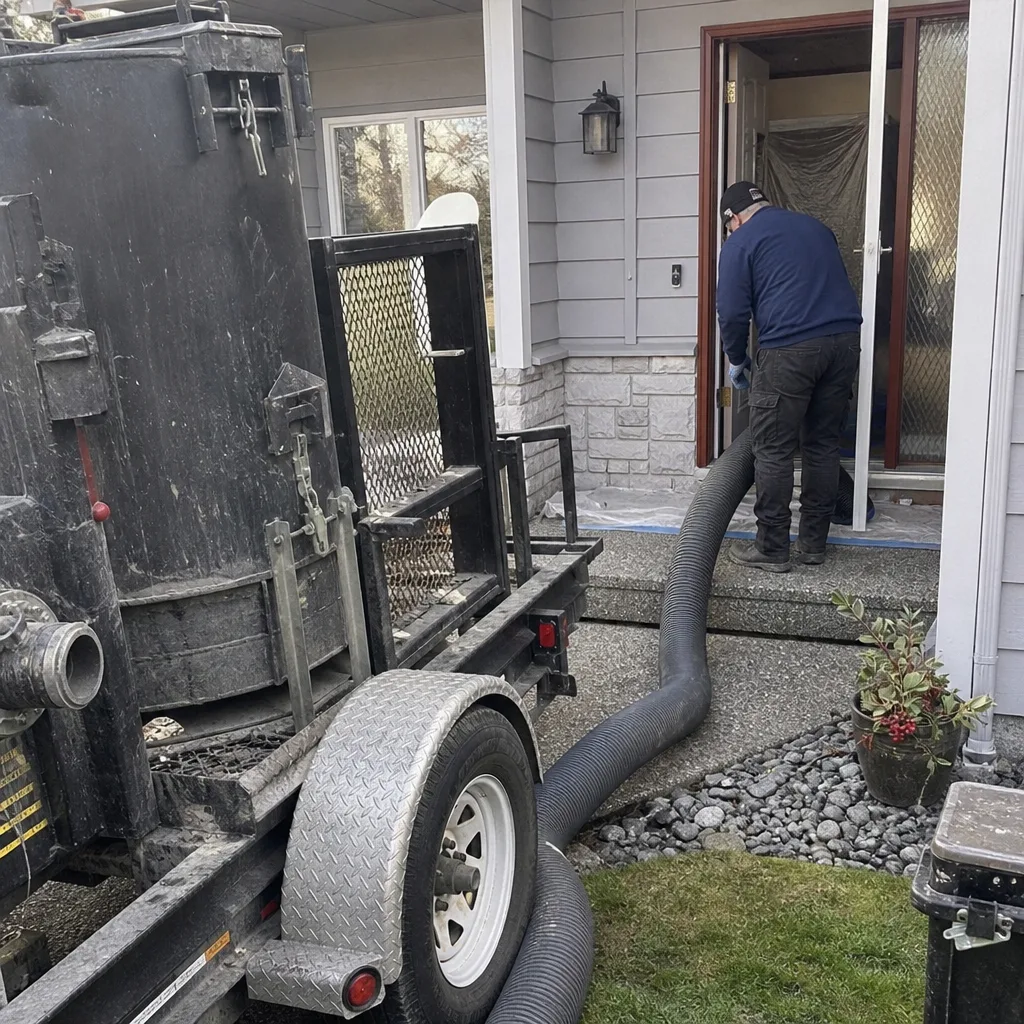
Last updated November 25, 2026
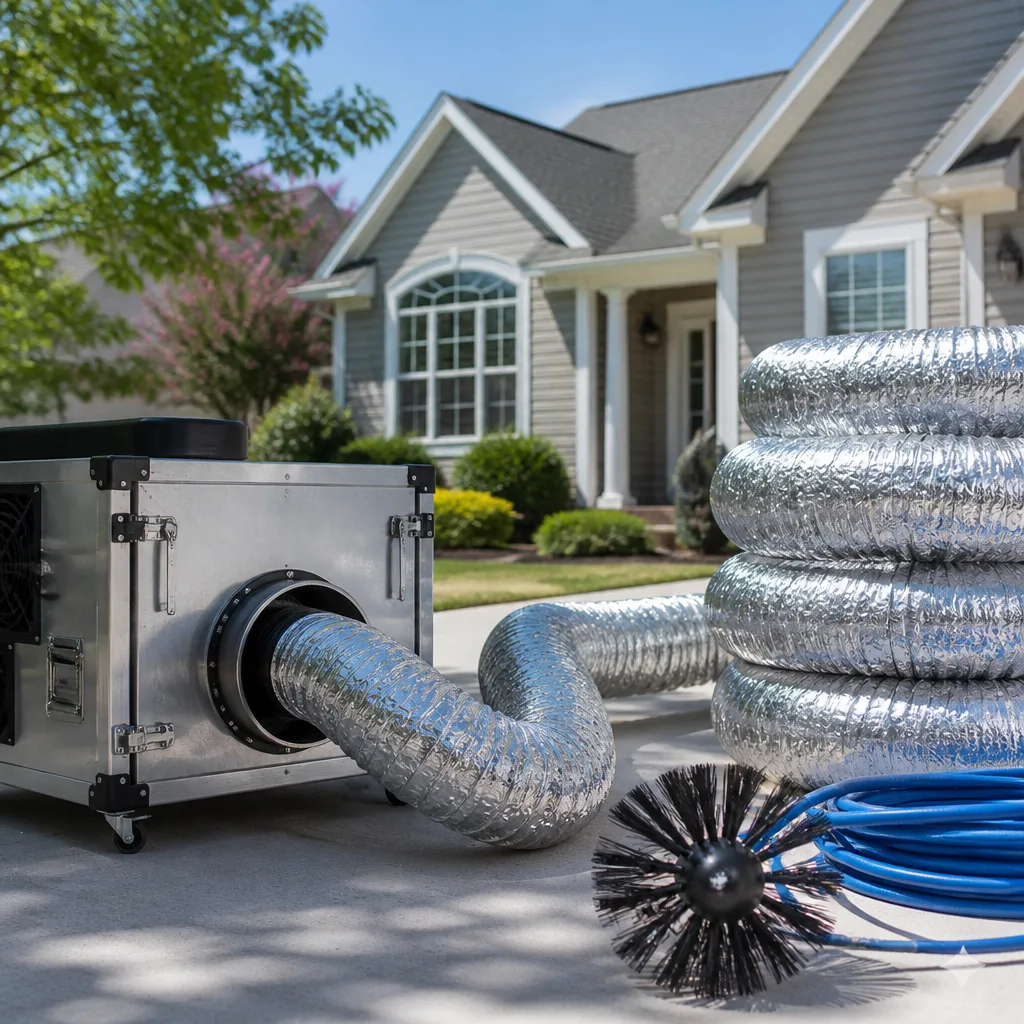 Whole-home duct cleaning
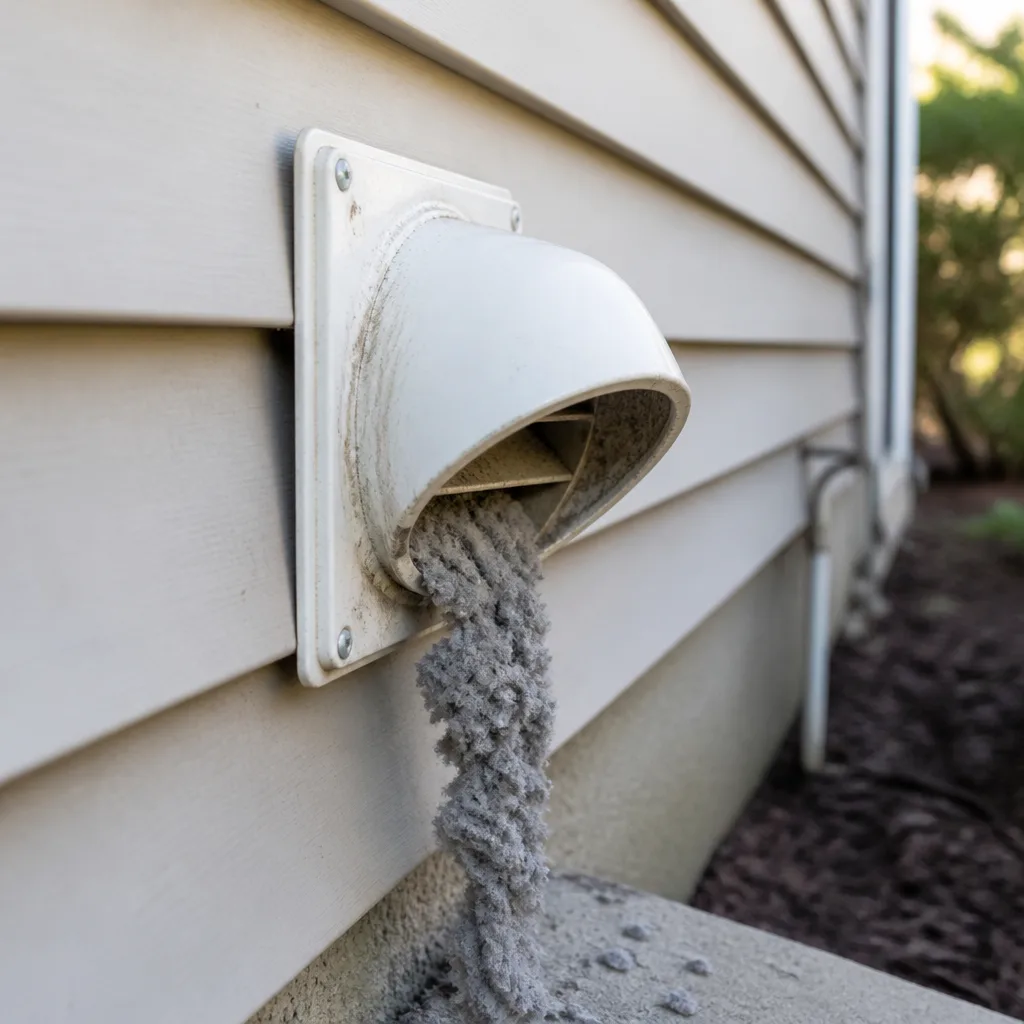 Dryer vent cleaning
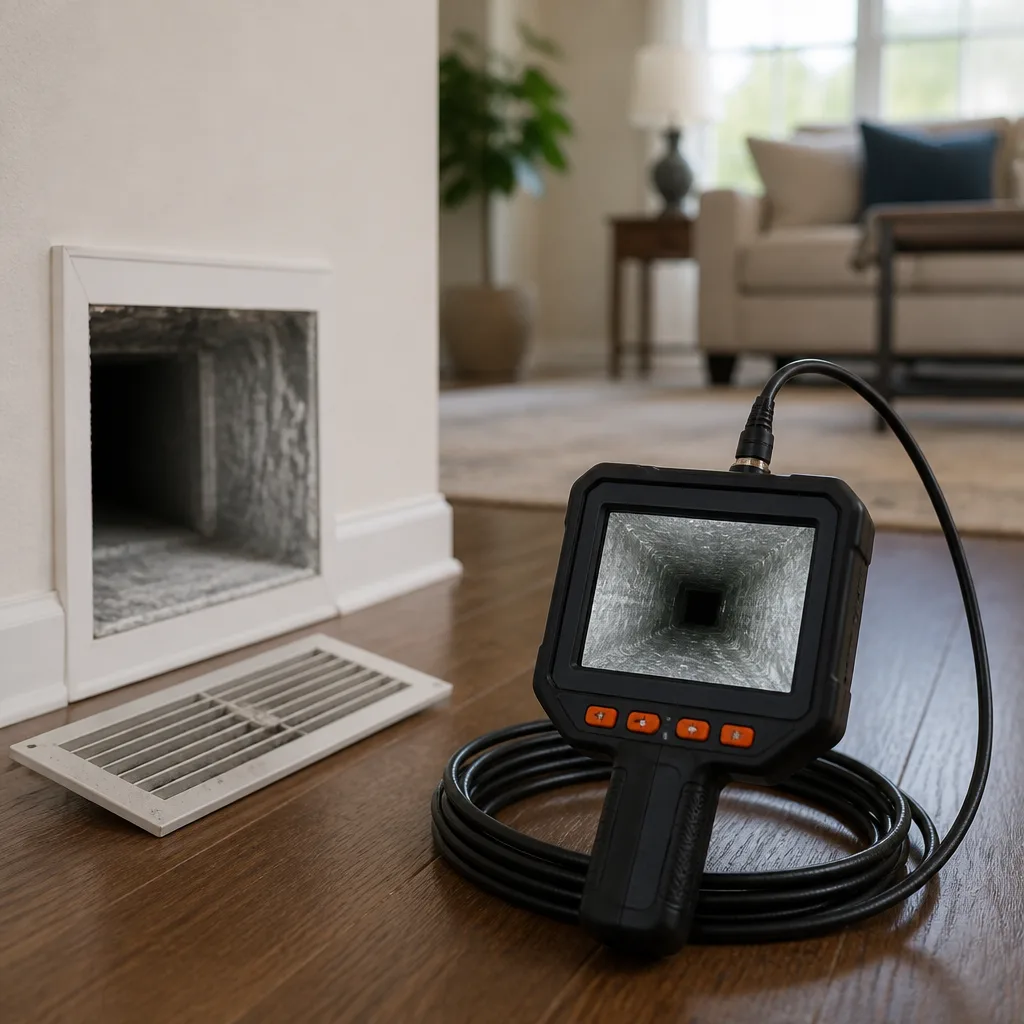 Camera inspection
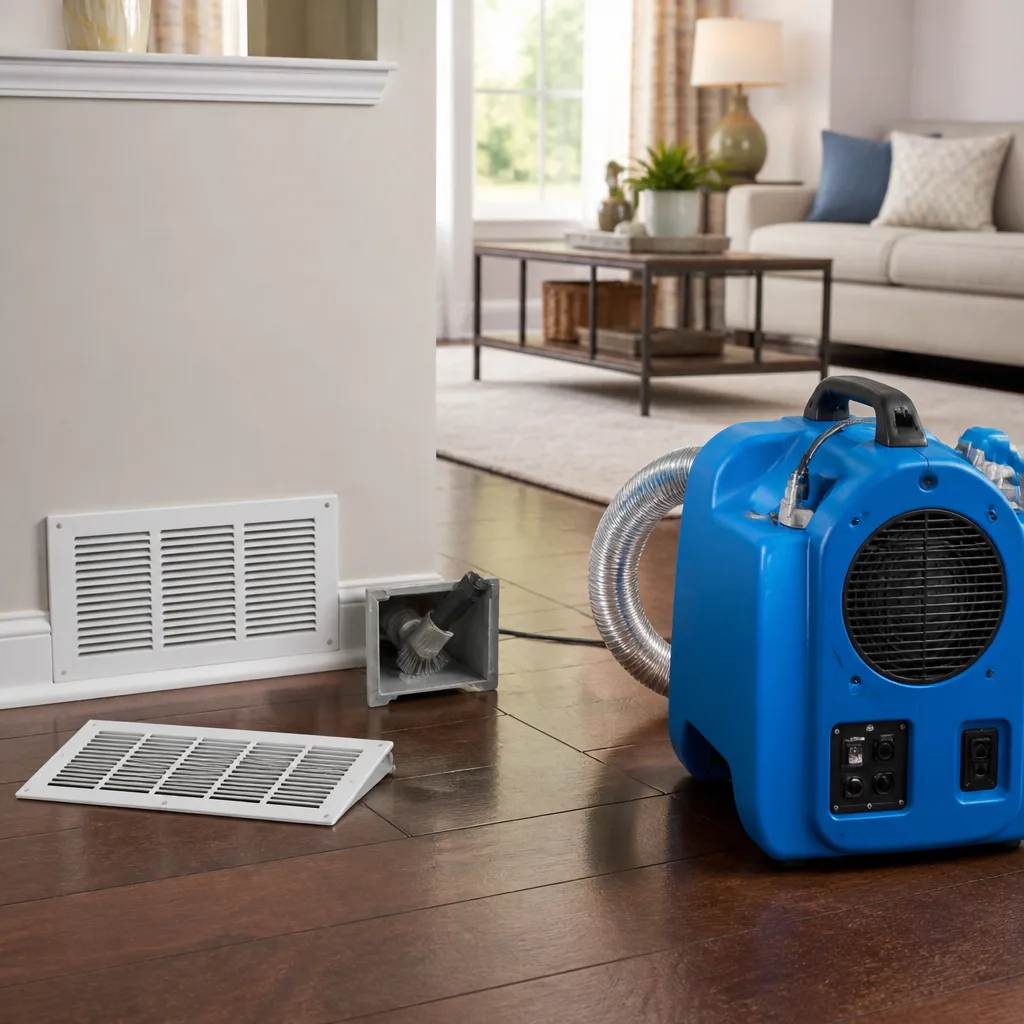 Sanitizing & deodorizing
Whole-system duct and dryer vent check with before-and-after photos - you see exactly what came out of your vents
That "$99 whole-house special" is a bait ad - the real number appears once they are in your hallway, or the "clean" is a shop-vac at the register. We photograph the inside of your ducts before and after instead.
Air Duct Cleaning Maintenance Schedule: What to Do and When
Almost every guide you’ll find tells you to clean your ducts every three to five years. That rule sounds tidy, and it’s close to useless for a house in Renton. Two homes on the same block can need completely different schedules, because what builds up inside ductwork depends on what’s happening in the house: the dogs, the remodel dust, the crawlspace that stays damp from October through May. We wrote this guide to replace the calendar rule with something you can actually use. You’ll learn the variables that drive contamination in Renton, a tiered schedule you can apply to your own home, and the small checks you can do between professional cleanings.
Quick Answer
There’s no single correct interval for air duct cleaning in Renton. A typical home with no pets, no smokers and no recent renovation usually needs a professional cleaning every three to five years. Homes with one or two dogs, an active remodel, or a wood-burning insert move to a two-to-three-year cycle, and homes with immunocompromised occupants or a moisture event need cleaning sooner, on inspection. The real schedule is set by what’s in your system, not by the calendar.
Styles & brands we work with
- Whole-home duct cleaning
- Dryer vent cleaning
- Camera inspection
- Sanitizing & deodorizing
Table of Contents
- Why a fixed cleaning interval fails Renton homeowners
- The household variables that speed up contamination in the Northwest
- Your filter is the leading indicator
- The tiered schedule: baseline, elevated-risk, and high-priority
- What to do between professional cleanings
- Dryer vent maintenance and the annual check
- How to document your home’s duct history
- Signs it’s time regardless of the schedule
Why a fixed cleaning interval fails Renton homeowners
The “clean every three to five years” rule comes from average conditions. Average means no pets, no smokers, no renovation dust, and a house with a well-sealed crawlspace. Renton homes often don’t match that profile. Wooded lots shed pollen and leaf debris into return air. Crawlspaces under older homes hold moisture through the wet season. And dogs are common in a city full of trails and green space. Each of those factors shifts the real interval.
The EPA’s own guidance is to clean ducts “as needed,” which is technically correct and practically useless without a way to measure need. Here’s how we think about it. Duct cleaners in the field look at two things: what’s visible on the inside of the return plenum and what your filter is capturing. Those two data points tell you more in five minutes than any calendar rule does in five years.
In our experience across Renton Air Duct Cleaning Pros, the homes that get on the wrong schedule fall into two groups. Some homeowners over-clean, paying for a full job every year when their system is barely loaded. Others wait a decade, and by the time we open the return trunk there’s a felted mat of dust and pet hair across the sheet metal. The right interval sits between those extremes, and it’s specific to the house.
The household variables that speed up contamination in the Northwest
Pacific Northwest housing creates a few contamination patterns that don’t show up in national cleaning guides. If any of these apply to your home, treat them as schedule accelerators.
- Crawlspace moisture intrusion. Many Renton homes sit over vented crawlspaces that stay humid through the wet season. Moisture moves upward into the living space and gets pulled into return ducts. If your crawlspace vapor barrier is torn, missing, or covered in standing water, the duct system is likely handling more humidity than it should.
- Wood-burning inserts and fireplaces. A wood insert sends fine ash into the room air every time a door is opened. That ash settles into return grilles and gets drawn into the system. Homes with regular wood burning should be on a shorter interval.
- High-shedding dog breeds. Labs, shepherds, huskies and other double-coated breeds shed year-round in western Washington’s mild climate. Pet hair binds to dust on duct walls and forms the dense matting that robs airflow.
- Recent renovation. Drywall dust is the worst offender. A single bathroom remodel or kitchen refresh generates enough fine gypsum dust to load the return side of a system.
- Filtration equipment already installed. Homes with a Honeywell or Aprilaire filtration system capture more, but the ducts still need cleaning on a schedule matched to the unit’s rated performance.
The wet climate matters here in a way coastal marketing tends to overstate with “salt air” language. Renton is inland, and the real climate factor is rain and humidity, not sea spray. Six months of moisture puts more load on ducts than six months of dry heat does.
Your filter is the leading indicator
You can read your duct system’s load from your filter. A filter that’s still holding its pleat shape and lightly gray after three months is telling you the system is running clean. A filter that’s matted, dark around the edges, or visibly bowed inward from airflow restriction is telling you something else: the return side is pulling heavy particulate load, and the ducts behind it are catching what the filter can’t hold.
Here’s how we use the filter as a diagnostic, and how you can do the same:
- Note the date you install a new filter. Write it on the edge with a marker.
- Inspect the filter at 30, 60, and 90 days without changing it. Look at the color and texture, not just how “dirty” it seems.
- If the filter loads completely in 30 to 45 days, your system is under heavy load and your cleaning interval should shorten.
- If a MERV-11 or higher filter is still light at 90 days, the system is running clean and you can stay on the longer schedule.
- Replace the filter on the interval the manufacturer specifies, and log the date. That log becomes your duct history.
Most homes in Renton run best on a MERV-11 or MERV-13 filter, depending on what the equipment is rated for. Going higher than the equipment supports restricts airflow on the return side in a way that can be worse than a slightly lower-rated filter that loads at the right rate.
The tiered schedule: baseline, elevated-risk, and high-priority
This is the framework we’d like to see replace the universal rule. Figure out which tier describes your household, then let the filter reading and a professional inspection adjust it up or down.
Baseline tier (three to five years)
No pets, no smokers, no wood burning, no recent renovations, and a dry crawlspace with an intact vapor barrier. The system is running clean. Clean every three to five years and inspect the filter monthly.
Elevated-risk tier (two to three years)
One or two dogs, or a recent renovation, or regular use of a wood insert. These households need a cleaning every two to three years. The filter reading usually confirms the interval within a year of the last cleaning.
High-priority tier (inspection-based, often annual)
Households with immunocompromised or asthmatic occupants, homes that have experienced a mold event or water intrusion, and homes where a moisture problem has been identified but not yet corrected. These need an inspection and cleaning grounded in what the system is actually showing, not a calendar. If mold has been documented in the HVAC system, cleaning should happen promptly, and then the moisture source should be corrected before the schedule can go back to a longer interval.
One complication we frequently see in Renton homes: the problem isn’t confined to the ducts. When a cleaning turns up compromised duct runs, disconnected joints behind drywall, or failed mastic at the trunk, that should be fixed while we’re already on-site. That’s why we keep air duct cleaning paired with in-house repair and sealing. Repairing what we find on the same visit beats asking the homeowner to book a second contractor.
What to do between professional cleanings
The schedule above is about professional cleanings, but most of the year-to-year condition of your duct system is set by what happens between those visits. These are the tasks a homeowner can do without specialized equipment.
- Check and change filters on schedule. Log the date each time. A three-month interval is a starting point, not a rule that fits every home.
- Brush return grilles quarterly. A dry microfiber cloth or a soft-bristle brush across the slats removes the surface dust that would otherwise get pulled into the return plenum.
- Vacuum around supply registers. Dust caked around the register housing migrates into the duct when the system runs.
- Inspect the crawlspace vapor barrier. A torn or displaced barrier lets moisture reach the ducts. A six-mil polyethylene barrier, lapped at seams and running up the foundation walls, keeps ground moisture where it belongs.
- Watch for condensation on duct surfaces. Damp or dripping supply ducts mean a moisture or insulation problem that should be investigated before the next cleaning.
None of these replaces a professional cleaning, but they extend the interval between cleanings meaningfully. We see homes on the elevated-risk tier that stay clean for the full two-to-three-year window because the homeowners are disciplined about filter changes and grille dust.
Dryer vent maintenance and the annual check
Dryer vents get grouped with duct cleaning, but the schedule is different and the stakes are higher. Lint is a fire risk, and a dryer vent can clog long before the ducts themselves need attention. Nearly every manufacturer recommends an annual vent cleaning, and that’s a sensible minimum for any household drying a normal load volume.
Some households need the vent cleaned more often:
- Homes drying five or more loads per week
- Any household with a long vent run, a vented-through-the-roof configuration, or multiple 90-degree elbows
- Households that dry heavy items like towels or denim daily
- Anyone noticing that a load now takes noticeably longer than it used to
The annual check is also the point where you can catch a crushed or disconnected vent behind the dryer before it becomes a bigger problem. dryer vent cleaning is a straightforward job when booked as a yearly task and a much bigger one after years of neglect.
How to document your home’s duct history
The most useful thing you can build for your home is a written duct history. It replaces the “reset to generic timeline” habit with real data about your specific system. Here’s what to track.
- Date of each professional cleaning, and the name of the company that performed it.
- Any observations from the technician: contamination type, notable areas, moisture findings.
- Filter change dates and the MERV rating installed each time.
- Crawlspace vapor barrier condition at each inspection.
- Any duct repair or sealing work completed and where.
- Dryer vent cleaning dates.
- Any sanitizing or treatment work, and the product line used.
That log becomes genuinely useful when you sell the house, when you change HVAC equipment, or when you’re trying to decide whether a filter that loaded fast this year is a real change or just a cold season. It also tells the next technician exactly what they’re looking at.
One additional note on the higher-tier homes: properties with existing IAQ equipment from Honeywell or Aprilaire need cleaning scheduled around the equipment’s performance, not around a generic timeline. When a filtration unit is already handling a lot of particulate, the duct itself loads more slowly. When the equipment has been undersized or failed, the ducts load faster. Cleanings matched to what’s already in the system work better than one-size intervals. The filtration equipment doesn’t clean the ducts; it slows how quickly they load.
Signs it’s time regardless of the schedule
Some situations override the calendar rule entirely. If any of these apply, book an inspection even if your last cleaning is recent.
- Visible dust blowing from supply registers when the system starts
- A persistent musty odor when the HVAC runs
- A recent water event (roof leak, plumbing leak, appliance failure) that reached the duct system
- Visible mold growth on duct surfaces or around registers
- Recent pest activity inside the duct system
- A new pet added to the household
- Significant renovation that generated drywall dust
- An HVAC equipment replacement where the existing ductwork was retained
These aren’t marketing triggers. They’re conditions where the system has changed in a way the calendar can’t track. When we arrive for an inspection on any of these, the first step is to see what’s inside the system rather than assume. That’s the only way to know whether a full cleaning, a targeted cleaning, or a repair-and-seal job is the right call. Professional-grade tools from Rotobrush and Nikro let us see and clean the return trunk properly; consumer or shop-vac setups can knock dust loose without containing it. We also run Abatement Technologies negative-pressure equipment to hold dust inside the work zone instead of blowing it into the living space. It’s a step many generalist providers skip.
Common Mistakes to Avoid
- Treating “every three to five years” as a rule. That interval assumes average household conditions. Homes with pets, wood inserts or recent renovations need a shorter cycle, and the calendar rule will miss them.
- Skipping the filter log. Without dates written on the filter edge or in a notebook, you lose the leading indicator that tells you when the ducts are loading.
- Going to the highest MERV rating available. A filter rated higher than the equipment supports restricts return airflow and can make indoor air quality worse, not better. Match the filter to the equipment.
- Hiring a cleaner who quotes a per-vent price over the phone. That pricing structure encourages a light touch and quick exit. A single price per system, agreed before any work starts, with before-and-after photos of your own ducts, is the model to demand.
- Overlooking the crawlspace. A torn or missing vapor barrier in a Renton crawlspace pushes moisture into the return ducts. Fix the barrier before scheduling another cleaning.
- Skipping the dryer vent for the year. Lint clogs build up faster than people assume in high-use households, and the annual check catches crushed or disconnected vent runs.
- Ignoring the “after” documentation. Ask for before-and-after photos every time. A cleaning you can’t verify is a cleaning you have to pay for again sooner than you should.
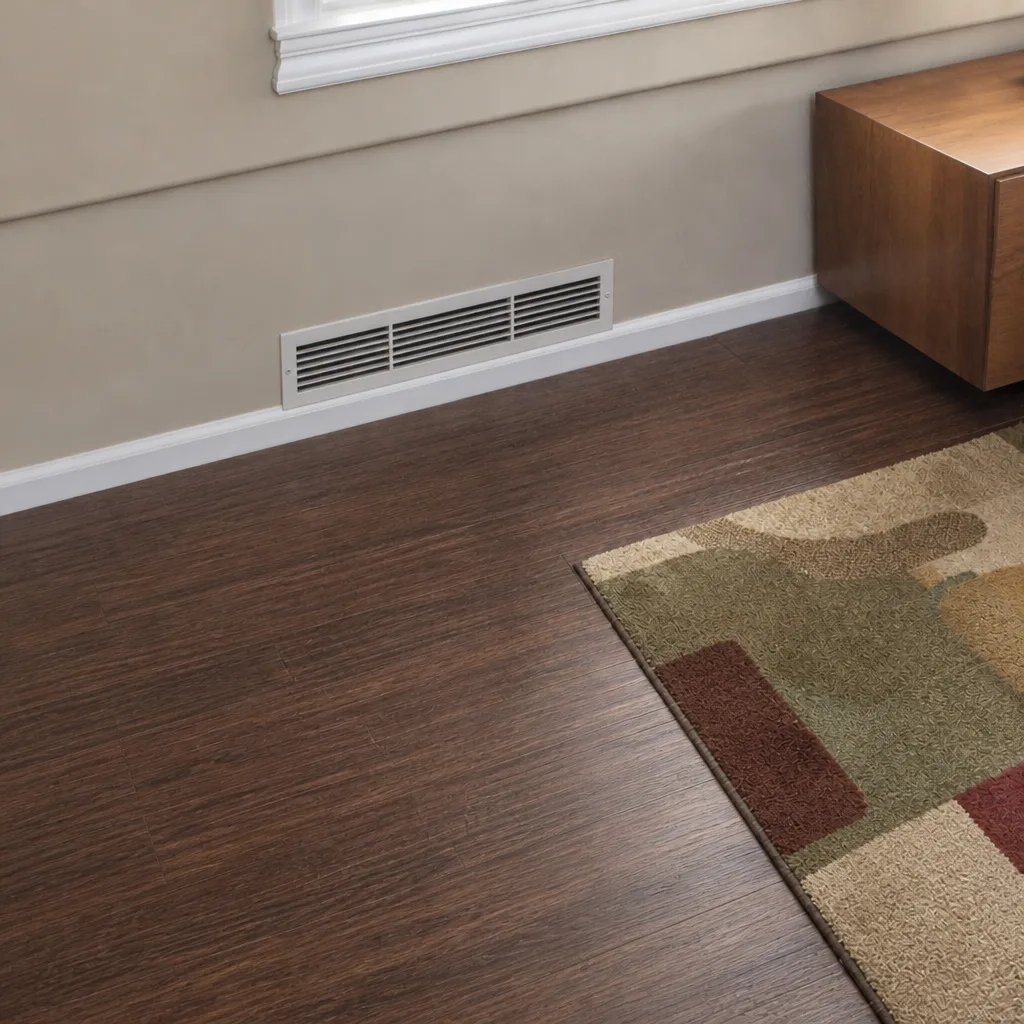
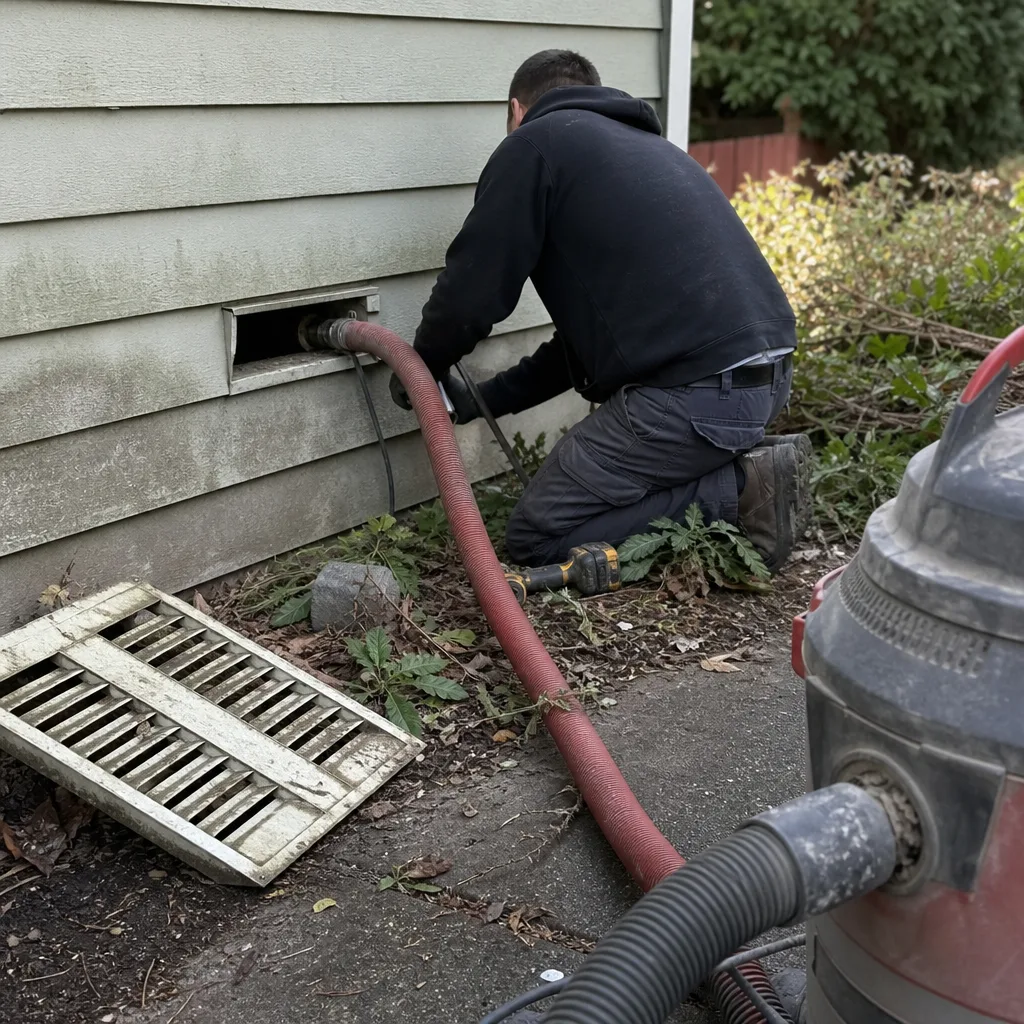
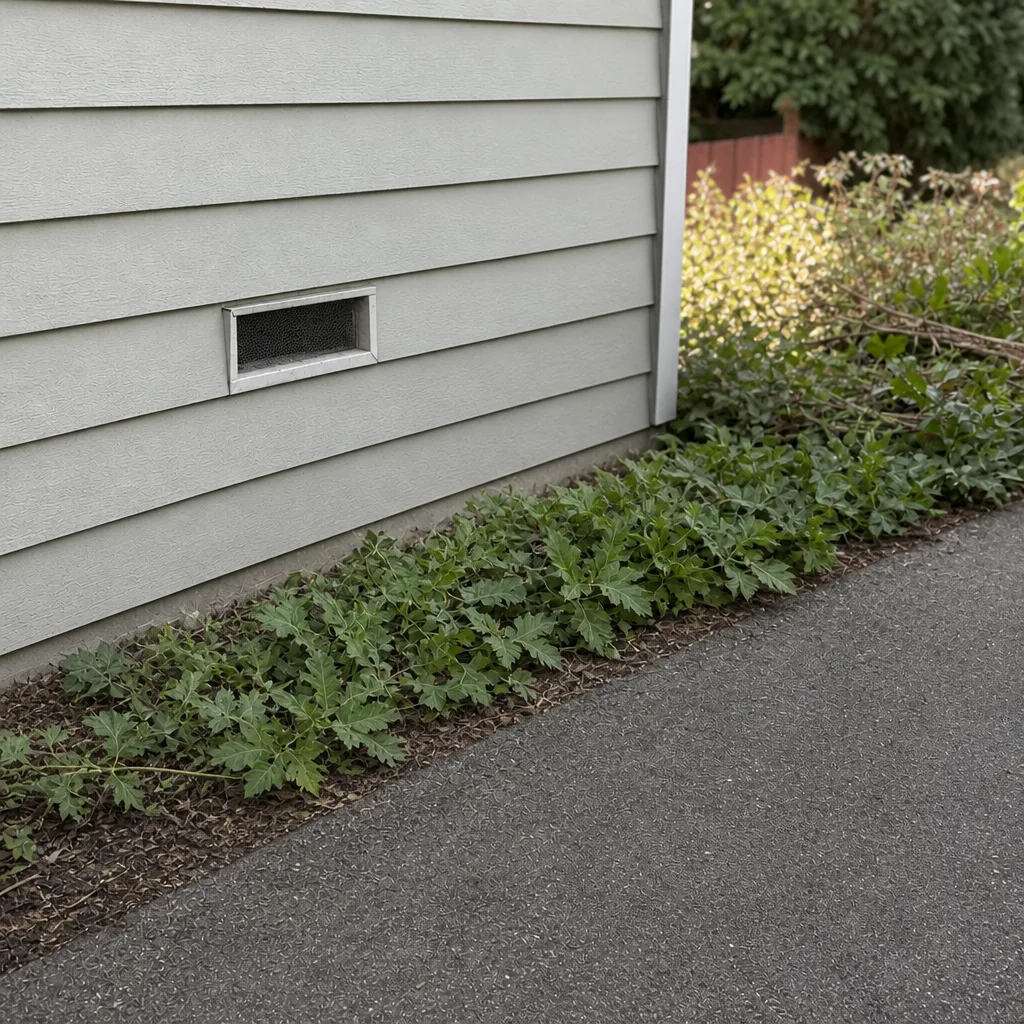
See the difference
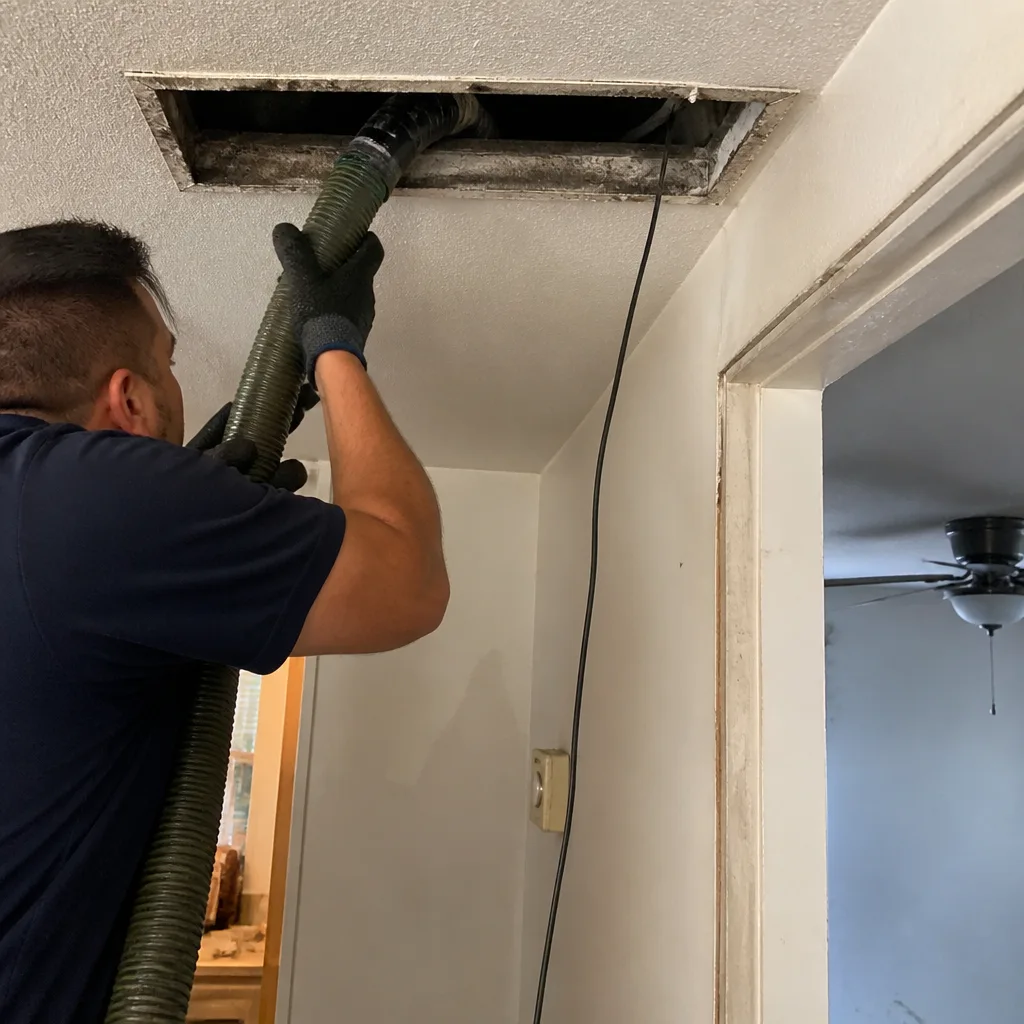 Before
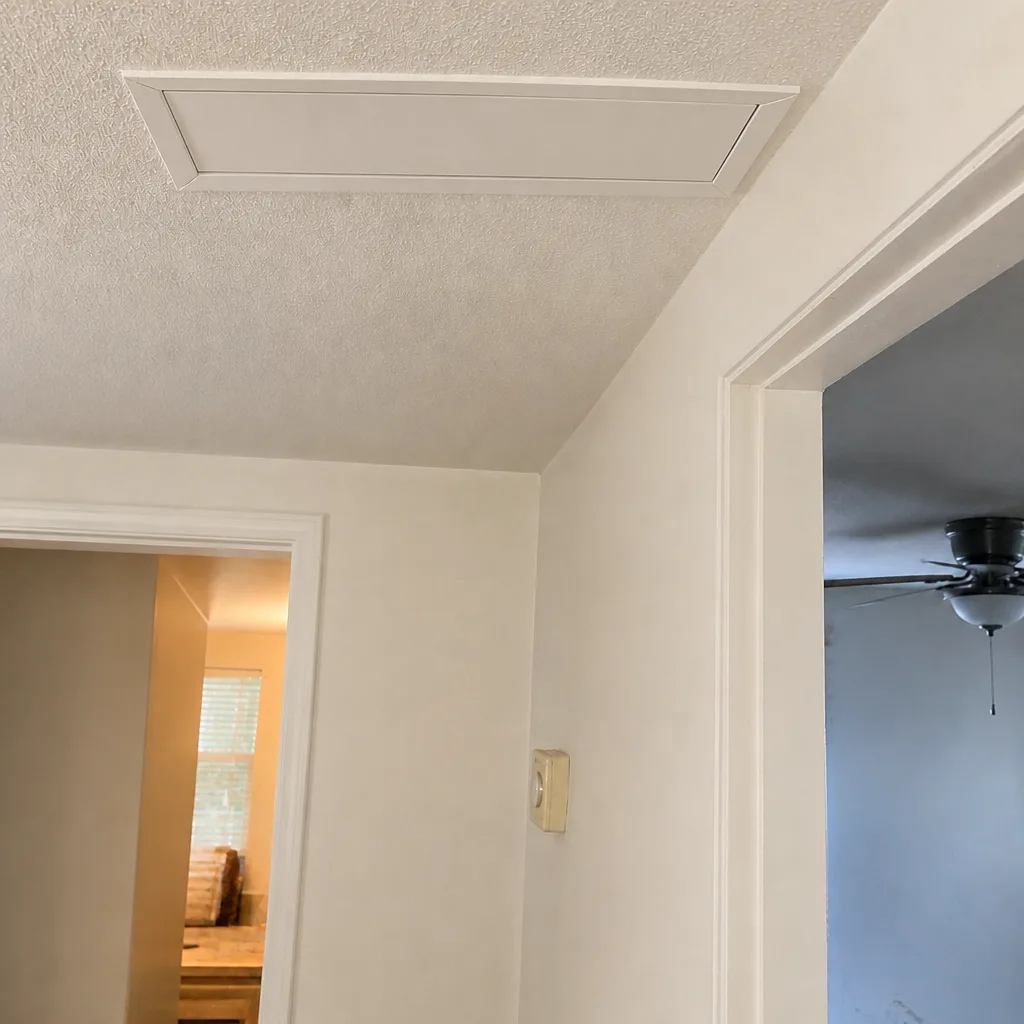 After
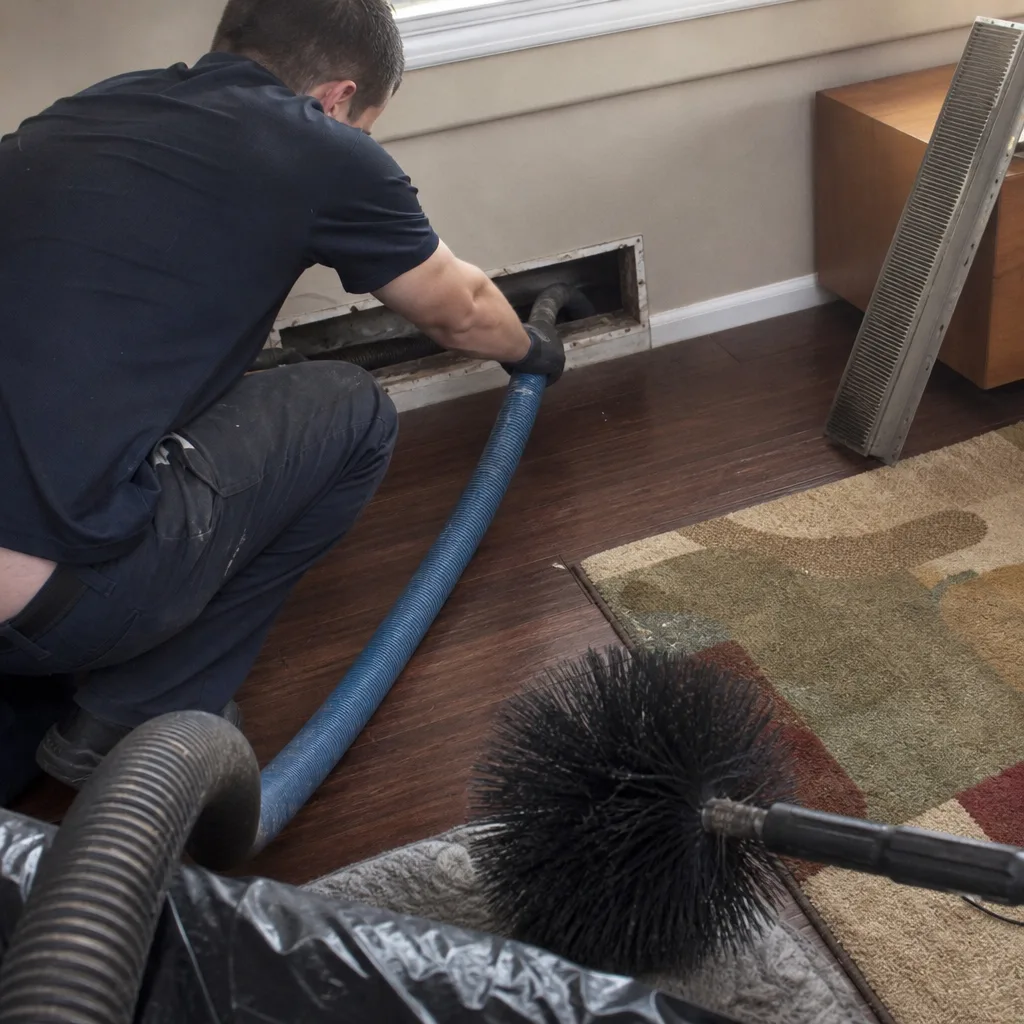 Before
 After
 Before
 After
When to Call a Professional
Call for a professional evaluation if any of these describe your home: a filter that loads in under six weeks, visible dust from supply registers, a musty odor on startup, recent water intrusion, recent renovation dust, a pet added to the household, or a cleaning that’s past the interval for your tier. The other clear call is the annual dryer vent check; vent work isn’t a DIY task because the fire risk is real and a crushed or disconnected vent behind the dryer often isn’t visible without the right tools. Renton Air Duct Cleaning Pros offers free estimates in Renton, and we bring Rotobrush and Nikro professional equipment plus Abatement Technologies containment to every full-system job. We also offer repair and sealing in-house, so compromised ductwork found on the inspection doesn’t get deferred to a second vendor. Call (888) 423-4218. We answer 24/7. Fast dispatch from 7am to 7pm, Sunday through Friday.
Frequently Asked Questions
There’s no single interval. Baseline homes with no pets, no smokers, and no recent renovations typically need cleaning every three to five years, while homes with one or two dogs or a recent remodel need it every two to three years. Homes with immunocompromised occupants or a moisture event need inspection-based cleaning, sometimes annually. Call (888) 423-4218 for an exact quote based on your system; estimates are free.
Prices are per system, not per vent, because the work is priced on the size and configuration of the system. A fair quote will state a single number for the full system before any work begins, and it will include before-and-after photos of your own ducts. Be skeptical of a teaser coupon price that grows once the technician is on site. Call (888) 423-4218 for an exact quote; estimates are free.
The cheap quotes usually come from providers using consumer-grade vacuums or repurposed equipment that can’t hold negative pressure in the system. What they do is knock dust loose rather than contain it. Professional cleaning requires a purpose-built machine (Rotobrush and Nikro are the industry standards), proper containment (we use Abatement Technologies for this), and photograph documentation of the result. Those three things are what separates a real cleaning from a dust shuffle. Call (888) 423-4218 for an exact quote; estimates are free.
Before-and-after photos of your own return plenum and trunk lines are the standard. Ask for them at the bid stage, not after the work is complete. Any professional provider should be happy to provide them. Call (888) 423-4218 for an exact quote; estimates are free.
Yes, mainly through moisture. Western Washington’s wet season keeps vented crawlspaces humid from fall through spring, and that humidity reaches return ducts when the vapor barrier is compromised. Homes with crawlspace moisture issues should shorten the cleaning interval regardless of pets or renovation history. Call (888) 423-4218 for an exact quote; estimates are free.
Annually for most households, more often for homes drying five or more loads per week or with long or multiple-elbow vent runs. Lint is a real fire risk, and a crushed or disconnected vent behind the dryer often surfaces at the annual check. Call (888) 423-4218 for an exact quote; estimates are free.
The Bottom Line
The calendar rule is a starting point, not a schedule. Renton homes sit in a wet climate with specific local drivers: vented crawlspaces, wood inserts, high-shedding dogs, and a rental and remodel market that keeps drywall dust in the air. Read your filter, track the dates, note your tier, and let both the filter reading and a professional inspection set the actual interval. Between cleanings, keep the filters on schedule, brush the return grilles, keep the crawlspace barrier intact, and get the dryer vent cleaned yearly. When the inspection turns up a compromised duct joint or a moisture finding, get it repaired on the same visit rather than deferring to a second contractor. The result is a duct system that stays clean on its own schedule rather than an industry average. For a free estimate, call (888) 423-4218. We answer 24/7. Fast dispatch from 7am to 7pm, Sunday through Friday. HVAC cleaning, sanitizing, and full-system work are all part of what we offer. If you’d like to see how the whole service line fits together, take a look at hvac cleaning for the equipment-and-coil side of the same air pathway.
Related Guides
Written by the team at Renton Air Duct Cleaning Pros.