
Abatement Technologies Air Duct Cleaning in Renton: A Homeowner’s Guide
When a duct cleaning company shows up with Abatement Technologies HEPA filtration equipment, it’s not a sales tactic. It means the job site has particulate levels that call for true HEPA-rated containment rather than standard HVAC filtration. Most Renton homeowners have never heard of the brand, and that’s exactly why it’s worth understanding before you book anyone. This guide explains what the equipment actually does, and when it matters for your home.
What Does Abatement Technologies Equipment Actually Do?
Abatement Technologies builds air scrubbers and negative air machines for mold remediation, restoration work, and hazardous particulate containment. These are the tools contractors reach for after a flood, a sewage backup, or a confirmed mold problem – jobs where loose spores and fine debris have to be captured, not just stirred up and blown back into the living space.
Mechanically, the equipment does three jobs at once:
- True HEPA filtration. The machines pull air through HEPA-rated filters designed to capture particles down to the sub-micron range, including mold spores and fine dust that a standard shop vacuum would pass straight through.
- High airflow capacity. Abatement Technologies air scrubbers move a large volume of air per minute compared with consumer-grade units, which means a room’s air can be cycled through filtration repeatedly during the job rather than once.
- Negative pressure control. Negative air machines hold a work area at slightly lower pressure than the rest of the house, so air flows into the containment zone instead of out of it.
Why this matters in duct work specifically: ducts are confined, connected to every room, and under pressure. Cleaning agitation looses particulate into the air stream. Without HEPA-rated containment running alongside it, that particulate ends up somewhere – often your living room. In our experience, that’s the gap between a real cleaning and a visual one.
When Do You Actually Need Abatement Technologies Equipment?
Not every duct cleaning job needs this level of equipment. A routine maintenance cleaning on a reasonably maintained system in Renton calls for professional agitation and high-capacity vacuuming, and that’s usually enough. Abatement Technologies-level containment becomes the appropriate tool in three specific situations:
- Mold-confirmed ductwork. If a visual inspection or test has found mold growth inside ducts or on interior insulation, agitation without HEPA containment can spread spores through the home. The job becomes a containment job, not a dust job.
- Post-remediation clearance. After a mold remediation contractor finishes work elsewhere in the home, clearance testing confirms the air is clean. Ducts that pulled air during remediation may need cleaning before that clearance holds.
- Rodent debris in the system. Rodent activity in ductwork leaves droppings, nesting material, and fine contamination that carries real handling concerns. A HEPA-rated setup with negative pressure is the appropriate way to remove it without introducing it into the room.
Renton’s older housing stock includes plenty of homes with crawl spaces and attic duct runs that have seen moisture and pest activity over the years. If you’ve noticed a musty smell when the system kicks on, or you’ve had pest work done in the attic, it’s worth asking pointed questions about containment before you book. A cleaning company that can’t explain its containment setup probably doesn’t have one.
How Abatement Technologies and Nikro Work Together on a Full Cleaning
Here’s the part most homeowners never hear explained. A thorough duct cleaning uses two different categories of equipment doing two different jobs, and both are necessary. This is where the equipment really earns its keep.
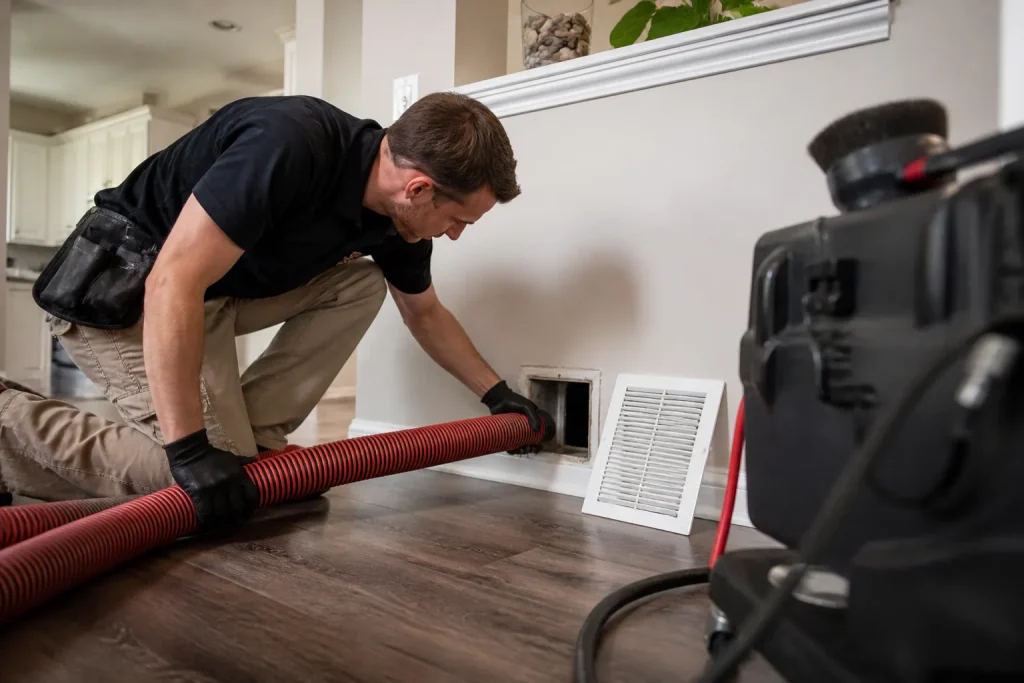
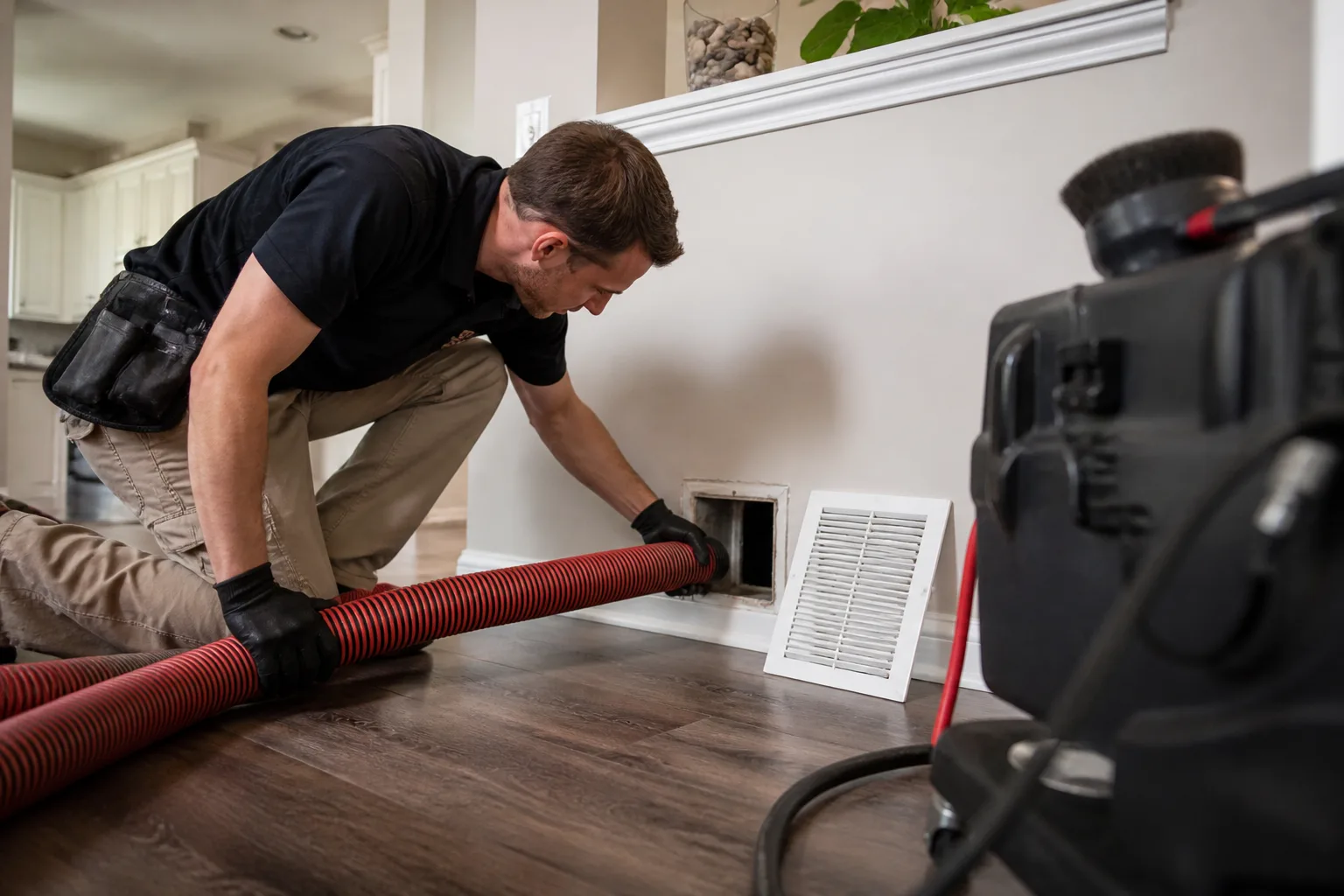
Agitation and removal comes from a professional system like Rotobrush or Nikro – purpose-built machines with rotating brushes and high-capacity vacuum that physically loosen debris from duct walls and extract it. Consumer tools and repurposed vacuums can’t reach duct surfaces or move enough air to pull the debris out.
Containment and filtration comes from the Abatement Technologies side – the air scrubbers and negative air machines that hold the work zone and filter the air during the job.
Used together, the two-tool approach covers the whole air pathway: supply ducts, return ducts, the HVAC unit, and the spaces around them. The Nikro system does the physical work inside the duct; the Abatement equipment protects the rest of the house while it happens. When a company also handles HVAC cleaning and dryer vent cleaning in the same visit, nothing gets left for a second contractor to discover later.
What Does Proper HEPA Containment Mean for the Rest of Your Home?
Containment is the difference between a homeowner staying comfortable during the job and a homeowner wiping dust off the mantel afterward. Here’s what it looks like in practice on a Renton job where contamination levels call for it:
- Plastic sheeting and sealed doorways. The work area is isolated so air and dust from the cleaning zone don’t cross into bedrooms, kitchens, or living spaces.
- Room pressurization. Negative air machines keep the work zone under slightly lower pressure, so any air movement at seams or doorways flows into containment rather than out.
- Air change rate during the job. HEPA-rated scrubbers cycle the air inside the containment zone repeatedly, filtering out the particulate that agitation releases. That continuous cycling is what keeps the air safe to breathe while work is happening.
- Filtered exhaust. Air leaving the work zone passes through HEPA-rated filters before it returns to the rest of the home.
If you have family members with allergies or respiratory sensitivity, or if the job involves confirmed mold, ask specifically whether the contractor uses HEPA-rated containment. A plain “we use a big vacuum” answer doesn’t cover it. If you’d rather have someone walk you through the setup before you commit, call (888) 423-4218 – the estimate is free and there’s no obligation.
Clearance Testing: Confirming the Job Actually Worked
How do you know the cleaning worked? Not by how the ducts look from the register. The objective answer is a post-job air quality measurement. After a cleaning at the Abatement Technologies level, a post-job particle count or air quality reading gives you a before-and-after number instead of a promise.
That’s what “air you can measure, not just feel” means practically. A few things to expect:
- Baseline measurements taken before the job starts, so you have a reference point.
- Post-cleaning readings that show the reduction in airborne particulate.
- Before-and-after photos of your own ducts, so you can see the condition for yourself.
For standard maintenance cleanings, a photo record is usually enough. For mold-confirmed or pest-contaminated systems, ask for the air quality measurement – it’s the difference between a claim and a result. If your home has Honeywell or Aprilaire filtration or humidification equipment installed, matching the cleaning to what those systems expect is part of getting the result right.
When to Call a Pro (and When You Can Skip It)
Not every dusty register means you need a certified air quality contractor. Here’s the honest breakdown for Renton homeowners.
Call a pro when:
- You smell must or mold when the system runs.
- You’ve had rodent activity in the attic or crawl space.
- You’ve had water damage or a flood near ductwork.
- You’ve just finished remediation work and need clearance.
- You’ve had recent duct repair or sealing work and want the system cleaned before it goes back into service.
Skip it for now if:
- The system is serviced regularly and there’s no odor, moisture, or pest history.
- A contractor quotes you a single low price without inspecting anything first – that’s a red flag worth walking away from.
If repair or sealing work turns up during inspection, it makes sense to have that handled in the same visit rather than tracking down a second contractor. That’s why duct repair and sealing is part of the full-system scope rather than an add-on.
Related services in Renton: if you’re already booking a cleaning, it’s worth bundling dryer vent cleaning into the same visit – lint buildup in the vent run is a separate issue from duct dust, but it’s the same air pathway and the same appointment. You can also read more about how air duct cleaning works on a standard maintenance job.
The Bottom Line
Abatement Technologies equipment shows up on duct cleaning jobs where contamination levels need true HEPA-rated containment – not as an upsell, but because standard vacuuming can’t safely handle mold spores, rodent debris, or post-remediation cleanup. The two-tool approach pairs a Rotobrush or Nikro system for agitation with Abatement Technologies scrubbers for containment, so the whole air pathway gets cleaned while the rest of the house stays protected. For routine maintenance, that level of equipment may not be necessary; for confirmed contamination, it’s the right tool for the job.
If you’re in Renton and want an honest walk-through of what your system actually needs, Renton Air Duct Cleaning Pros offers free estimates. Call (888) 423-4218. We answer 24/7. Fast dispatch from 7am to 7pm, Sunday through Friday. Ask about Renton Air Duct Cleaning Pros full-system service and we’ll match the equipment to the job.
Frequently Asked Questions
Do I need Abatement Technologies equipment for a standard duct cleaning in Renton?
Not usually. Routine maintenance cleanings on a system with no mold, pest, or water-damage history typically use professional agitation and high-capacity vacuuming without full HEPA containment. Abatement Technologies equipment becomes appropriate when contamination levels call for it – confirmed mold, rodent debris, or post-remediation clearance work.
How do I know if my ducts have mold or rodent contamination?
Signs include a musty smell when the system runs, visible staining near registers, and a history of pest activity in the attic or crawl space. A professional inspection with a camera can confirm what’s actually inside the ductwork. Call (888) 423-4218 for a free estimate and an honest assessment.
What does negative pressure actually do during duct cleaning?
Negative pressure holds the work area at slightly lower pressure than the rest of your home, so any air movement at seams, doorways, or duct joints flows into the containment zone rather than out into your living space. Combined with HEPA filtration, it keeps the particulate that agitation releases from spreading through the house.
Is clearance testing worth it after a mold-related duct cleaning?
Yes. A post-job air quality measurement is the only objective confirmation that the cleaning worked – it gives you a before-and-after number rather than a visual claim. For mold-confirmed or heavily contaminated systems, ask for the measurement and the before-and-after photos of your own ducts. Call (888) 423-4218 – estimates are free.
Written by the team at Renton Air Duct Cleaning Pros.
Need Air Duct Cleaning Help?
Call Renton Air Duct Cleaning Pros - the local pro we connect you with is licensed and insured, here with fast help in Renton.
(888) 423-4218